Palmer James N, Jacobson Kraig W, Messina John C, Kosik-Gonzalez Colette, Djupesland Per G, Mahmoud Ramy A
Department of Otorhinolaryngology-Head and Neck Surgery, University of Pennsylvania, Perelman School of Medicine, Philadelphia, PA.
Oregon Allergy Associates, Eugene, OR.
Int Forum Allergy Rhinol. 2018 Jun 1;8(8):869-76. doi: 10.1002/alr.22141.
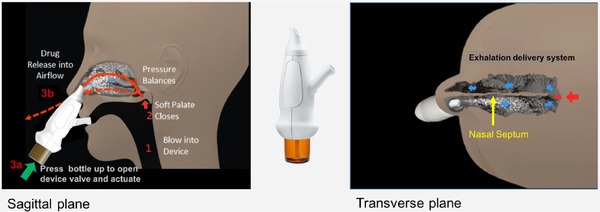
Inadequate efficacy of current intranasal steroids in chronic rhinosinusitis (CRS) is attributable to ineffective and/or inconsistent drug delivery to target anatomic sites. A new exhalation delivery system with fluticasone (EDS-FLU) may improve outcomes by significantly increasing superior/posterior corticosteroid delivery. A study was conducted to assess the long-term efficacy and safety outcomes of EDS-FLU in individuals with CRS.
This was a 12-month, multicenter, single-arm study evaluating the safety and efficacy of EDS-FLU 372 μg twice daily in CRS patients (with [n = 34] or without [n = 189] nasal polyps [NP]). Efficacy assessments by serial nasal endoscopy and patient report included: 22-item Sino-Nasal Outcome Test (SNOT-22), NP grade, standardized surgical indicator assessment, Lund-Kennedy score, and Patient Global Impression of Change. Adverse event (AE) evaluations included nasal endoscopy. Additional safety and efficacy outcomes were assessed.
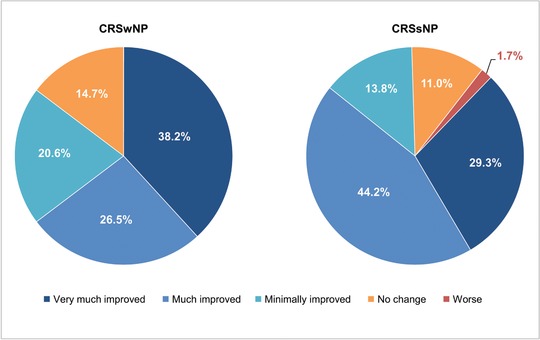
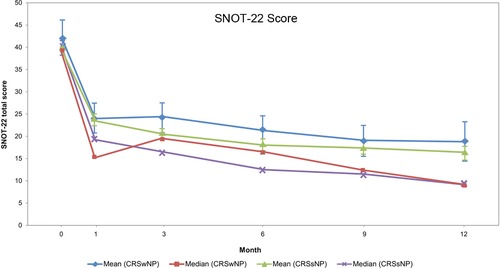
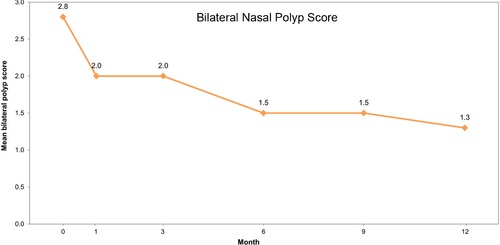
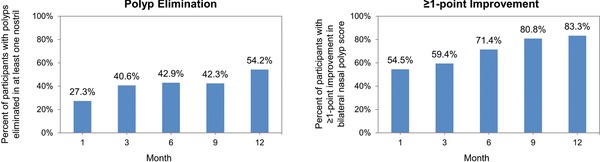
Of 223 patients who received EDS-FLU, 96% reported prior corticosteroid use and 29% prior sinus surgery. The EDS-FLU AE profile was similar to conventional intranasal steroids studied in similar populations. Most patients (87%) reported symptom improvement. Through 12 months, mean SNOT-22 scores improved by -21.5 and -21.1 for CRS with and without NP, respectively. Among patients with NP, 54.2% had polyp elimination in at least 1 nostril and 83.3% had ≥1-point improvement in polyp grade.
Over 1 year of treatment in CRS with and without NP, EDS-FLU 372 μg twice daily was well tolerated and produced improvements across a broad range of objective and subjective measures. EDS-FLU may be a desirable new option for patients with this condition.
目前鼻内用类固醇药物治疗慢性鼻-鼻窦炎(CRS)疗效欠佳,原因在于药物向目标解剖部位的递送无效和/或不一致。一种新型的含氟替卡松呼气给药系统(EDS-FLU)可能通过显著增加上/后鼻腔皮质类固醇的递送量来改善治疗效果。本研究旨在评估EDS-FLU治疗CRS患者的长期疗效和安全性。
这是一项为期12个月的多中心单臂研究,评估每日两次使用372μg EDS-FLU对CRS患者(有[n = 34]或无[n = 189]鼻息肉[NP])的安全性和疗效。通过系列鼻内镜检查和患者报告进行疗效评估,包括:22项鼻窦鼻结局测试(SNOT-22)、鼻息肉分级、标准化手术指标评估、Lund-Kennedy评分以及患者总体变化印象。不良事件(AE)评估包括鼻内镜检查。还评估了其他安全性和疗效指标。
在223例接受EDS-FLU治疗的患者中,96%报告曾使用过皮质类固醇,29%曾接受过鼻窦手术。EDS-FLU的不良事件谱与在类似人群中研究的传统鼻内用类固醇相似。大多数患者(87%)报告症状改善。在12个月的研究期间,伴有和不伴有鼻息肉的CRS患者的平均SNOT-22评分分别改善了-21.5和-21.1。在患有鼻息肉的患者中,54.2%至少有一侧鼻孔的息肉消失,83.3%的患者息肉分级改善≥1分。
在伴有和不伴有鼻息肉的CRS患者中进行了超过1年的治疗,每日两次使用372μg EDS-FLU耐受性良好,并且在广泛的客观和主观指标上均有改善。对于患有这种疾病的患者,EDS-FLU可能是一个理想的新选择。