National Research Lobachevsky State University of Nizhny Novgorod, Nizhny Novgorod, Russia.
Center for Biomedical Technology, Technical University of Madrid, Campus Montegancedo, Pozuelo de Alarcón, Madrid, Spain.
PLoS One. 2018 Jun 1;13(6):e0198396. doi: 10.1371/journal.pone.0198396. eCollection 2018.
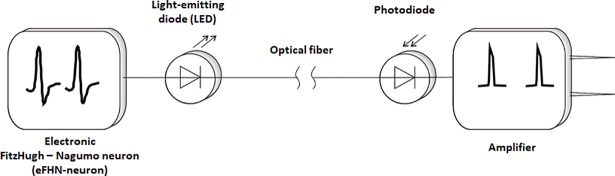
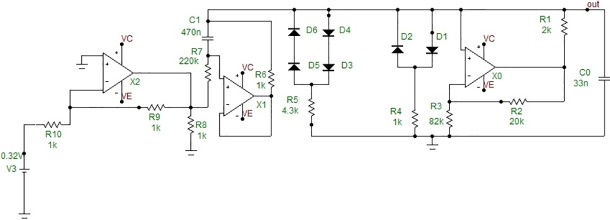
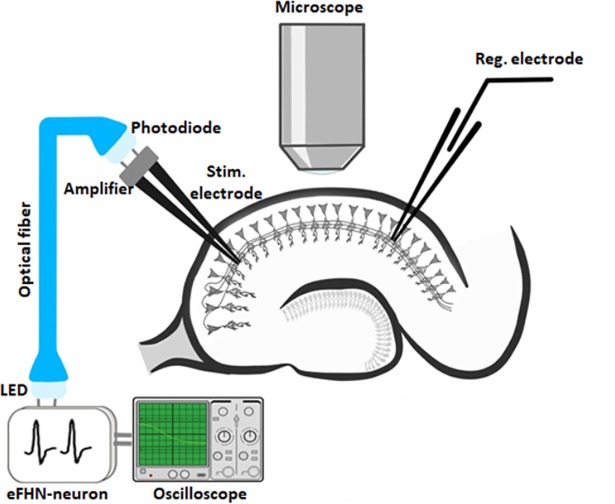
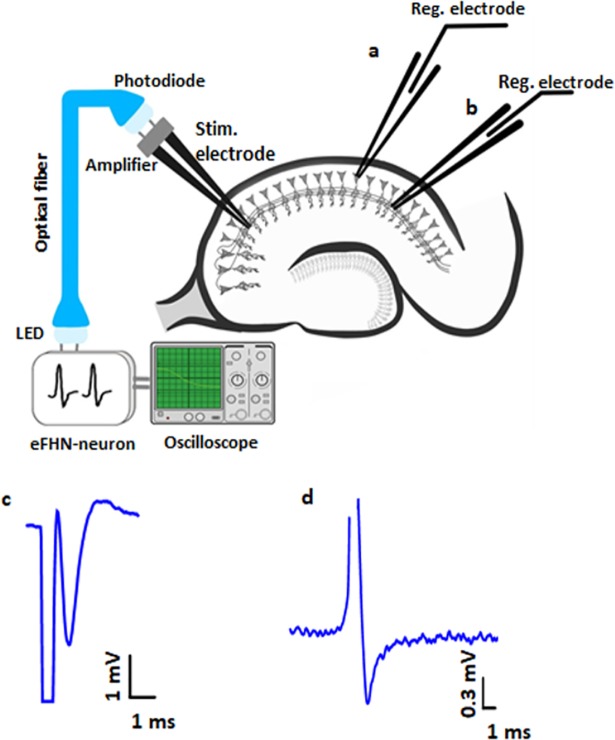
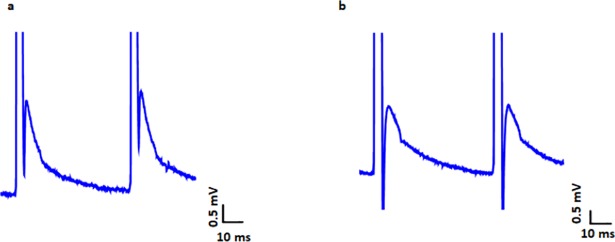
We propose an optoelectronic system for stimulation of living neurons. The system consists of an electronic circuit based on the FitzHugh-Nagumo model, an optical fiber, and a photoelectrical converter. We used this system for electrical stimulation of hippocampal living neurons in acute hippocampal brain slices (350-μm thick) obtained from a 20-28 days old C57BL/6 mouse or a Wistar rat. The main advantage of our system over other similar stimulators is that it contains an optical fiber for signal transmission instead of metallic wires. The fiber is placed between the electronic circuit and stimulated neurons and provides galvanic isolation from external electrical and magnetic fields. The use of the optical fiber allows avoiding electromagnetic noise and current flows which could affect metallic wires. Furthermore, it gives us the possibility to simulate "synaptic plasticity" by adaptive signal transfer through optical fiber. The proposed optoelectronic system (hybrid neural circuit) provides a very high efficiency in stimulating hippocampus neurons and can be used for restoring brain activity in particular regions or replacing brain parts (neuroprosthetics) damaged due to a trauma or neurodegenerative diseases.
我们提出了一种用于刺激活神经元的光电系统。该系统由基于 FitzHugh-Nagumo 模型的电子电路、光纤和光电转换器组成。我们使用该系统对从 20-28 天大的 C57BL/6 小鼠或 Wistar 大鼠获得的急性海马脑片(350-μm 厚)中的海马活神经元进行电刺激。与其他类似刺激器相比,我们的系统的主要优势在于它包含用于信号传输的光纤而不是金属线。光纤置于电子电路和受刺激神经元之间,并提供与外部电场和磁场的电隔离。使用光纤可以避免可能影响金属线的电磁噪声和电流。此外,它使我们能够通过光纤自适应信号传输来模拟“突触可塑性”。所提出的光电系统(混合神经电路)在刺激海马神经元方面具有非常高的效率,可用于恢复特定区域的大脑活动或替代因创伤或神经退行性疾病而受损的大脑部分(神经假体)。