Department of Information Systems, Faculty of Computer Science and Information Technology, University of Malaya, Kuala Lumpur 50603, Malaysia.
Management Information Systems, Sohar University, Sohar 311, Oman.
Int J Environ Res Public Health. 2018 Jun 1;15(6):1137. doi: 10.3390/ijerph15061137.
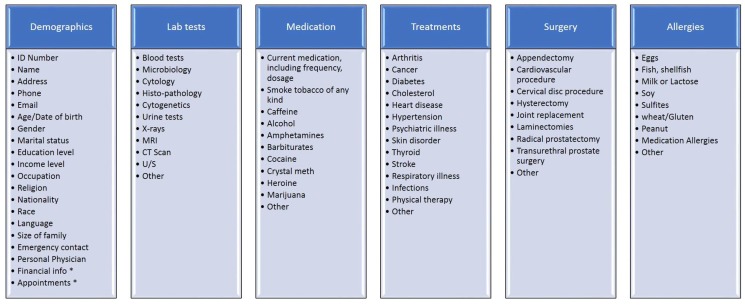
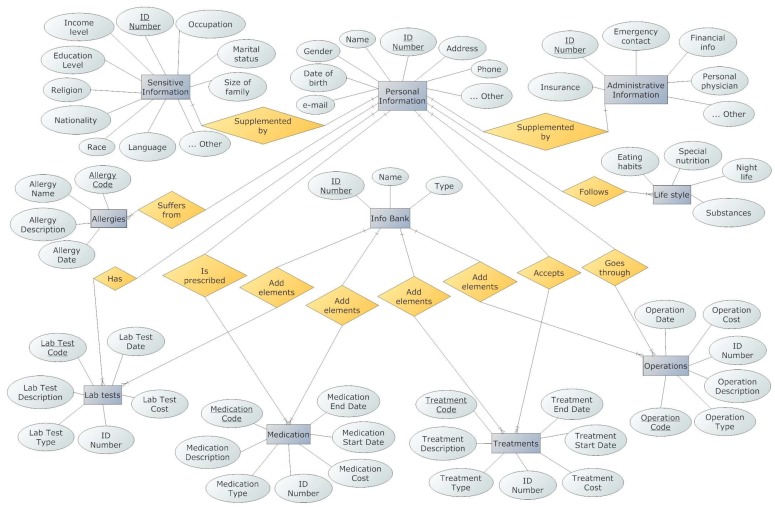
An Electronic Medical Record (EMR) is a patient's database record that can be transmitted securely. There are a diversity of EMR systems for different medical units to choose from. The structure and value of these systems is the focus of this qualitative study, from a medical professional's standpoint, as well as its economic value and whether it should be shared between health organizations. The study took place in the natural setting of the medical units' environments. A purposive sample of 40 professionals in Greece and Oman, was interviewed. The study suggests that: (1) The demographics of the EMR should be divided in categories, not all of them accessible and/or visible by all; (2) The EMR system should follow an open architecture so that more categories and subcategories can be added as needed and following a possible business plan (ERD is suggested); (3) The EMR should be implemented gradually bearing in mind both medical and financial concerns; (4) Sharing should be a patient's decision as the owner of the record. Reaching a certain level of maturity of its implementation and utilization, it is useful to seek the professionals' assessment on the structure and value of such a system.
电子病历 (EMR) 是可以安全传输的患者数据库记录。有多种 EMR 系统可供不同的医疗单位选择。从医疗专业人员的角度来看,这些系统的结构和价值,以及其经济价值和是否应该在医疗机构之间共享,是本定性研究的重点。该研究在医疗单位环境的自然环境中进行。在希腊和阿曼,对 40 名专业人员进行了目的性抽样采访。研究表明:(1) EMR 的人口统计学数据应分为类别,并非所有类别都可供所有人访问和/或可见;(2) EMR 系统应遵循开放架构,以便根据可能的业务计划(建议使用 ERD)按需添加更多类别和子类别;(3) 应考虑到医疗和财务方面的考虑,逐步实施 EMR;(4) 共享应该是患者作为记录所有者的决定。在实施和利用达到一定成熟度后,寻求专业人员对该系统的结构和价值的评估是有用的。