West Virginia University Cancer Institute, Mary Babb Randolph Cancer Center, West Virginia University, Morgantown, WV 26506-9300, United States.
Case Comprehensive Cancer Center, Case Western Reserve University, 10900 Euclid Ave., Cleveland, OH 44106, United States.
EBioMedicine. 2018 Jun;32:102-110. doi: 10.1016/j.ebiom.2018.05.025. Epub 2018 Jun 1.
This study aims to develop a multi-gene assay predictive of the clinical benefits of chemotherapy in non-small cell lung cancer (NSCLC) patients, and substantiate their protein expression as potential therapeutic targets.
The mRNA expression of 160 genes identified from microarray was analyzed in qRT-PCR assays of independent 337 snap-frozen NSCLC tumors to develop a predictive signature. A clinical trial JBR.10 was included in the validation. Hazard ratio was used to select genes, and decision-trees were used to construct the predictive model. Protein expression was quantified with AQUA in 500 FFPE NSCLC samples.
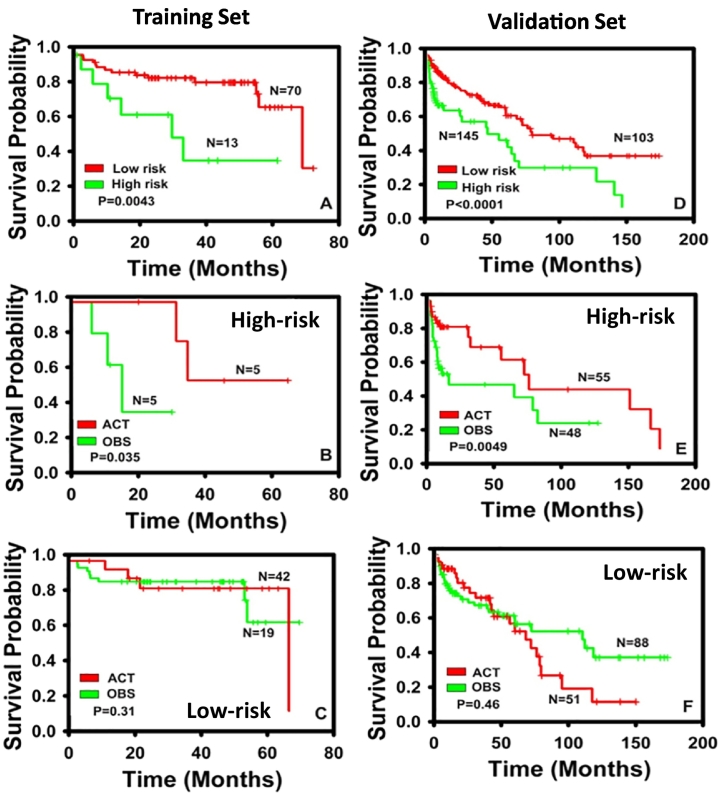
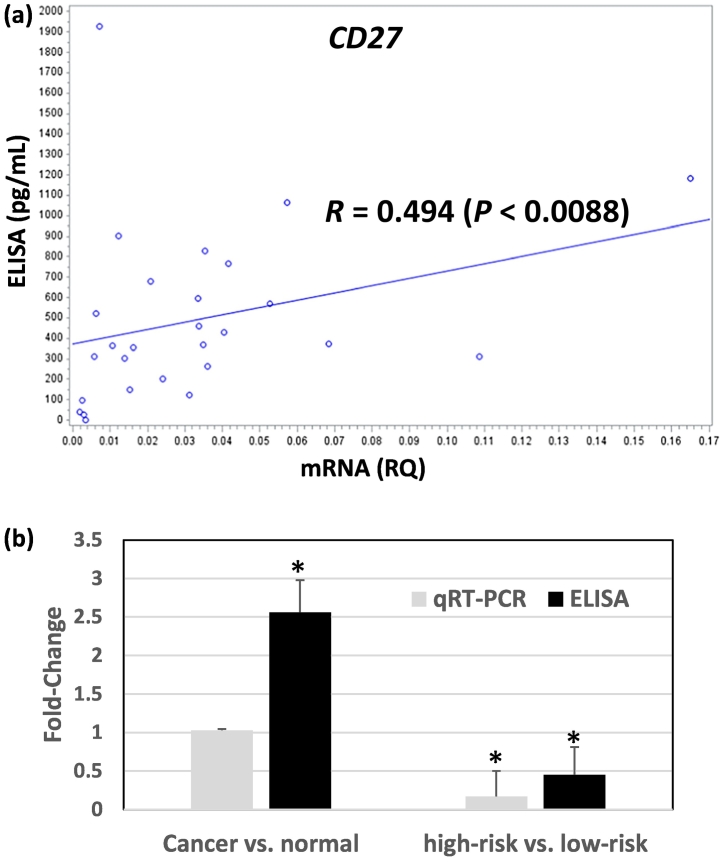
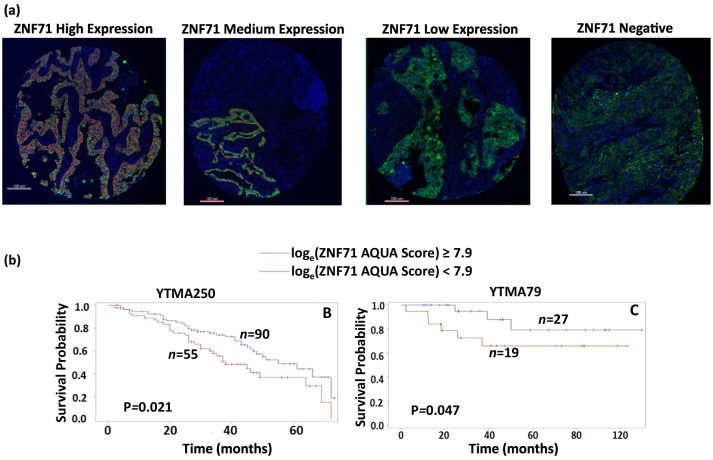
A 7-gene signature was identified from training cohort (n = 83) with accurate patient stratification (P = 0.0043) and was validated in independent patient cohorts (n = 248, P < 0.0001) in Kaplan-Meier analyses. In the predicted benefit group, there was a significantly better disease-specific survival in patients receiving adjuvant chemotherapy in both training (P = 0.035) and validation (P = 0.0049) sets. In the predicted non-benefit group, there was no survival benefit in patients receiving chemotherapy in either set. The protein expression of ZNF71 quantified with AQUA scores produced robust patient stratification in separate training (P = 0.021) and validation (P = 0.047) NSCLC cohorts. The protein expression of CD27 quantified with ELISA had a strong correlation with its mRNA expression in NSCLC tumors (Spearman coefficient = 0.494, P < 0.0088). Multiple signature genes had concordant DNA copy number variation, mRNA and protein expression in NSCLC progression.
This study presents a predictive multi-gene assay and prognostic protein biomarkers clinically applicable for improving NSCLC treatment, with important implications in lung cancer chemotherapy and immunotherapy.
本研究旨在开发一种多基因检测方法,以预测非小细胞肺癌(NSCLC)患者化疗的临床获益,并证实其蛋白表达作为潜在的治疗靶点。
对 337 例冷冻 NSCLC 肿瘤的独立 qRT-PCR 检测分析了 160 个基因的 mRNA 表达,以开发预测性标记物。一项名为 JBR.10 的临床试验也被纳入验证。使用风险比选择基因,使用决策树构建预测模型。使用 AQUA 在 500 例 NSCLC 样本中定量检测蛋白表达。
从训练队列(n=83)中鉴定出一个 7 基因标记物,可准确分层患者(P=0.0043),并在独立的患者队列(n=248,P<0.0001)的 Kaplan-Meier 分析中得到验证。在预测获益组中,在接受辅助化疗的患者中,无论是在训练组(P=0.035)还是验证组(P=0.0049),均有显著更好的疾病特异性生存。在预测非获益组中,接受化疗的患者在两组中均无生存获益。使用 AQUA 评分定量检测 ZNF71 的蛋白表达,在独立的训练组(P=0.021)和验证组(P=0.047)的 NSCLC 队列中产生了稳健的患者分层。使用 ELISA 定量检测 CD27 的蛋白表达与 NSCLC 肿瘤中其 mRNA 表达具有很强的相关性(Spearman 系数=0.494,P<0.0088)。多个标记基因在 NSCLC 进展过程中具有一致的 DNA 拷贝数变化、mRNA 和蛋白表达。
本研究提出了一种具有预测性的多基因检测方法和预后蛋白生物标志物,可用于改善 NSCLC 治疗,对肺癌化疗和免疫治疗具有重要意义。