Wang Lei, Chen Zhiyuan, Liu Yang, Du Yang, Liu Xiuheng
Department of Urology, Renmin Hospital of Wuhan University, Wuhan, Hubei, P. R. China.
Drug Des Devel Ther. 2018 May 21;12:1293-1301. doi: 10.2147/DDDT.S164927. eCollection 2018.
Ozone has been used as a curative agent for a variety of different diseases for over 150 years. In our previous study, we found that ozone oxidative preconditioning could alleviate renal damage induced by ischemia and reperfusion injury (I/R). Although this method had obvious protective effects in the reduction of I/R, its clinical application remains limited because this treatment must be commenced prior to the ischemic period, which is not practical in the clinic.
In the present study, we investigated whether ozone oxidative postconditioning (OzoneOP) could attenuate renal I/R in vivo and in vitro, as well as the mechanisms underlying the effects of this treatment.
Sprague Dawley rats were subjected to right renal ischemia for 45 min and reperfusion for 24 h, or to sham operation with the left kidney removed, both with and without OzoneOP. In addition, normal rat kidney tubular epithelial cells (NRK-52E) were chosen to create a hypoxia-reoxygenation (H/R) model of 3 h hypoxia and 24 h reoxygenation processes, both with or without OzoneOP and mitogen-activated protein kinase (MAPK) inhibitors.
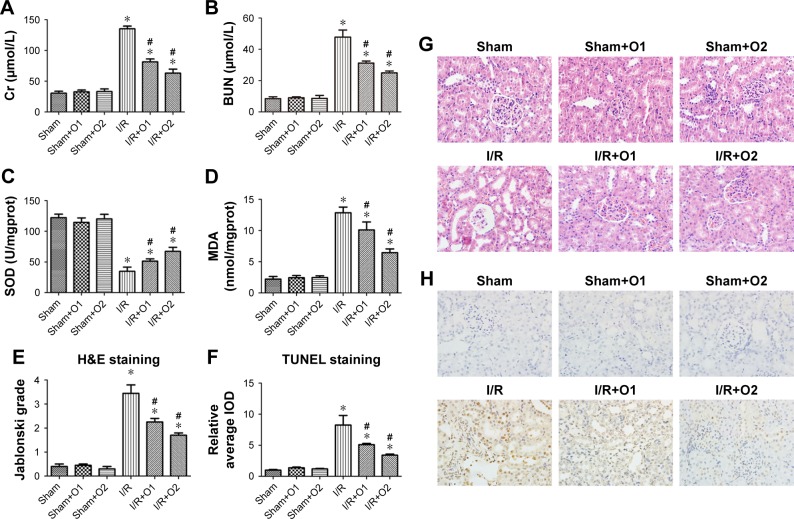
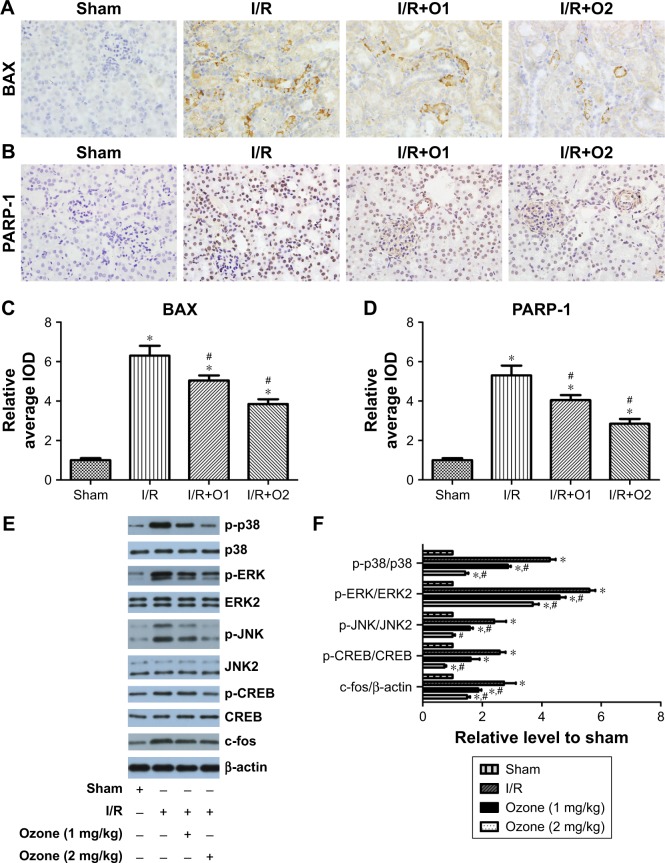
Our results showed that OzoneOP significantly reversed apoptosis and the abnormal superoxide dismutase and malondialdehyde levels induced by I/R or H/R. OzoneOP also inhibited activation of the MAPK pathways both in vivo and in vitro, which resulted in significant protection against apoptosis and oxidative stress.
Our current data provide evidence that OzoneOP might serve as a potential therapy for renal I/R.
150多年来,臭氧一直被用作治疗多种不同疾病的药物。在我们之前的研究中,我们发现臭氧氧化预处理可以减轻缺血再灌注损伤(I/R)诱导的肾损伤。尽管这种方法在减轻I/R方面有明显的保护作用,但其临床应用仍然有限,因为这种治疗必须在缺血期之前开始,这在临床上并不实用。
在本研究中,我们调查了臭氧氧化后处理(OzoneOP)是否能在体内和体外减轻肾I/R,以及这种治疗效果的潜在机制。
将Sprague Dawley大鼠的右肾进行45分钟缺血和24小时再灌注,或进行假手术并切除左肾,均分为有或无OzoneOP组。此外,选用正常大鼠肾小管上皮细胞(NRK-52E)建立3小时缺氧和24小时复氧过程的缺氧复氧(H/R)模型,同样分为有或无OzoneOP和丝裂原活化蛋白激酶(MAPK)抑制剂组。
我们的结果表明,OzoneOP显著逆转了I/R或H/R诱导的细胞凋亡以及超氧化物歧化酶和丙二醛水平的异常。OzoneOP还在体内和体外抑制了MAPK通路的激活,从而对细胞凋亡和氧化应激产生了显著的保护作用。
我们目前的数据提供了证据,表明OzoneOP可能是治疗肾I/R的一种潜在疗法。