Herbreteau Guillaume, Vallée Audrey, Knol Anne-Chantal, Théoleyre Sandrine, Quéreux Gaelle, Varey Emilie, Khammari Amir, Dréno Brigitte, Denis Marc G
Laboratoire de Biochimie et Plateforme de Génétique Moléculaire des Cancers, CHU Nantes, Nantes, France.
Centre de Recherche en Cancérologie et Immunologie, CRCINA, INSERM U1232, Nantes, France.
Oncotarget. 2018 May 18;9(38):25265-25276. doi: 10.18632/oncotarget.25404.
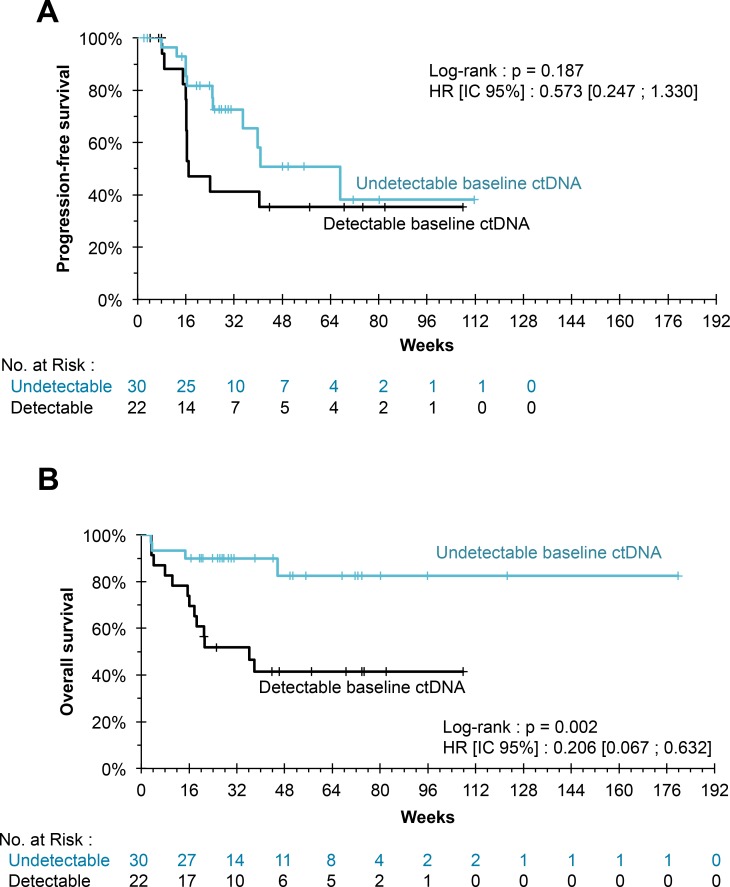
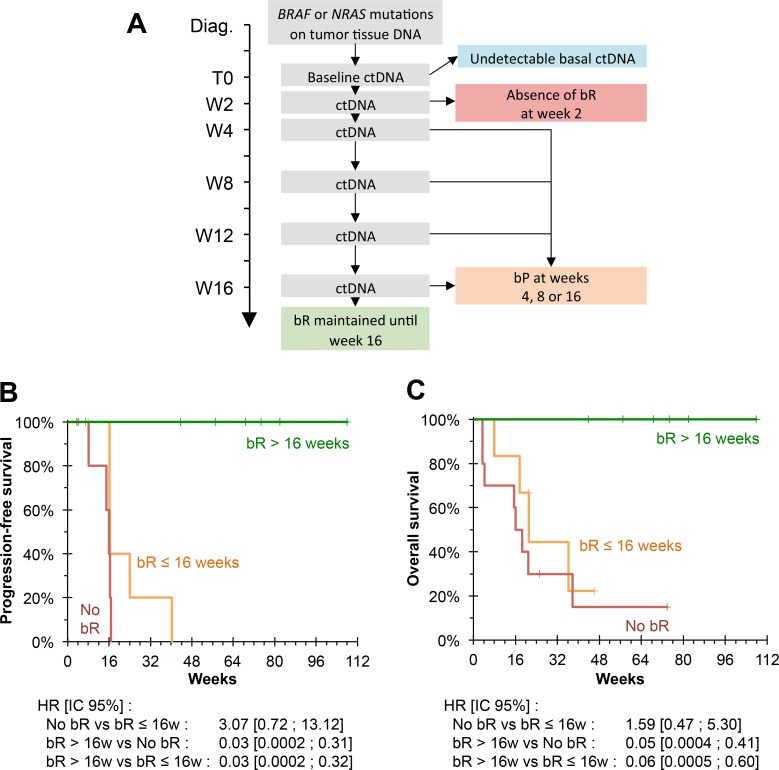
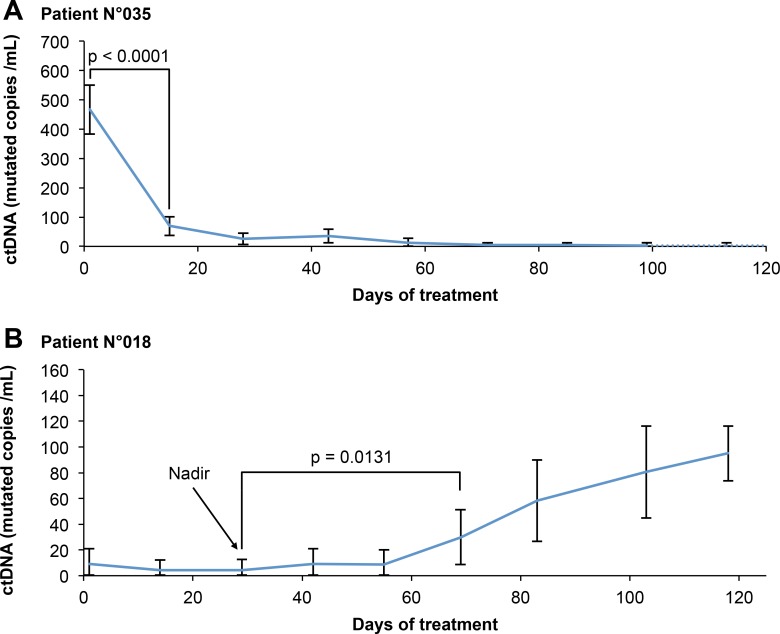
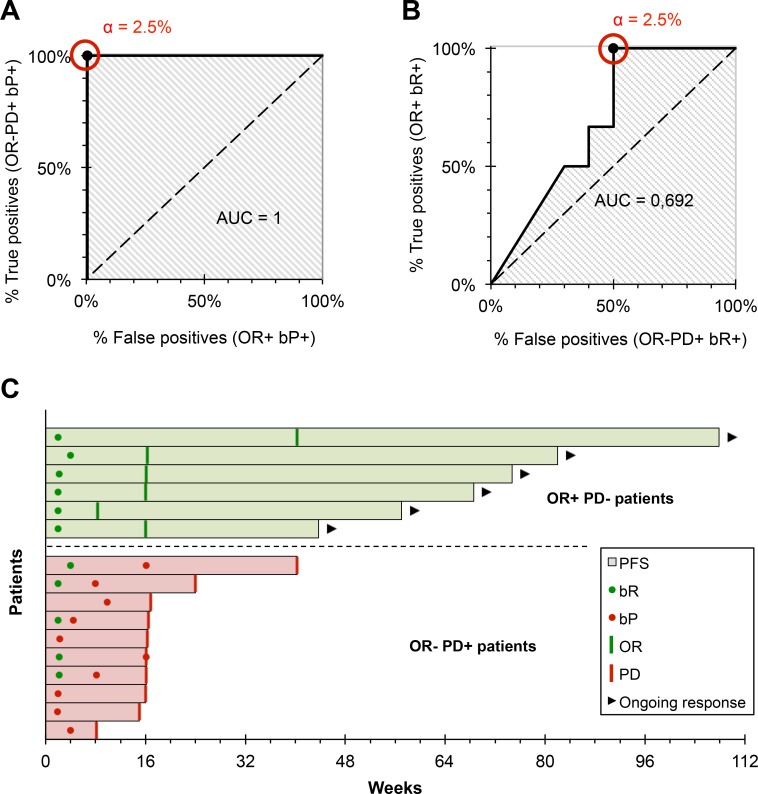
Immunotherapies have changed the medical management of metastatic melanoma. However, the early detection of patients who do not respond to these treatments is a key issue. We evaluated the quantitative monitoring of circulating tumor DNA (ctDNA) as an early predictor of response to anti-PD1. Patients treated with anti-PD1 for metastatic mutated melanoma were selected. The somatic alteration detected on the tumor tissue was quantified on plasma DNA by digital PCR (dPCR) at treatment initiation, after 2 and 4 weeks of treatment, and then every 4 weeks until progression. The absence of biological response (defined as a significant decrease in the amount of ctDNA relative to the baseline level) after 2 weeks of treatment was associated with a lack of clinical benefit under anti-PD1. In the presence of a biological response at week 2, detection of subsequent biological progression (significant increase in the amount of ctDNA relative to its nadir) was 100% predictive of progressive disease, on average 75 days prior to radiological detection. Patients with a persistent biological response beyond week 16 did not experience any progressive disease and exhibited sustained responses. In conclusion, we show that quantitative monitoring of ctDNA, using criteria accounting for dPCR measurement imprecision, allows the early and specific detection of patients who do not respond to anti-PD1 therapy.
免疫疗法已经改变了转移性黑色素瘤的医学管理方式。然而,早期发现对这些治疗无反应的患者是一个关键问题。我们评估了循环肿瘤DNA(ctDNA)的定量监测作为抗PD1治疗反应的早期预测指标。选取接受抗PD1治疗的转移性突变黑色素瘤患者。在治疗开始时、治疗2周和4周后,然后每4周直至疾病进展,通过数字PCR(dPCR)对肿瘤组织中检测到的体细胞改变在血浆DNA上进行定量。治疗2周后无生物学反应(定义为ctDNA量相对于基线水平显著降低)与抗PD1治疗缺乏临床获益相关。在第2周出现生物学反应的情况下,检测到随后的生物学进展(ctDNA量相对于其最低点显著增加)对疾病进展的预测准确率为100%,平均比影像学检测提前75天。在第16周后仍有持续生物学反应的患者未出现任何疾病进展,并表现出持续反应。总之,我们表明,使用考虑dPCR测量不精确性的标准对ctDNA进行定量监测,可以早期且特异性地检测出对抗PD1治疗无反应的患者。