Martínez Ángel Manu, Echavarren Javier, Alonso Inés, Rodríguez Nuria, Gómez Arrayás Ramón, Carretero Juan C
Universidad Autónoma de Madrid (UAM) , Cantoblanco 28049 , Madrid , Spain . Email:
Chem Sci. 2015 Oct 1;6(10):5802-5814. doi: 10.1039/c5sc01885d. Epub 2015 Jun 29.
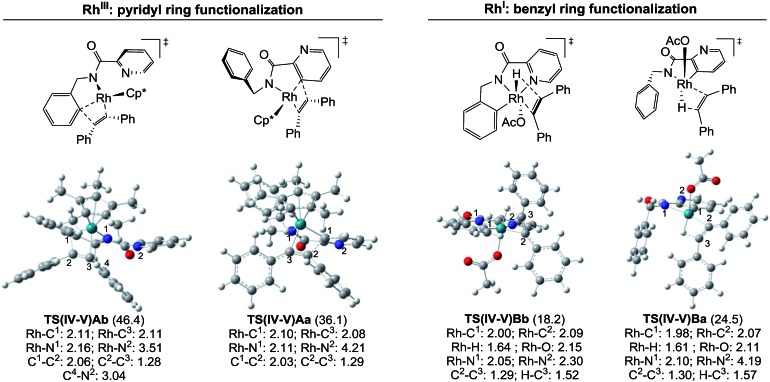
The ability to establish switchable site-selectivity through catalyst control in the direct functionalization of molecules that contain distinct C-H bonds remains a demanding challenge that would enable the construction of diverse scaffolds from the same starting materials. Herein we describe the realization of this goal, namely a divergent heteroaryl/aryl C-H functionalization of aromatic picolinamide derivatives, targeting two distinct C-H sites, either at the pyridine ring or at the arene unit, to afford isoquinoline or -olefinated benzylamine (or phenethylamine) derivatives. This complementary reactivity has been achieved on the basis of a Rh/Rh switch in the catalyst, resulting in different mechanistic outcomes. Notably, a series of experimental and DFT mechanistic studies revealed important insights about the mechanism of the reaction and reasons behind the divergent regiochemical outcome.
通过催化剂控制在含有不同C-H键的分子直接官能团化中建立可切换的位点选择性的能力,仍然是一项具有挑战性的任务,而这将能够从相同的起始原料构建多种骨架。在此,我们描述了这一目标的实现,即芳香族吡啶甲酰胺衍生物的发散性杂芳基/芳基C-H官能团化,其靶向两个不同的C-H位点,即吡啶环或芳烃单元上的位点,以得到异喹啉或烯基化苄胺(或苯乙胺)衍生物。这种互补反应性是基于催化剂中的Rh/Rh切换实现的,从而导致不同的机理结果。值得注意的是,一系列实验和DFT机理研究揭示了关于反应机理以及发散性区域化学结果背后原因的重要见解。