Centifanti Luna C M, Negen James
University of Liverpool, Liverpool, UK.
University of Durham, Durham, UK.
F1000Res. 2018 Apr 26;7:502. doi: 10.12688/f1000research.14623.1. eCollection 2018.
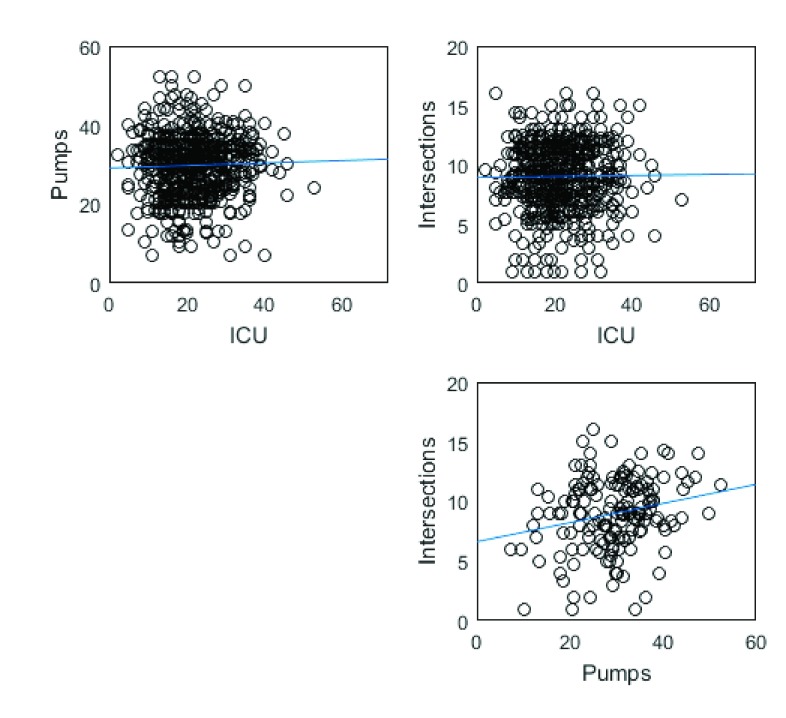
A hypothesized association between callous-unemotional (CU) traits and risk-taking may account for the link between CU traits and real-world risky behaviors, such as illegal behavior. Prior findings show that reward and punishment responsivity differs in relation to CU traits, but is not associated with general risk-taking. However this has only been examined previously with one task, only with a frequentist framework, and with limited interpretation. Here, we expand to another task and to Bayesian analyses. A total of 657 participants (52% female) completed the Inventory of Callous-Unemotional Traits, the Balloon Analogue Risk Task (essentially a gambling task), and the Stoplight driving task, which repeatedly presents participants with riskier or less risky choices to make while driving. We found strong evidence for the null model, in which there is no relation between the two risk-taking tasks and CU traits (R = 0.001; BF = 1/60.22). These results suggest that general risk-taking does not underlie the real-world risky behavior of people with CU traits. Alternative explanations include a different method of valuing certain outcomes.
冷酷无情(CU)特质与冒险行为之间的假设关联,可能解释了CU特质与现实世界中冒险行为(如违法行为)之间的联系。先前的研究结果表明,奖惩反应性因CU特质而异,但与一般冒险行为无关。然而,此前仅通过一项任务、仅在频率主义框架下进行了检验,且解释有限。在此,我们扩展到另一项任务并进行贝叶斯分析。共有657名参与者(52%为女性)完成了冷酷无情特质量表、气球模拟风险任务(本质上是一项赌博任务)以及红绿灯驾驶任务,该驾驶任务会反复向参与者呈现驾驶时风险更高或更低的选择。我们发现了支持零模型的有力证据,即在这两项冒险任务与CU特质之间不存在关联(R = 0.001;BF = 1/60.22)。这些结果表明,一般冒险行为并非CU特质者现实世界中冒险行为的基础。其他解释包括对某些结果进行评估的不同方法。