Tochigi Toru, Kosugi Chihiro, Shuto Kiyohiko, Mori Mikito, Hirano Atsushi, Koda Keiji
Department of Surgery Teikyo University Chiba Medical Center Ichihara Chiba Japan.
Ann Gastroenterol Surg. 2017 Sep 28;2(1):22-27. doi: 10.1002/ags3.12035. eCollection 2018 Jan.
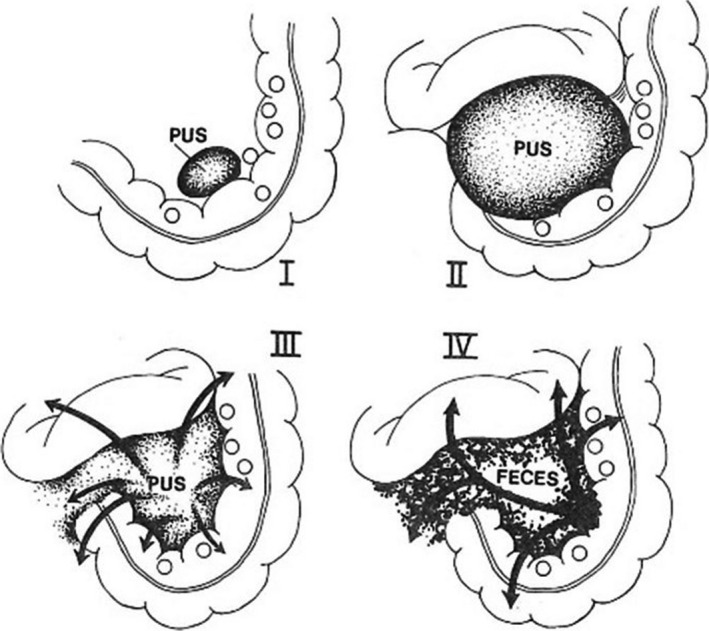
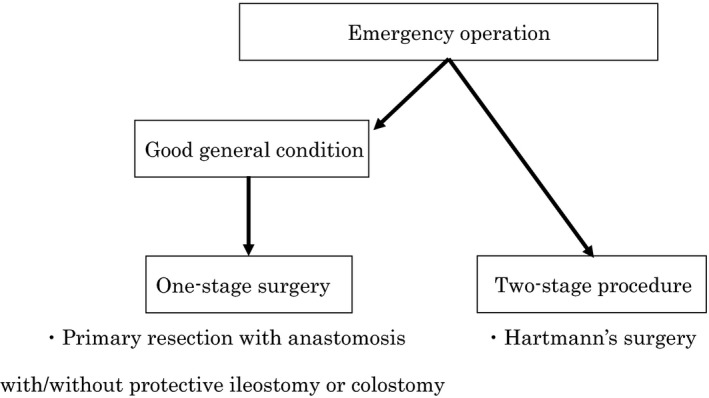
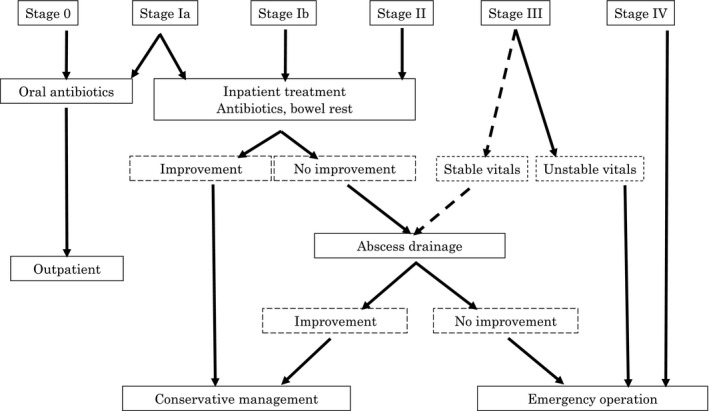
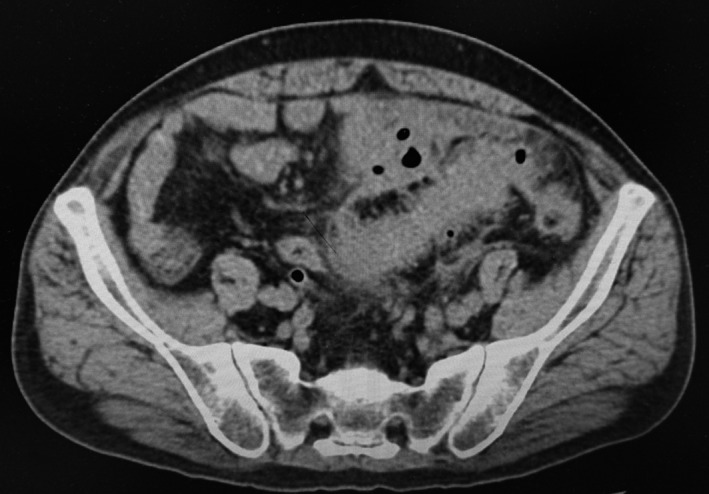
Diverticular disease of the colon occurs quite frequently in developed countries, and its prevalence has recently increased in Japan. The appearance of diverticulosis increases with age, although mostly remaining asymptomatic. Approximately 20% of cases require treatment. As the Western lifestyle and number of elderly people increase, the need for medical treatment also increases. Computed tomography (CT) is the gold standard for diagnosing diverticulitis. Complicated diverticulitis is classified by the size and range of abscess formation and the severity of the peritonitis. Each case should be classified based on clinical and computed tomography (CT) findings and then treated appropriately. Most patients with uncomplicated diverticulitis (stages 0-Ia) can be treated conservatively. Diverticulitis with a localized abscess (stages Ib-II) is generally resolved with conservative treatment. If the abscess is larger or conservative treatment fails, however, percutaneous drainage or surgery should be considered. Operative treatment is considered standard therapy for severe diverticulitis with perforation and generalized peritonitis (stages III-IV). Colonic diverticulitis treated conservatively frequently recurs. Elective surgery after recovery should be considered carefully and decisions made on a case-by-case basis. Because cases of colonic diverticulitis will undoubtedly increase in Japan, it is likely that we will be confronted with increasing numbers of treatment decisions. We therefore need to have a systematic strategy for treating the various stages of colonic diverticulitis appropriately. We herein review the management of complicated diverticulitis.
结肠憩室病在发达国家颇为常见,近年来在日本其患病率也有所上升。憩室病的发病率随年龄增长而增加,不过大多情况下并无症状。约20%的病例需要治疗。随着西方生活方式的普及以及老年人数量的增加,医疗需求也随之上升。计算机断层扫描(CT)是诊断憩室炎的金标准。复杂憩室炎根据脓肿形成的大小和范围以及腹膜炎的严重程度进行分类。每个病例都应根据临床和计算机断层扫描(CT)结果进行分类,然后进行适当治疗。大多数非复杂性憩室炎患者(0 - Ia期)可采用保守治疗。局限性脓肿的憩室炎(Ib - II期)通常通过保守治疗得以缓解。然而,如果脓肿较大或保守治疗失败,则应考虑经皮引流或手术治疗。手术治疗被视为伴有穿孔和弥漫性腹膜炎的严重憩室炎(III - IV期)的标准疗法。经保守治疗的结肠憩室炎经常复发。恢复后应谨慎考虑择期手术,并根据具体情况做出决策。由于日本结肠憩室炎病例无疑会增加,我们很可能会面临越来越多的治疗决策。因此,我们需要制定一个系统的策略,以妥善治疗结肠憩室炎的各个阶段。我们在此回顾复杂憩室炎的治疗方法。