Cognitive Neurobiology and Helmholtz Institute, Department of Psychology, Utrecht University, Utrecht, The Netherlands.
Department of Zoology and St. Catharine's College, University of Cambridge, Cambridge, United Kingdom.
PLoS Biol. 2018 Jun 4;16(6):e2005157. doi: 10.1371/journal.pbio.2005157. eCollection 2018 Jun.
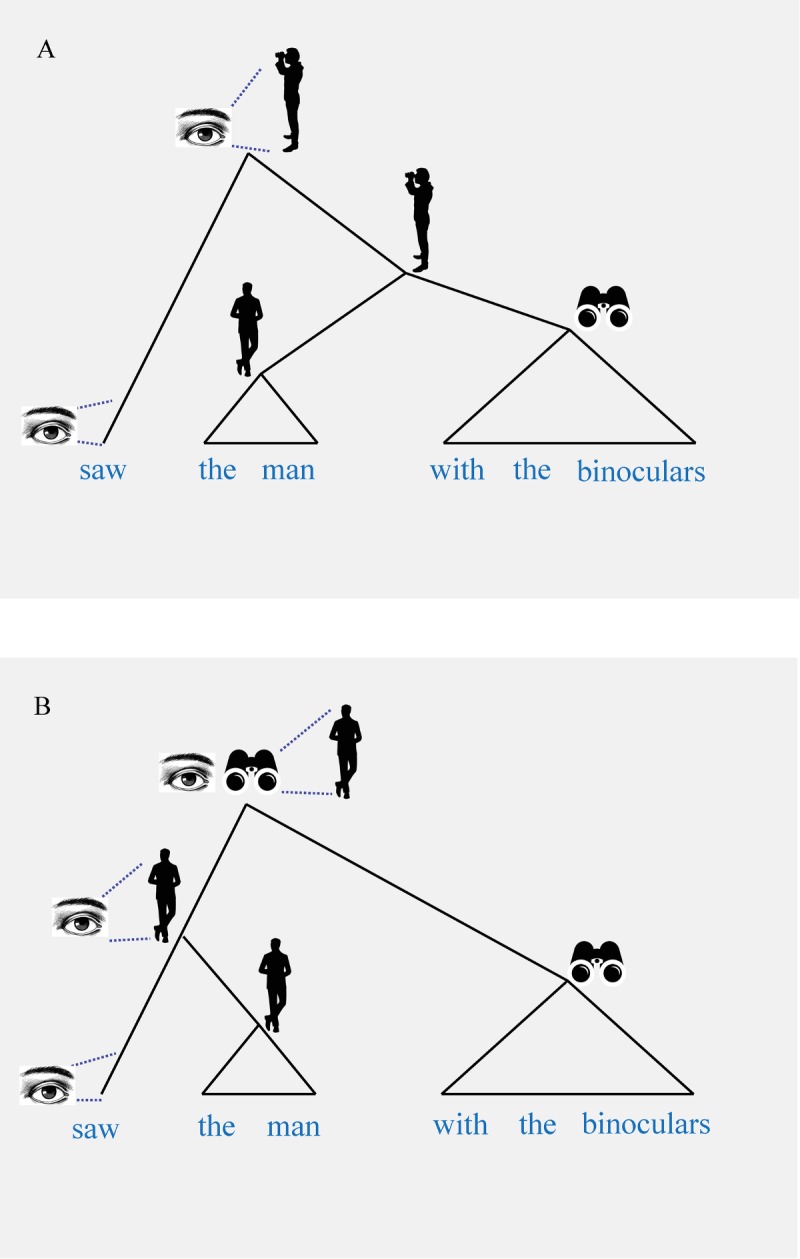
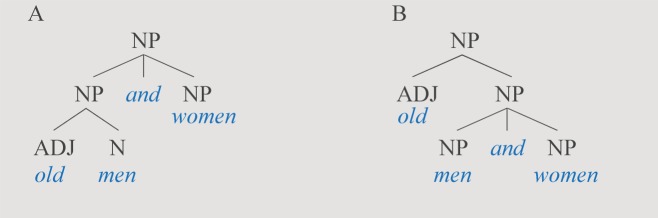
The faculty of language is thought to be uniquely human. Recently, it has been claimed that songbirds are able to associate meaning with sound, comparable to the way that humans do. In human language, the meaning of expressions (semantics) is dependent on a mind-internal hierarchical structure (syntax). Meaning is associated with structure through the principle of compositionality, whereby the meaning of a complex expression is a function of the meaning of its constituent parts and the mode of composition. We argue that while recent experimental findings on songbird call sequences offer exciting novel insights into animal communication, despite claims to the contrary, they are quite unlike what we find in human language. There are indeed remarkable behavioral and neural parallels in auditory-vocal imitation learning between songbirds and human infants that are absent in our closest evolutionary relatives, the great apes. But so far, there is no convincing evidence of syntax-determined meaning in nonhuman animals.
语言能力被认为是人类所独有的。最近有人声称,鸣禽能够将意义与声音联系起来,这与人类的方式类似。在人类语言中,表达式的含义(语义)取决于内部的分层结构(句法)。意义通过组合原则与结构相关联,即复杂表达式的意义是其组成部分的意义和组合方式的函数。我们认为,尽管最近关于鸣禽鸣叫序列的实验结果为动物交流提供了令人兴奋的新见解,但与相反的说法相反,它们与我们在人类语言中发现的完全不同。在听觉-发声模仿学习方面,鸣禽和人类婴儿之间确实存在显著的行为和神经相似之处,而这些在我们最亲近的进化亲属——类人猿中却没有。但到目前为止,还没有令人信服的证据表明非人类动物的意义是由语法决定的。