FIDMAG Germanes Hospitalàries Research Foundation, Avda. Jordà 8, 08035, Barcelona, Spain; Fundació ACE. Institut Català de Neurociències Aplicades, Marqués de Sentmenat 57, 08029, Barcelona, Spain.
Barcelonaβeta Brain Research Center, Pasqual Maragall Foundation. Barcelona, Carrer de Wellington 30, 08005, Barcelona, Spain; CIBER en Bioingenieria, Biomateriales y Nanomedicina (CIBER-BBN), Spain.
Neuroimage. 2018 Sep;178:753-768. doi: 10.1016/j.neuroimage.2018.05.065. Epub 2018 Jun 2.
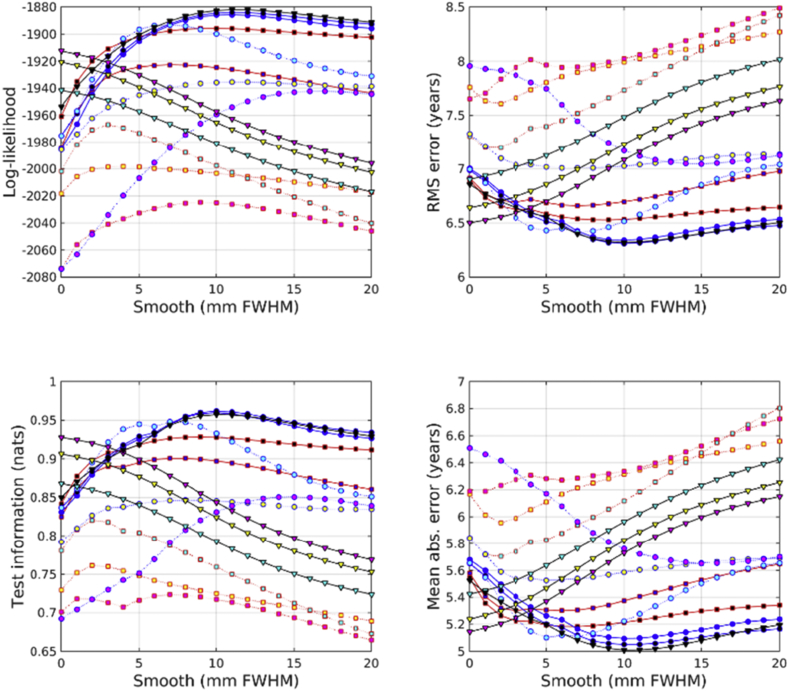
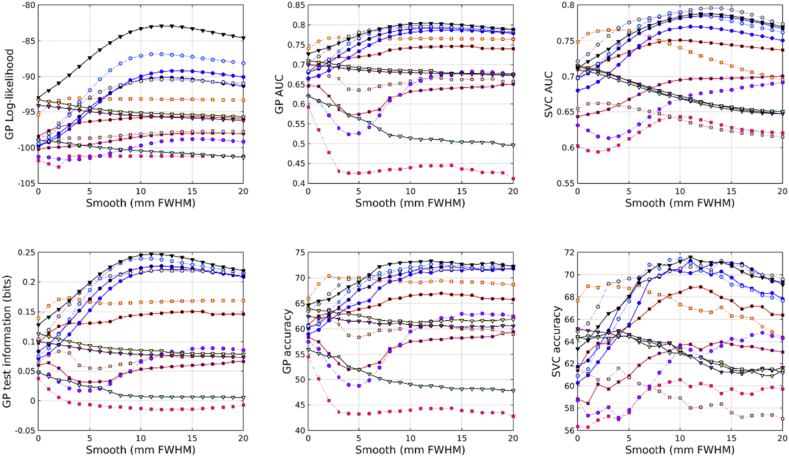
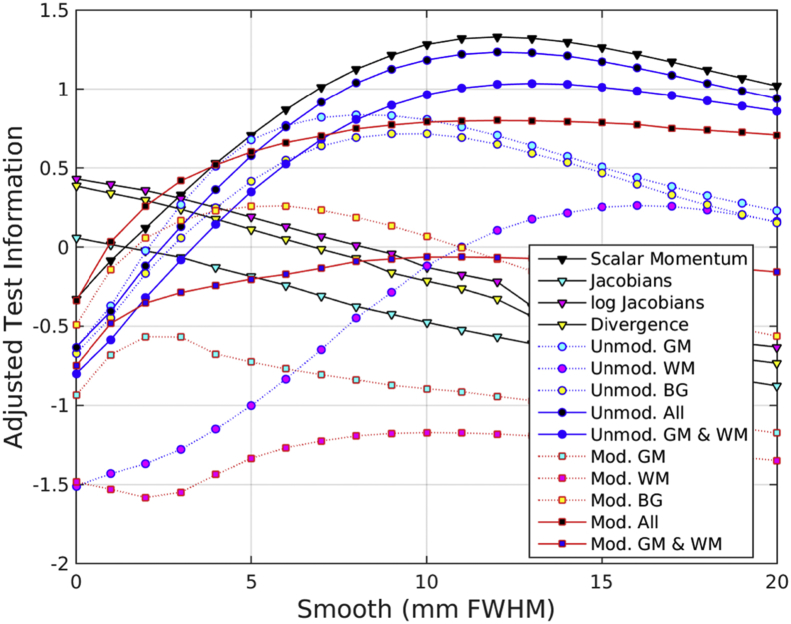
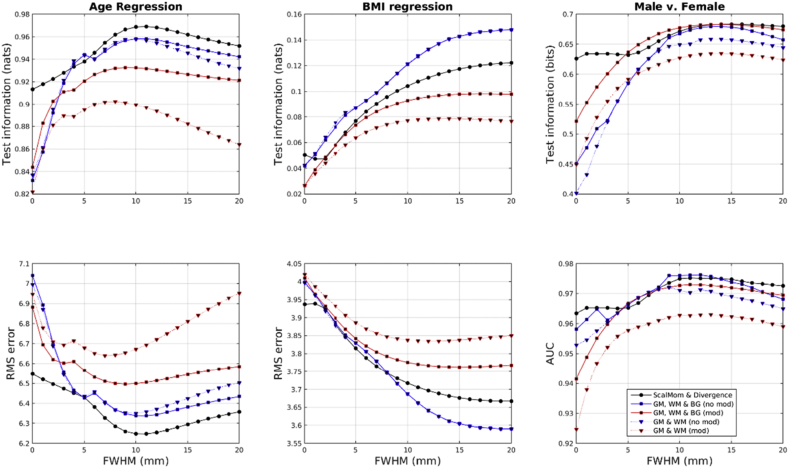
There is a widespread interest in applying pattern recognition methods to anatomical neuroimaging data, but so far, there has been relatively little investigation into how best to derive image features in order to make the most accurate predictions. In this work, a Gaussian Process machine learning approach was used for predicting age, gender and body mass index (BMI) of subjects in the IXI dataset, as well as age, gender and diagnostic status using the ABIDE and COBRE datasets. MRI data were segmented and aligned using SPM12, and a variety of feature representations were derived from this preprocessing. We compared classification and regression accuracy using the different sorts of features, and with various degrees of spatial smoothing. Results suggested that feature sets that did not ignore the implicit background tissue class, tended to result in better overall performance, whereas some of the most commonly used feature sets performed relatively poorly.
人们普遍希望将模式识别方法应用于解剖神经影像学数据,但到目前为止,对于如何最好地提取图像特征以进行最准确的预测,相关研究还相对较少。在这项工作中,我们使用高斯过程机器学习方法来预测 IXI 数据集的被试的年龄、性别和体重指数(BMI),以及使用 ABIDE 和 COBRE 数据集预测年龄、性别和诊断状态。使用 SPM12 对 MRI 数据进行分割和对齐,并从预处理中提取各种特征表示。我们比较了不同特征类型以及不同程度的空间平滑的分类和回归准确性。结果表明,不忽略隐含背景组织类的特征集往往会产生更好的整体性能,而一些最常用的特征集的性能相对较差。