Department of Science and Technology for Agriculture, Forestry, Nature and Energy (DAFNE), University of Tuscia, Viterbo, Italy.
Department of Ecological and Biological Sciences (DEB), University of Tuscia, Viterbo, Italy.
Cell Death Dis. 2018 Apr 22;9(6):671. doi: 10.1038/s41419-018-0587-9.
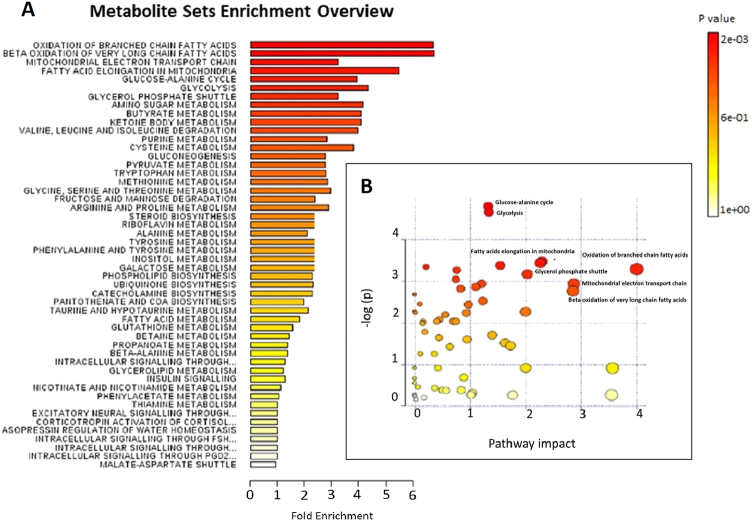
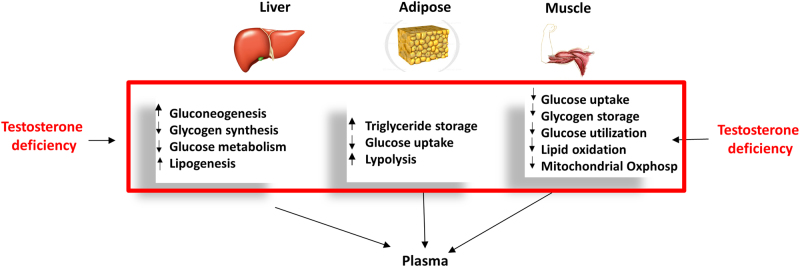
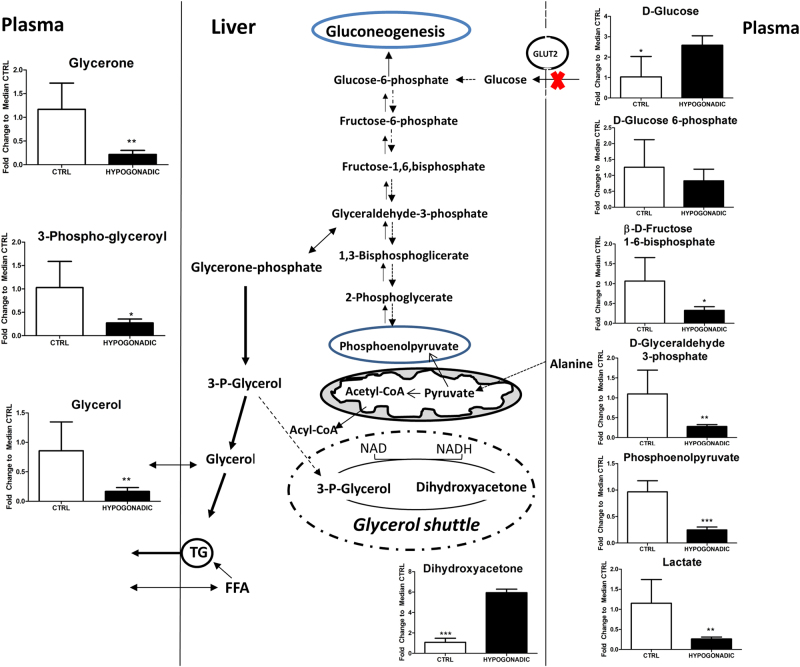
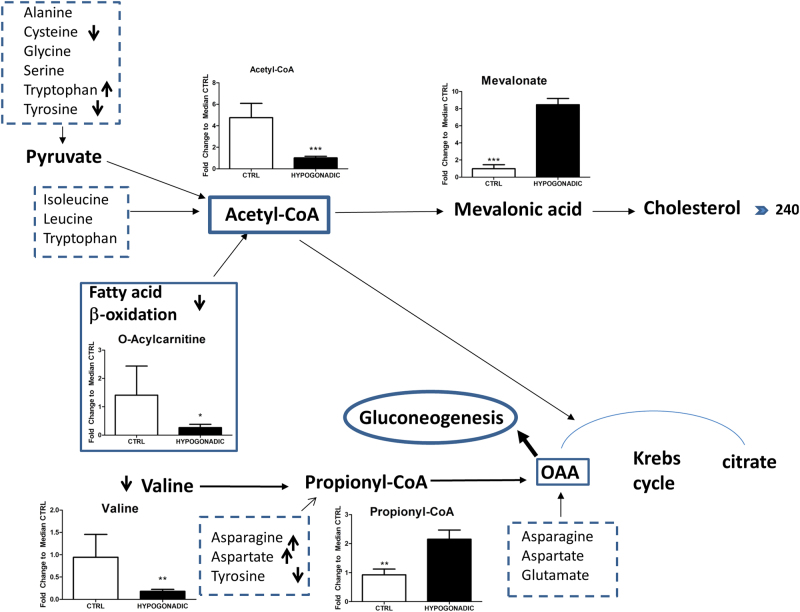
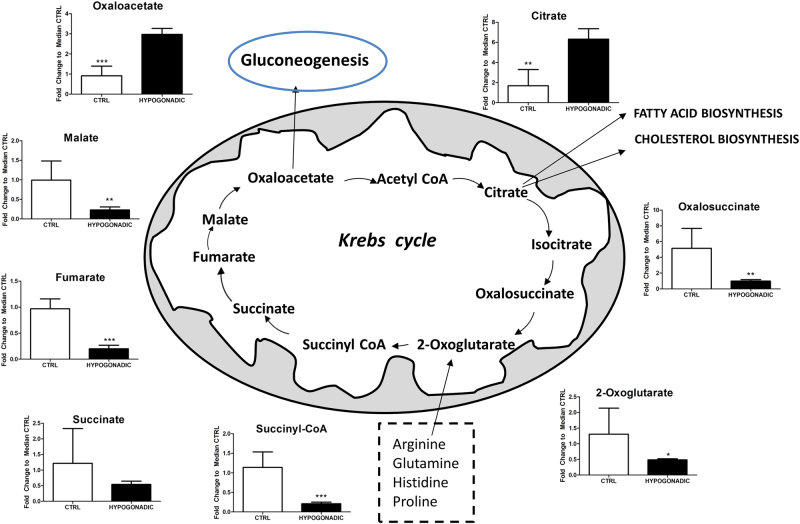
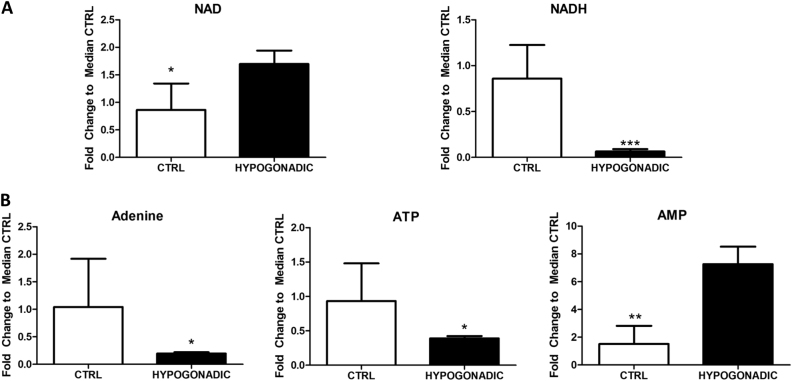
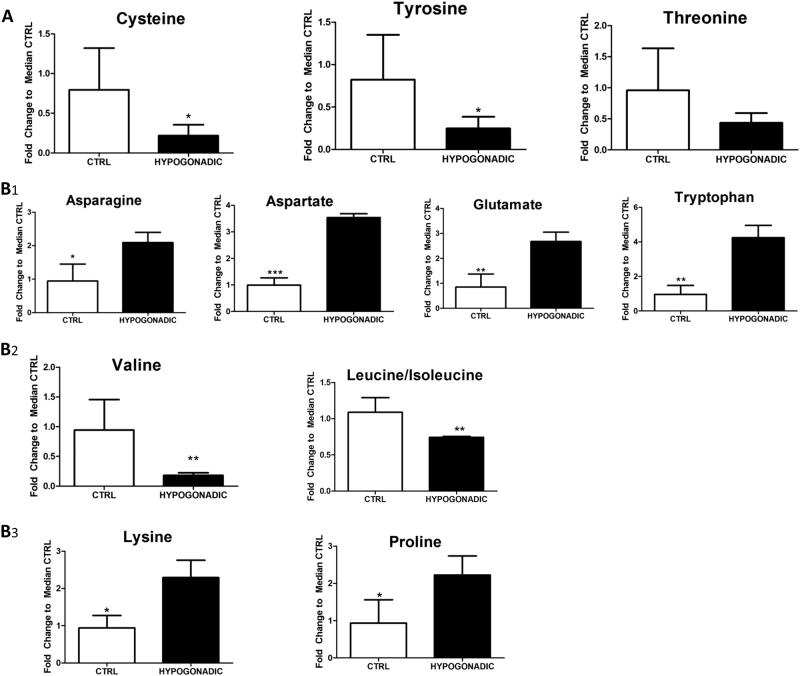
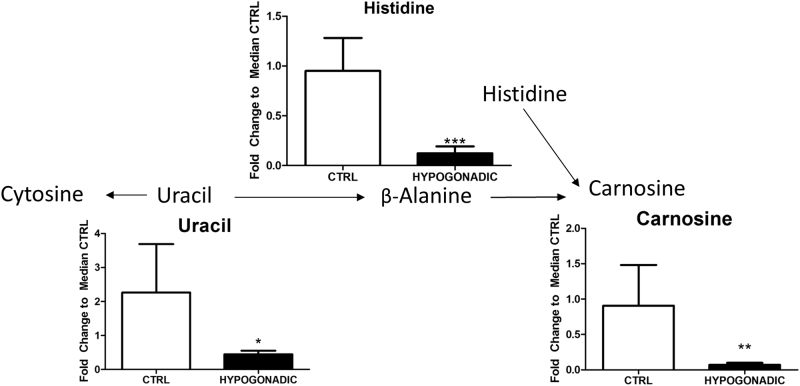
Male hypogonadism associated with insulin resistance (IR) very often leads to metabolic syndrome, at variance with hypogonadism in its first stadium of insulin sensitivity (IS). A plasma metabolomic investigation of these patients can provide useful information in comparison with the values of IS patients. To this aim plasma from insulin-resistant males with hypogonadism were analysed by using ultra high-performance liquid chromatography (UHPLC) and high-resolution mass spectrometry (HRMS). Thus, metabolites were compared to the controls through multivariate statistical analysis and grouped by metabolic pathways. Metabolite database searches and pathway analyses identified imbalances in 18-20 metabolic pathways. Glucose metabolism (e.g., glycolysis and the Krebs cycle) is fuelled by amino acids degradation, in particular of branched amino acids, in individuals with lean body mass. Gluconeogenesis is strongly activated. Some crucial pathways such as glycerol are skewed. Mitochondrial electron transport is affected with a reduction in ATP production. Beta-oxidation of short and medium chain fatty acids did not represent an energy source in hypogonadism, at variance with long and branched fatty acids, justifying the increase in fat mass. Carnosine and β-alanine are strongly reduced resulting in increased fatigue and mental confusion. A comparison of IR with IS male hypogonadism will contribute to a better understanding of how these two hormones work in synergy or antagonise each other in humans. It could also help to select patients who will respond to hormone treatment, and provide accurate biomarkers to measure the response to treatment eventually leading to better strategies in preventing systemic complications in patients not fit for hormone replacement therapy.
男性性腺功能减退症与胰岛素抵抗(IR)密切相关,常导致代谢综合征,与胰岛素敏感性(IS)早期阶段的性腺功能减退症不同。对这些患者进行血浆代谢组学研究可以与 IS 患者的数值进行比较,提供有用的信息。为此,我们采用超高效液相色谱(UHPLC)和高分辨率质谱(HRMS)分析了胰岛素抵抗伴性腺功能减退症男性的血浆。通过多变量统计分析将代谢物与对照进行比较,并按代谢途径进行分组。代谢物数据库搜索和途径分析确定了 18-20 条代谢途径的失衡。葡萄糖代谢(例如糖酵解和克雷布斯循环)由氨基酸降解提供燃料,特别是支链氨基酸,在瘦体重个体中。糖异生被强烈激活。一些关键途径,如甘油,发生了偏斜。线粒体电子传递受到影响,导致 ATP 生成减少。短链和中链脂肪酸的β氧化不是性腺功能减退症的能量来源,而长链和支链脂肪酸则不然,这可以解释脂肪量的增加。肉毒碱和β-丙氨酸的大量减少导致疲劳和精神混乱增加。IR 与 IS 男性性腺功能减退症的比较将有助于更好地理解这两种激素在人类中如何协同作用或相互拮抗。它还可以帮助选择对激素治疗有反应的患者,并提供准确的生物标志物来衡量对治疗的反应,最终导致为不适合激素替代疗法的患者预防全身并发症的更好策略。