O'Connell Thomas M
LipoScience Inc., 2500 Sumner Blvd, Raleigh, NC 27616, USA.
Metabolites. 2013 Oct 14;3(4):931-45. doi: 10.3390/metabo3040931.
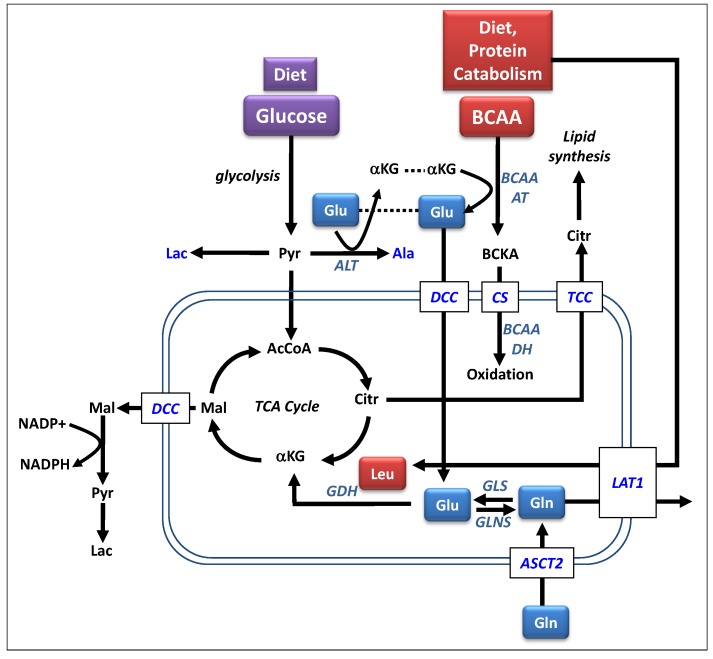
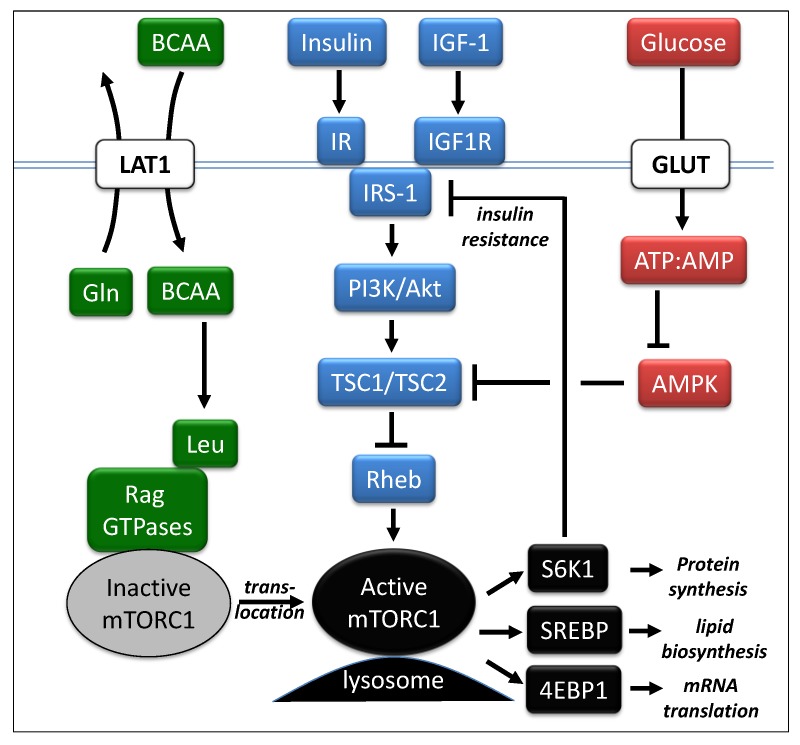
The obesity and diabetes epidemics are continuing to spread across the globe. There is increasing evidence that diabetes leads to a significantly higher risk for certain types of cancer. Both diabetes and cancer are characterized by severe metabolic perturbations and the branched chain amino acids (BCAAs) appear to play a significant role in both of these diseases. These essential amino acids participate in a wide variety of metabolic pathways, but it is now recognized that they are also critical regulators of a number of cell signaling pathways. An elevation in branched chain amino acids has recently been shown to be significantly correlated with insulin resistance and the future development of diabetes. In cancer, the normal demands for BCAAs are complicated by the conflicting needs of the tumor and the host. The severe muscle wasting syndrome experience by many cancer patients, known as cachexia, has motivated the use of BCAA supplementation. The desired improvement in muscle mass must be balanced by the need to avoid providing materials for tumor proliferation. A better understanding of the complex functions of BCAAs could lead to their use as biomarkers of the progression of certain cancers in diabetic patients.
肥胖症和糖尿病正在全球范围内持续蔓延。越来越多的证据表明,糖尿病会显著增加患某些类型癌症的风险。糖尿病和癌症都具有严重的代谢紊乱特征,而支链氨基酸(BCAAs)似乎在这两种疾病中都起着重要作用。这些必需氨基酸参与多种代谢途径,但现在人们认识到它们也是许多细胞信号通路的关键调节因子。最近研究表明,支链氨基酸水平升高与胰岛素抵抗以及糖尿病的未来发展显著相关。在癌症中,肿瘤和宿主的需求相互冲突,使得对支链氨基酸的正常需求变得复杂。许多癌症患者经历的严重肌肉萎缩综合征,即恶病质,促使人们使用支链氨基酸补充剂。在增加肌肉质量方面的预期改善必须与避免为肿瘤增殖提供物质的需求相平衡。更好地理解支链氨基酸的复杂功能可能会使其用作糖尿病患者某些癌症进展的生物标志物。