Wan Jinpeng, Zhang Ping, Wang Ruling, Sun Liangliang, Wang Wenying, Zhou Huakun, Xu Jin
Key Laboratory of Tropical Plant Resources and Sustainable Use, Xishuangbanna Tropical Botanical Garden, Chinese Academy of Sciences, Mengla, China.
University of Chinese Academy of Sciences, Beijing, China.
Front Plant Sci. 2018 May 17;9:618. doi: 10.3389/fpls.2018.00618. eCollection 2018.
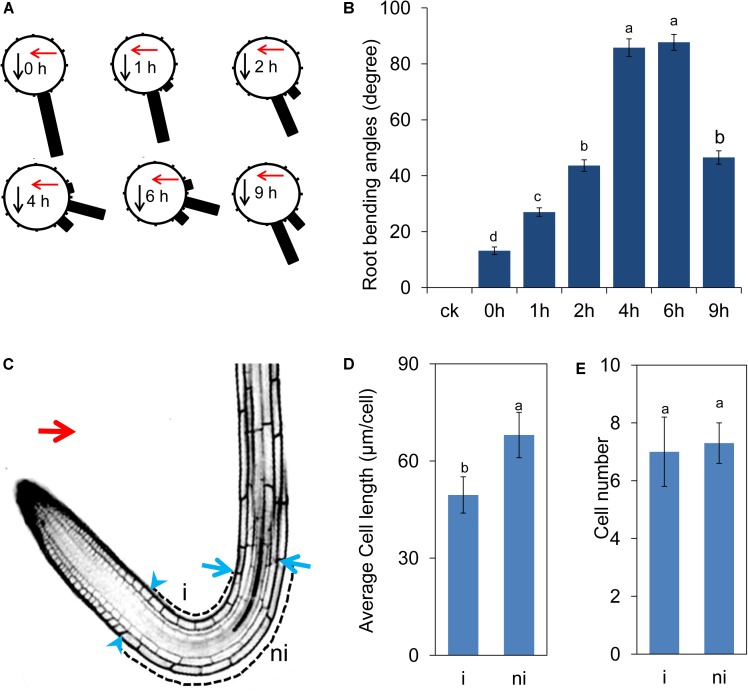
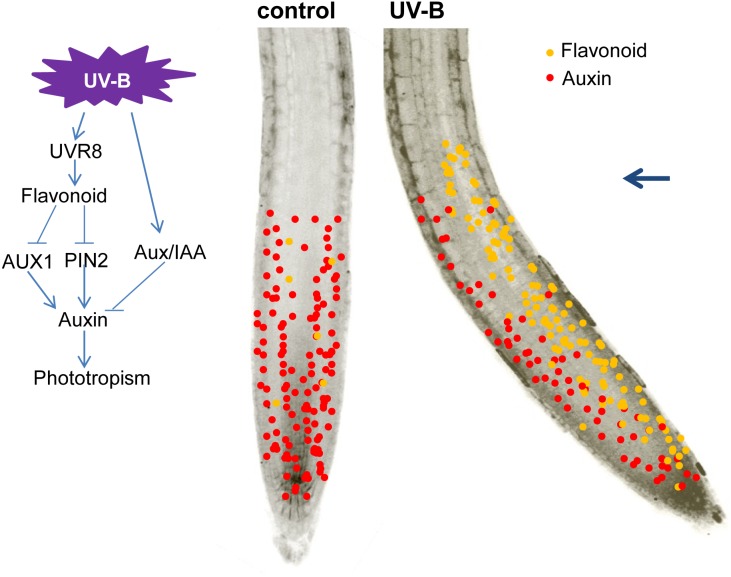
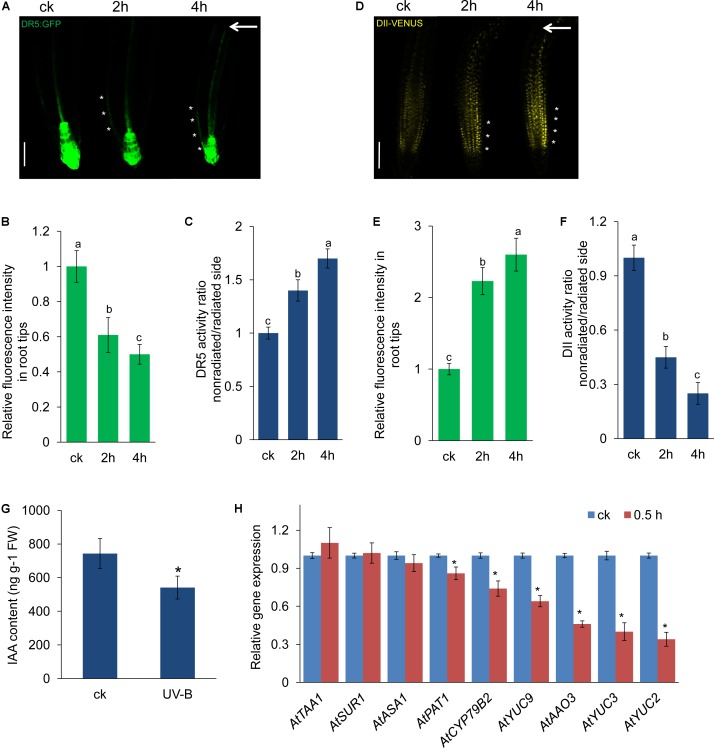
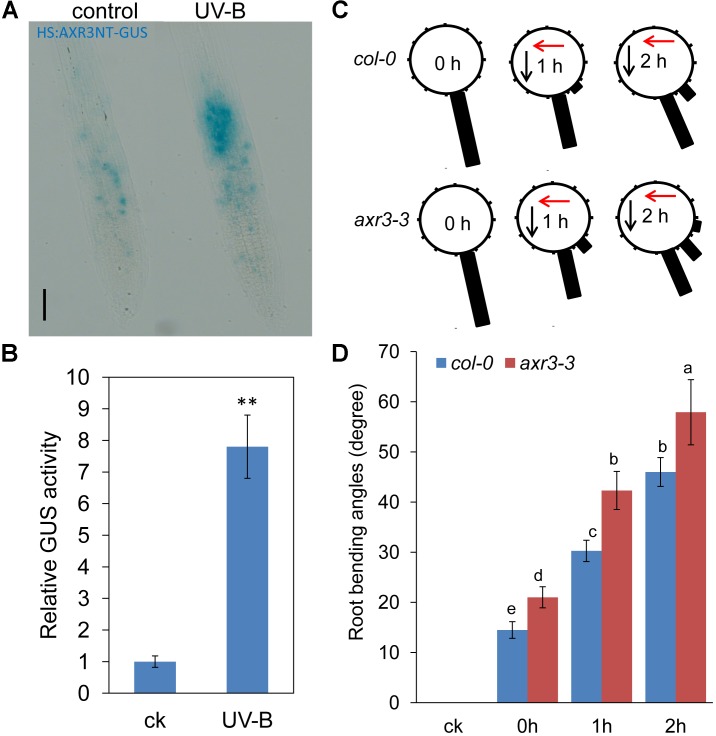
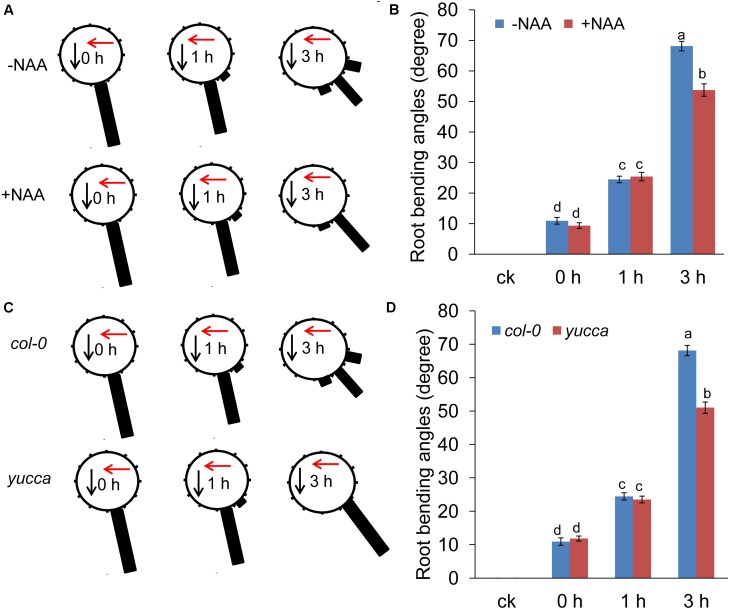
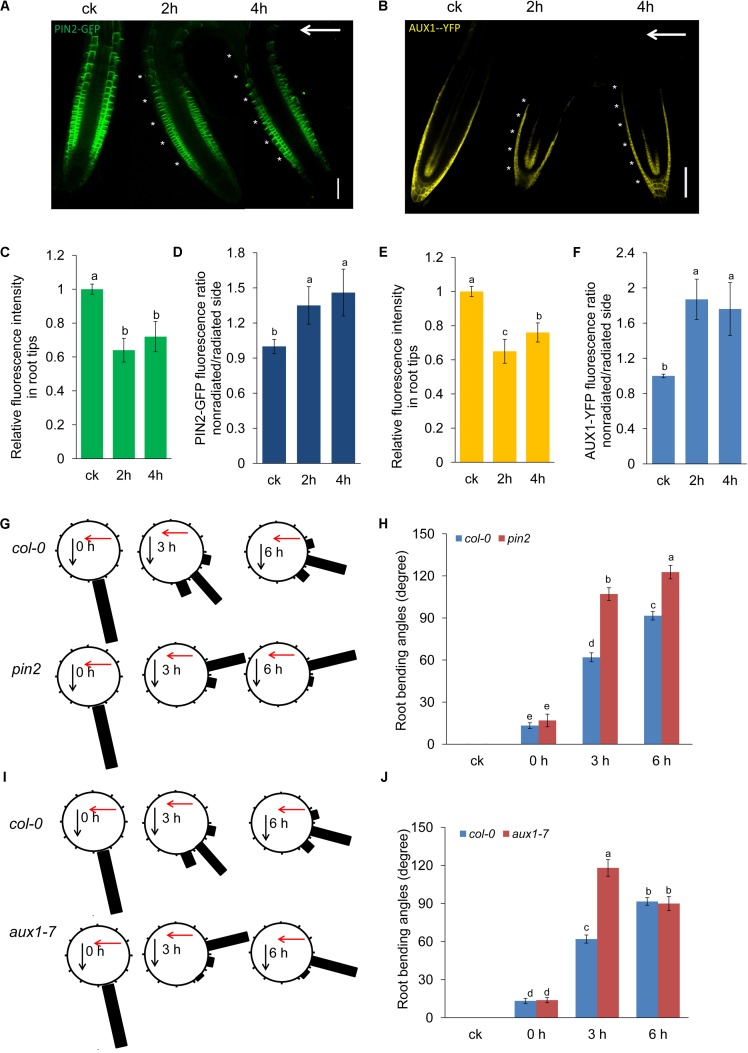
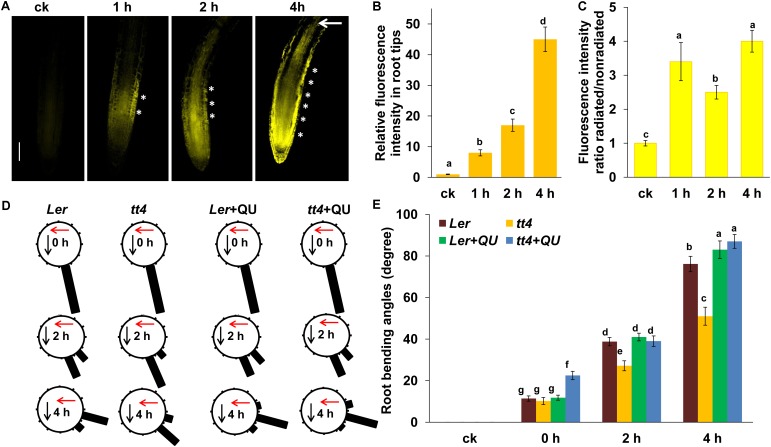
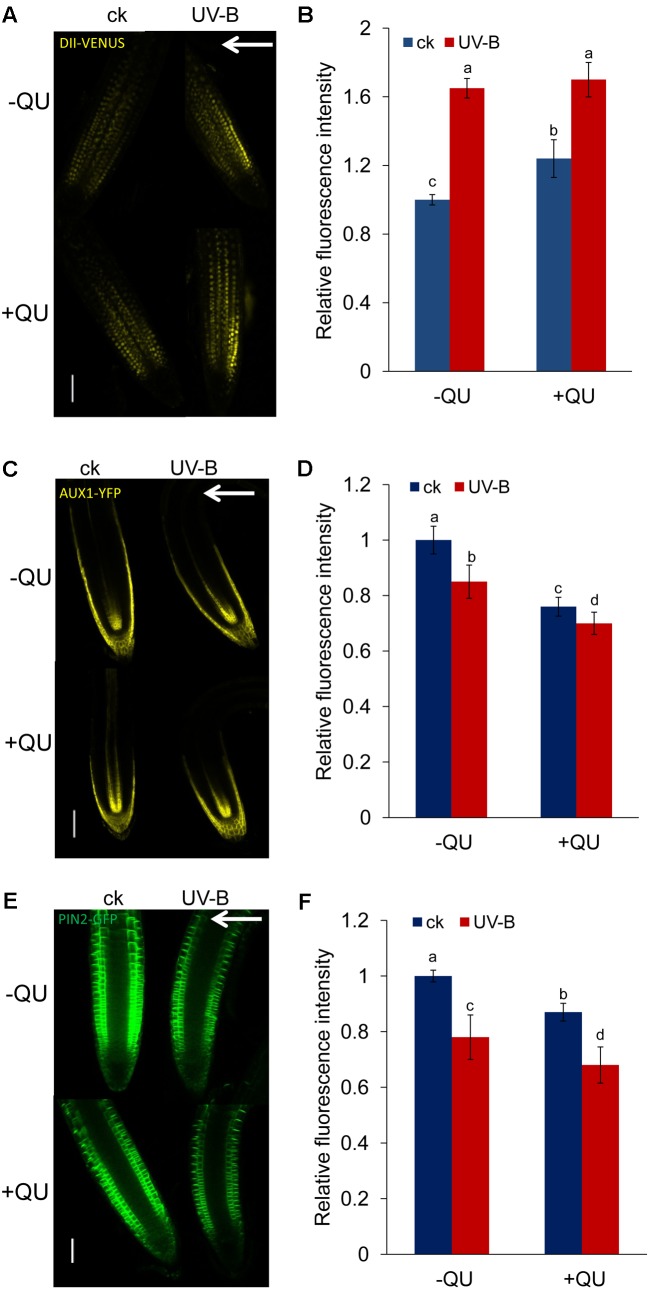
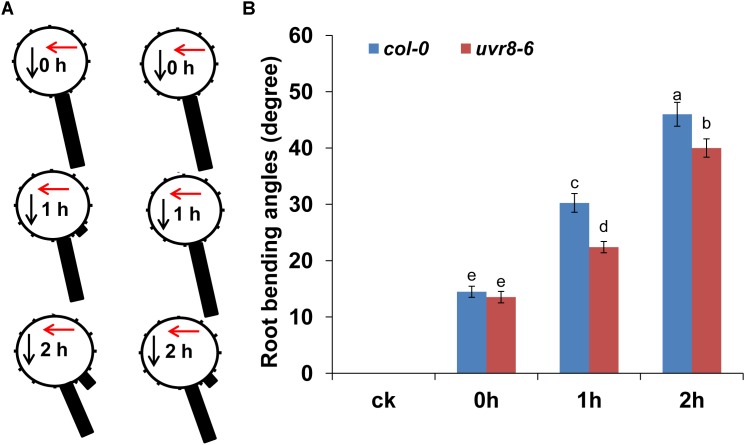
Ultraviolet (UV)-B radiation-induced root bending has been reported; however, the underlying mechanisms largely remain unclear. Here, we investigate whether and how auxin and flavonoids are involved in UV-B radiation-induced root bending in using physiological, pharmacological, and genetic approaches. UV-B radiation modulated the direction of root growth by decreasing IAA biosynthesis and affecting auxin distribution in the root tips, where reduced auxin accumulation and asymmetric auxin distribution were observed. UV-B radiation increased the distribution of auxin on the nonradiated side of the root tips, promoting growth and causing root bending. Further analysis indicated that UV-B induced an asymmetric accumulation of flavonoids; this pathway is involved in modulating the accumulation and asymmetric distribution of auxin in root tips and the subsequent redirection of root growth by altering the distribution of auxin carriers in response to UV-B radiation. Taken together, our results indicate that UV-B radiation-induced root bending occurred through a flavonoid-mediated phototropic response to UV-B radiation.
紫外线B(UV-B)辐射诱导的根弯曲已有报道;然而,其潜在机制在很大程度上仍不清楚。在这里,我们使用生理学、药理学和遗传学方法研究生长素和类黄酮是否以及如何参与UV-B辐射诱导的根弯曲。UV-B辐射通过减少生长素生物合成并影响根尖中的生长素分布来调节根的生长方向,在根尖中观察到生长素积累减少和生长素分布不对称。UV-B辐射增加了根尖未受辐射一侧的生长素分布,促进生长并导致根弯曲。进一步分析表明,UV-B诱导类黄酮不对称积累;该途径通过响应UV-B辐射改变生长素载体的分布,参与调节根尖中生长素的积累和不对称分布以及随后根生长方向的改变。综上所述,我们的结果表明,UV-B辐射诱导的根弯曲是通过类黄酮介导的对UV-B辐射的向光反应发生的。