• 文献检索
  • 文档翻译
  • 深度研究
  • 学术资讯
  • Suppr Zotero 插件Zotero 插件
  • 邀请有礼
  • 套餐&价格
  • 历史记录
应用&插件
Suppr Zotero 插件Zotero 插件浏览器插件Mac 客户端Windows 客户端微信小程序
定价
高级版会员购买积分包购买API积分包
服务
文献检索文档翻译深度研究API 文档MCP 服务
关于我们
关于 Suppr公司介绍联系我们用户协议隐私条款
关注我们

Suppr 超能文献

核心技术专利:CN118964589B侵权必究
粤ICP备2023148730 号-1Suppr @ 2026

文献检索

告别复杂PubMed语法,用中文像聊天一样搜索,搜遍4000万医学文献。AI智能推荐,让科研检索更轻松。

立即免费搜索

文件翻译

保留排版,准确专业,支持PDF/Word/PPT等文件格式,支持 12+语言互译。

免费翻译文档

深度研究

AI帮你快速写综述,25分钟生成高质量综述,智能提取关键信息,辅助科研写作。

立即免费体验

环境多金属(类金属)抗性细菌和金属(类金属)还原黄素蛋白合成金属(类金属)纳米结构及其抗菌活性

Synthesis and Antibacterial Activity of Metal(loid) Nanostructures by Environmental Multi-Metal(loid) Resistant Bacteria and Metal(loid)-Reducing Flavoproteins.

作者信息

Figueroa Maximiliano, Fernandez Valentina, Arenas-Salinas Mauricio, Ahumada Diego, Muñoz-Villagrán Claudia, Cornejo Fabián, Vargas Esteban, Latorre Mauricio, Morales Eduardo, Vásquez Claudio, Arenas Felipe

机构信息

Laboratorio Microbiología Molecular, Departamento de Biología, Facultad de Química y Biología, Universidad de Santiago de Chile, Santiago, Chile.

Centro de Bioinformática y Simulación Molecular, Universidad de Talca, Talca, Chile.

出版信息

Front Microbiol. 2018 May 15;9:959. doi: 10.3389/fmicb.2018.00959. eCollection 2018.

DOI:10.3389/fmicb.2018.00959
PMID:29869640
原文链接:https://pmc.ncbi.nlm.nih.gov/articles/PMC5962736/
Abstract

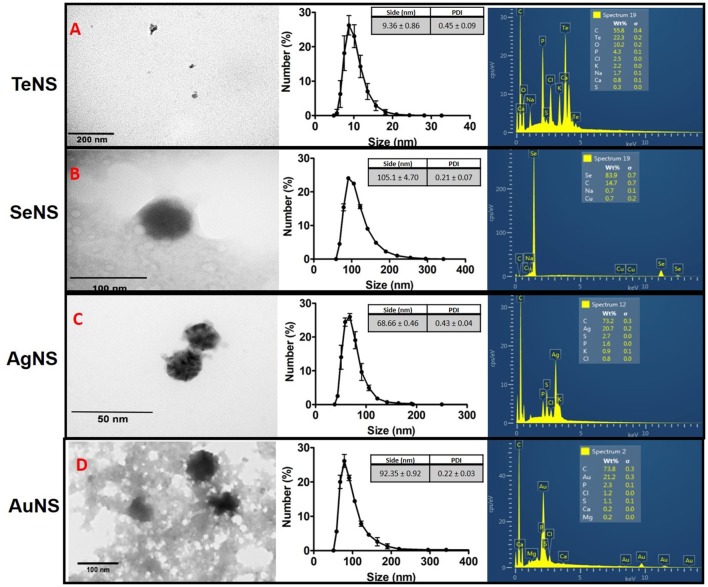
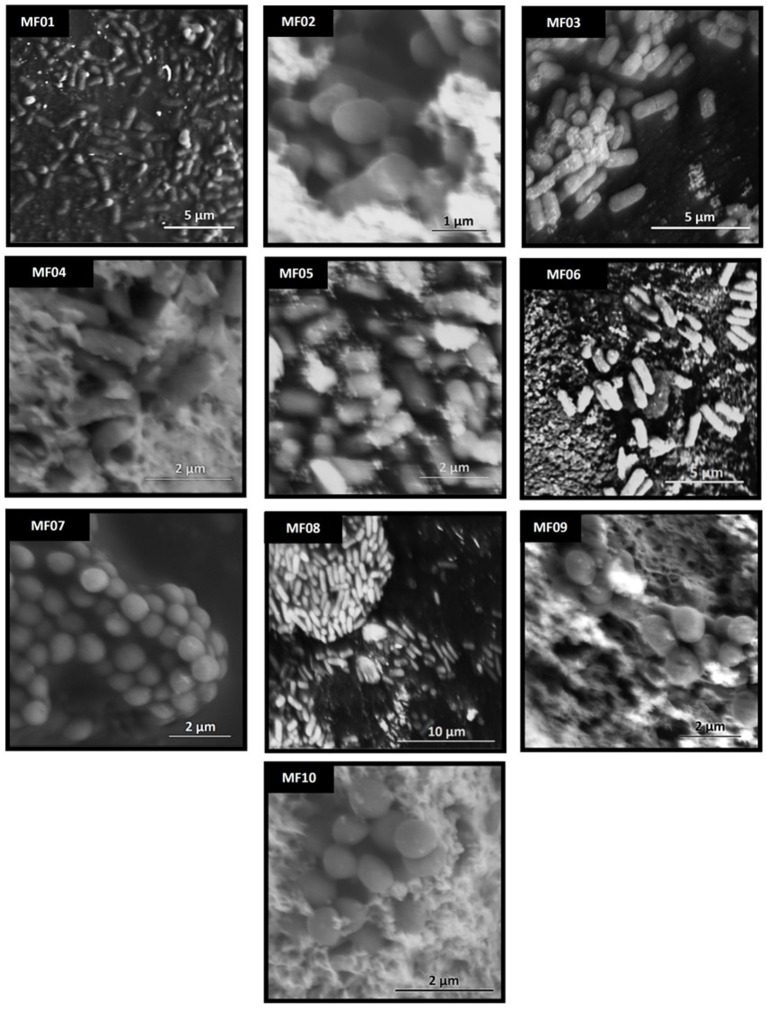
Microbes are suitable candidates to recover and decontaminate different environments from soluble metal ions, either via reduction or precipitation to generate insoluble, non-toxic derivatives. In general, microorganisms reduce toxic metal ions generating nanostructures (NS), which display great applicability in biotechnological processes. Since the molecular bases of bacterial reduction are still unknown, the search for new -environmentally safe and less expensive- methods to synthesize NS have made biological systems attractive candidates. Here, 47 microorganisms isolated from a number of environmental samples were analyzed for their tolerance or sensitivity to 19 metal(loid)s. Ten of them were highly tolerant to some of them and were assessed for their ability to reduce these toxicants . All isolates were analyzed by 16S rRNA gene sequencing, fatty acids composition, biochemical tests and electron microscopy. Results showed that they belong to the , and genera. Most strains displayed metal(loid)-reducing activity using either NADH or NADPH as cofactor. While showed the highest tellurite ( ) and tetrachloro aurate ( ) reducing activity, and exhibited selenite ( ) and silver (Ag) reducing activity, respectively. Based on these results, we used these bacteria to synthetize, Te, Se, Au, and Ag-containing nanostructures. On the other hand, we also used purified glutathione reductase to synthesize Te-, Ag-, and Se-containing NS, whose morphology, size, composition, and chemical composition were evaluated. Finally, we assessed the putative anti-bacterial activity exhibited by the synthesized NS: Te-containing NS were more effective than Au-NS in inhibiting and growth. Aerobically synthesized TeNS using MF09 crude extracts showed MICs of 45- and 66- μg/ml for and , respectively. Similar MIC values (40 and 82 μg/ml, respectively) were observed for TeNS generated using crude extracts from -overexpressing . In turn, AuNS MICs for and were 64- and 68- μg/ml, respectively.

摘要

微生物是从可溶性金属离子中恢复和净化不同环境的合适候选者,它们可以通过还原或沉淀生成不溶性、无毒衍生物。一般来说,微生物会还原有毒金属离子生成纳米结构(NS),这些纳米结构在生物技术过程中具有很大的适用性。由于细菌还原的分子基础仍然未知,寻找新的(环境安全且成本较低的)合成纳米结构的方法使生物系统成为有吸引力的候选者。在这里,对从多个环境样本中分离出的47种微生物进行了分析,以检测它们对19种金属(类金属)的耐受性或敏感性。其中有10种对其中一些金属具有高度耐受性,并评估了它们还原这些有毒物质的能力。所有分离株都通过16S rRNA基因测序、脂肪酸组成、生化测试和电子显微镜进行了分析。结果表明它们属于芽孢杆菌属、假单胞菌属和葡萄球菌属。大多数菌株使用NADH或NADPH作为辅因子表现出金属(类金属)还原活性。虽然MF09显示出最高的亚碲酸盐(TeO₃²⁻)和四氯金酸盐(HAuCl₄)还原活性,但MF04和MF06分别表现出亚硒酸盐(SeO₃²⁻)和银(Ag)还原活性。基于这些结果,我们利用这些细菌合成了含碲(Te)、硒(Se)、金(Au)和银(Ag)的纳米结构。另一方面,我们还使用纯化的谷胱甘肽还原酶合成了含碲、银和硒的纳米结构,并对其形态、大小、组成和化学组成进行了评估。最后,我们评估了合成的纳米结构所表现出的假定抗菌活性:含碲纳米结构在抑制金黄色葡萄球菌和大肠杆菌生长方面比含金纳米结构更有效。使用MF09粗提物需氧合成的碲纳米结构对金黄色葡萄球菌和大肠杆菌的最低抑菌浓度(MIC)分别为45和66 μg/ml。使用来自谷胱甘肽还原酶过表达菌株的粗提物生成的碲纳米结构也观察到类似的MIC值(分别为40和82 μg/ml)。相应地,含金纳米结构对金黄色葡萄球菌和大肠杆菌的MIC分别为64和68 μg/ml。
https://cdn.ncbi.nlm.nih.gov/pmc/blobs/73cc/5962736/007a7903a550/fmicb-09-00959-g0006.jpg
https://cdn.ncbi.nlm.nih.gov/pmc/blobs/73cc/5962736/abfb31d637d8/fmicb-09-00959-g0001.jpg
https://cdn.ncbi.nlm.nih.gov/pmc/blobs/73cc/5962736/129406419d21/fmicb-09-00959-g0002.jpg
https://cdn.ncbi.nlm.nih.gov/pmc/blobs/73cc/5962736/db566bb69630/fmicb-09-00959-g0003.jpg
https://cdn.ncbi.nlm.nih.gov/pmc/blobs/73cc/5962736/5aa4b1651152/fmicb-09-00959-g0004.jpg
https://cdn.ncbi.nlm.nih.gov/pmc/blobs/73cc/5962736/36c54035a8ef/fmicb-09-00959-g0005.jpg
https://cdn.ncbi.nlm.nih.gov/pmc/blobs/73cc/5962736/007a7903a550/fmicb-09-00959-g0006.jpg
https://cdn.ncbi.nlm.nih.gov/pmc/blobs/73cc/5962736/abfb31d637d8/fmicb-09-00959-g0001.jpg
https://cdn.ncbi.nlm.nih.gov/pmc/blobs/73cc/5962736/129406419d21/fmicb-09-00959-g0002.jpg
https://cdn.ncbi.nlm.nih.gov/pmc/blobs/73cc/5962736/db566bb69630/fmicb-09-00959-g0003.jpg
https://cdn.ncbi.nlm.nih.gov/pmc/blobs/73cc/5962736/5aa4b1651152/fmicb-09-00959-g0004.jpg
https://cdn.ncbi.nlm.nih.gov/pmc/blobs/73cc/5962736/36c54035a8ef/fmicb-09-00959-g0005.jpg
https://cdn.ncbi.nlm.nih.gov/pmc/blobs/73cc/5962736/007a7903a550/fmicb-09-00959-g0006.jpg

相似文献

1
Synthesis and Antibacterial Activity of Metal(loid) Nanostructures by Environmental Multi-Metal(loid) Resistant Bacteria and Metal(loid)-Reducing Flavoproteins.环境多金属(类金属)抗性细菌和金属(类金属)还原黄素蛋白合成金属(类金属)纳米结构及其抗菌活性
Front Microbiol. 2018 May 15;9:959. doi: 10.3389/fmicb.2018.00959. eCollection 2018.
2
In vitro biosynthesis of Ag, Au and Te-containing nanostructures by Exiguobacterium cell-free extracts.由极端芽孢杆菌无细胞提取物体外合成含 Ag、Au 和 Te 的纳米结构。
BMC Biotechnol. 2020 May 29;20(1):29. doi: 10.1186/s12896-020-00625-y.
3
Reduction of Gold (III) and Tellurium (IV) by MF01 Results in Nanostructure Formation Both in Aerobic and Anaerobic Conditions.MF01在有氧和无氧条件下还原金(III)和碲(IV)均会导致纳米结构的形成。
Front Microbiol. 2018 Dec 18;9:3118. doi: 10.3389/fmicb.2018.03118. eCollection 2018.
4
Flavoprotein-Mediated Tellurite Reduction: Structural Basis and Applications to the Synthesis of Tellurium-Containing Nanostructures.黄素蛋白介导的亚碲酸盐还原:结构基础及其在含碲纳米结构合成中的应用
Front Microbiol. 2016 Jul 26;7:1160. doi: 10.3389/fmicb.2016.01160. eCollection 2016.
5
Synthesis and antimicrobial activity of gold/silver-tellurium nanostructures.金/银-碲纳米结构的合成与抗菌活性
ACS Appl Mater Interfaces. 2014 Jun 11;6(11):8305-12. doi: 10.1021/am501134h. Epub 2014 May 22.
6
Se (IV) triggers faster Te (IV) reduction by soil isolates of heterotrophic aerobic bacteria: formation of extracellular SeTe nanospheres.四价硒通过异养需氧细菌的土壤分离物引发更快的四价碲还原:细胞外硒化碲纳米球的形成。
Microb Cell Fact. 2014 Nov 26;13:168. doi: 10.1186/s12934-014-0168-2.
7
Assessment of rhizospheric culturable bacteria of Phragmites australis and Juncus effusus from polluted sites.对污染场地芦苇和灯心草根际可培养细菌的评估。
J Basic Microbiol. 2015 Oct;55(10):1179-90. doi: 10.1002/jobm.201500010. Epub 2015 Jun 8.
8
Reduction of selenite to Se(0) nanoparticles by filamentous bacterium Streptomyces sp. ES2-5 isolated from a selenium mining soil.从硒矿土壤中分离出的丝状细菌链霉菌属ES2-5将亚硒酸盐还原为Se(0)纳米颗粒。
Microb Cell Fact. 2016 Sep 15;15(1):157. doi: 10.1186/s12934-016-0554-z.
9
Assessment of microbial communities from cold mine environments and subsequent enrichment, isolation and characterization of putative antimony- or copper-metabolizing microorganisms.对来自寒冷矿山环境的微生物群落进行评估,以及随后对假定的锑或铜代谢微生物进行富集、分离和表征。
Front Microbiol. 2024 May 24;15:1386120. doi: 10.3389/fmicb.2024.1386120. eCollection 2024.
10
Glutathione reductase-mediated synthesis of tellurium-containing nanostructures exhibiting antibacterial properties.谷胱甘肽还原酶介导的具有抗菌特性的含碲纳米结构的合成。
Appl Environ Microbiol. 2014 Nov;80(22):7061-70. doi: 10.1128/AEM.02207-14. Epub 2014 Sep 5.

引用本文的文献

1
Biosynthesis of Gold Nanostructures and Their Virucidal Activity Against Influenza A Virus.金纳米结构的生物合成及其对甲型流感病毒的杀病毒活性。
Int J Mol Sci. 2025 Feb 24;26(5):1934. doi: 10.3390/ijms26051934.
2
Exploring the Potential of Glutathione Reductase Overexpression to Improve Tellurium Nanoparticle Production in .探索谷胱甘肽还原酶过表达在提高碲纳米颗粒产量方面的潜力。 (原文末尾的“in.”后面内容缺失,所以翻译可能不完整)
Int J Mol Sci. 2025 Feb 12;26(4):1549. doi: 10.3390/ijms26041549.
3
Bacterial synthesis of metal nanoparticles as antimicrobials.

本文引用的文献

1
Aerobic biogenesis of selenium nanoparticles by Enterobacter cloacae Z0206 as a consequence of fumarate reductase mediated selenite reduction.肠杆菌 Z0206 通过延胡索酸还原酶介导的亚硒酸盐还原作用进行好氧生物合成硒纳米颗粒。
Sci Rep. 2017 Jun 12;7(1):3239. doi: 10.1038/s41598-017-03558-3.
2
from Red Sea for lipase production and modulation of silver nanomaterials for anti-candidal activities.从红海获取用于脂肪酶生产以及用于抗念珠菌活性的银纳米材料的调制。
IET Nanobiotechnol. 2017 Jun;11(4):403-410. doi: 10.1049/iet-nbt.2016.0104.
3
Flavoprotein-Mediated Tellurite Reduction: Structural Basis and Applications to the Synthesis of Tellurium-Containing Nanostructures.
细菌合成金属纳米颗粒作为抗菌剂。
Microb Biotechnol. 2024 Aug;17(8):e14549. doi: 10.1111/1751-7915.14549.
4
Anaerobiosis favors biosynthesis of single and multi-element nanostructures.厌氧条件有利于单元素和多元素纳米结构的生物合成。
PLoS One. 2022 Oct 7;17(10):e0273392. doi: 10.1371/journal.pone.0273392. eCollection 2022.
5
An exploration of microbial response to stressors with Prof. Claudio C. Vásquez Guzmán.与克劳迪奥·C·巴斯克斯·古斯曼教授一同探索微生物对应激源的反应。
Biol Res. 2022 Aug 6;55(1):25. doi: 10.1186/s40659-022-00393-3.
6
Tellurite and Selenite: how can these two oxyanions be chemically different yet so similar in the way they are transformed to their metal forms by bacteria?碲酸盐和硒酸盐:这两种含氧酸根在化学上有何不同,而在被细菌转化为其金属形态的方式上又如此相似?
Biol Res. 2022 Apr 5;55(1):17. doi: 10.1186/s40659-022-00378-2.
7
Impact of Tellurite on the Metabolism of AL109b With Flagellin Production Explaining High Reduction Capacity.亚碲酸盐对具有鞭毛蛋白产生且具有高还原能力的AL109b代谢的影响。
Front Microbiol. 2021 Sep 7;12:718963. doi: 10.3389/fmicb.2021.718963. eCollection 2021.
8
Green Synthesis of Selenium and Tellurium Nanoparticles: Current Trends, Biological Properties and Biomedical Applications.硒和碲纳米颗粒的绿色合成:当前趋势、生物学特性及生物医学应用
Int J Mol Sci. 2021 Jan 20;22(3):989. doi: 10.3390/ijms22030989.
9
Cellular response of Brevibacterium casei #NIOSBA88 to arsenic and chromium-a proteomic approach.短杆菌 #NIOSBA88 对砷和铬的细胞反应-一种蛋白质组学方法。
Braz J Microbiol. 2020 Dec;51(4):1885-1895. doi: 10.1007/s42770-020-00353-7. Epub 2020 Jul 29.
10
Understanding gold toxicity in aerobically-grown Escherichia coli.理解好氧生长的大肠杆菌中的金毒性。
Biol Res. 2020 Jun 8;53(1):26. doi: 10.1186/s40659-020-00292-5.
黄素蛋白介导的亚碲酸盐还原:结构基础及其在含碲纳米结构合成中的应用
Front Microbiol. 2016 Jul 26;7:1160. doi: 10.3389/fmicb.2016.01160. eCollection 2016.
4
Genetic basis and importance of metal resistant genes in bacteria for bioremediation of contaminated environments with toxic metal pollutants.细菌中金属抗性基因在有毒金属污染物污染环境生物修复中的遗传基础及重要性。
Appl Microbiol Biotechnol. 2016 Apr;100(7):2967-84. doi: 10.1007/s00253-016-7364-4. Epub 2016 Feb 10.
5
Selenite Protection of Tellurite Toxicity Toward Escherichia coli.亚硒酸盐对大肠杆菌碲酸盐毒性的保护作用。
Front Mol Biosci. 2015 Dec 18;2:69. doi: 10.3389/fmolb.2015.00069. eCollection 2015.
6
Transition Metal Homeostasis.过渡金属稳态
EcoSal Plus. 2009 Aug;3(2). doi: 10.1128/ecosalplus.5.4.4.3.
7
Antimicrobial activity of the metals and metal oxide nanoparticles.金属及金属氧化物纳米颗粒的抗菌活性。
Mater Sci Eng C Mater Biol Appl. 2014 Nov;44:278-84. doi: 10.1016/j.msec.2014.08.031. Epub 2014 Aug 16.
8
Glutathione reductase-mediated synthesis of tellurium-containing nanostructures exhibiting antibacterial properties.谷胱甘肽还原酶介导的具有抗菌特性的含碲纳米结构的合成。
Appl Environ Microbiol. 2014 Nov;80(22):7061-70. doi: 10.1128/AEM.02207-14. Epub 2014 Sep 5.
9
On the mechanism underlying tellurite reduction by Aeromonas caviae ST dihydrolipoamide dehydrogenase.关于豚鼠气单胞菌ST二氢硫辛酰胺脱氢酶还原亚碲酸盐的潜在机制
Biochimie. 2014 Jul;102:174-82. doi: 10.1016/j.biochi.2014.03.008. Epub 2014 Mar 26.
10
Monounsaturated fatty acids are substrates for aldehyde generation in tellurite-exposed Escherichia coli.亚碲酸盐暴露的大肠杆菌中单不饱和脂肪酸是醛生成的底物。
Biomed Res Int. 2013;2013:563756. doi: 10.1155/2013/563756. Epub 2013 Aug 7.