Immune-Oncology Discovery, AbbVie, Redwood City, CA, USA.
Clinical Pharmacology and Pharmacometrics, Abbvie, Redwood City, CA, USA.
J Immunother Cancer. 2018 Jun 5;6(1):50. doi: 10.1186/s40425-018-0355-5.
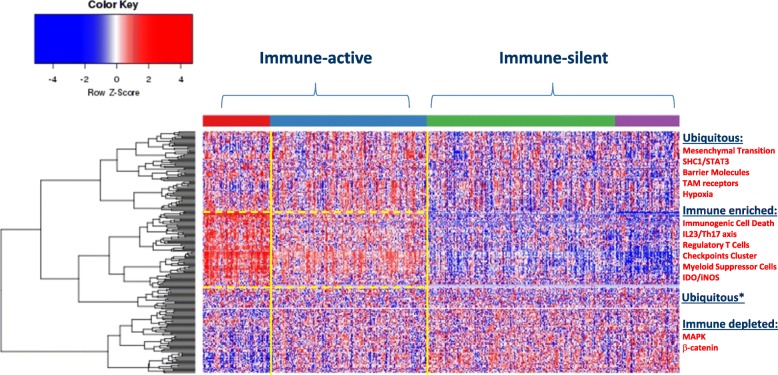
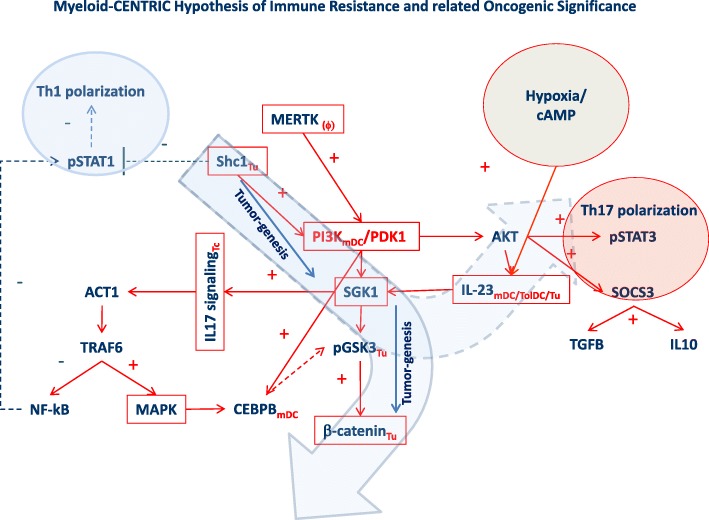
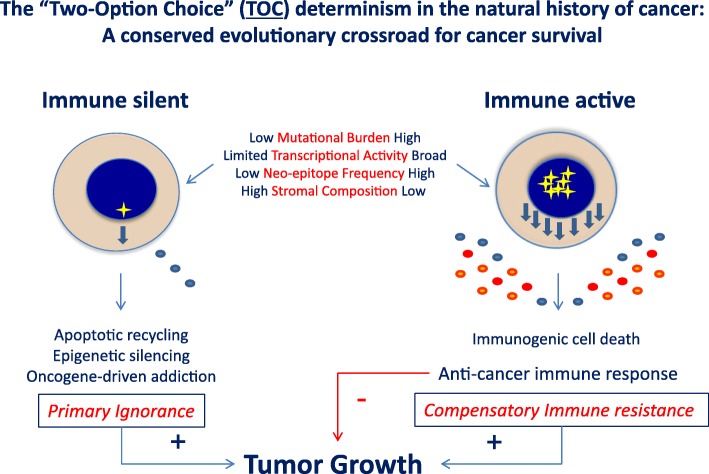
Anti-cancer immunotherapy is encountering its own checkpoint. Responses are dramatic and long lasting but occur in a subset of tumors and are largely dependent upon the pre-existing immune contexture of individual cancers. Available data suggest that three landscapes best define the cancer microenvironment: immune-active, immune-deserted and immune-excluded. This trichotomy is observable across most solid tumors (although the frequency of each landscape varies depending on tumor tissue of origin) and is associated with cancer prognosis and response to checkpoint inhibitor therapy (CIT). Various gene signatures (e.g. Immunological Constant of Rejection - ICR and Tumor Inflammation Signature - TIS) that delineate these landscapes have been described by different groups. In an effort to explain the mechanisms of cancer immune responsiveness or resistance to CIT, several models have been proposed that are loosely associated with the three landscapes. Here, we propose a strategy to integrate compelling data from various paradigms into a "Theory of Everything". Founded upon this unified theory, we also propose the creation of a task force led by the Society for Immunotherapy of Cancer (SITC) aimed at systematically addressing salient questions relevant to cancer immune responsiveness and immune evasion. This multidisciplinary effort will encompass aspects of genetics, tumor cell biology, and immunology that are pertinent to the understanding of this multifaceted problem.
癌症免疫疗法正面临自身的瓶颈。这种疗法的疗效显著且持久,但只在一部分肿瘤中起效,而且在很大程度上取决于个体癌症预先存在的免疫结构。现有数据表明,有三种肿瘤微环境最能定义癌症的免疫状态:免疫激活型、免疫荒漠型和免疫排除型。这种三分法在大多数实体瘤中都可见(尽管每种类型的频率因肿瘤组织来源而异),与癌症预后和对检查点抑制剂治疗(CIT)的反应相关。不同的研究小组已经描述了各种基因特征(如免疫排斥常数 ICR 和肿瘤炎症特征 TIS),这些特征可以划分这些不同的肿瘤微环境类型。为了解释癌症对免疫治疗的反应或对 CIT 的耐药机制,已经提出了几种模型,这些模型与这三种肿瘤微环境类型有一定的关联。在这里,我们提出了一种策略,即将来自不同范式的引人注目的数据整合到一个“万有理论”中。基于这个统一的理论,我们还建议成立一个由癌症免疫治疗学会(SITC)牵头的工作组,旨在系统地解决与癌症免疫反应性和免疫逃逸相关的突出问题。这项多学科的努力将包括遗传学、肿瘤细胞生物学和免疫学等方面的内容,这些内容与理解这个多方面问题有关。