Laboratoire de Biologie Physico-Chimique des Protéines Membranaires, CNRS, University Paris Diderot, Sorbonne Paris Cité, Institut de Biologie Physico-Chimique, Paris, France.
Helen L. and Martin S. Kimmel Center at the Skirball Institute for Biomolecular Medicine and Department of Cell Biology, NYU School of Medicine, New York, USA.
Sci Rep. 2018 Jun 5;8(1):8572. doi: 10.1038/s41598-018-26668-y.
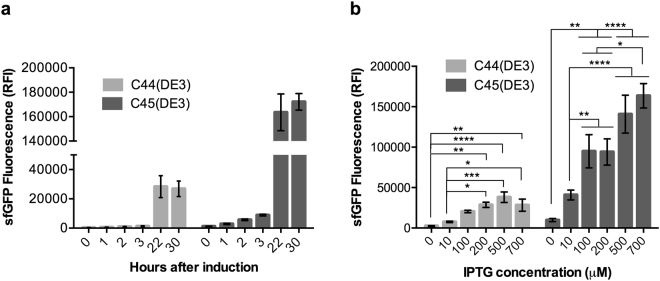
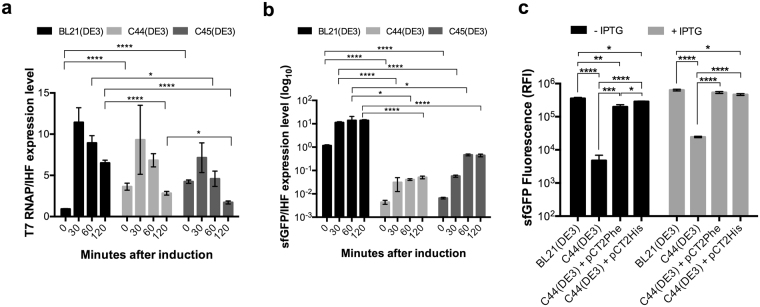
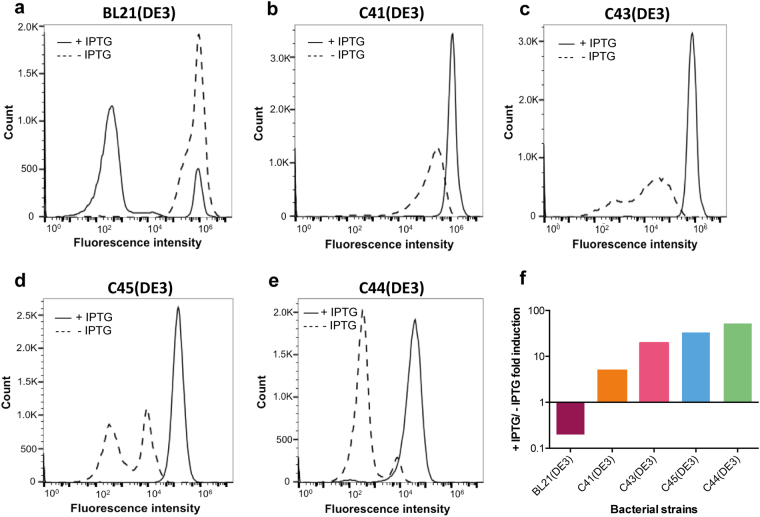
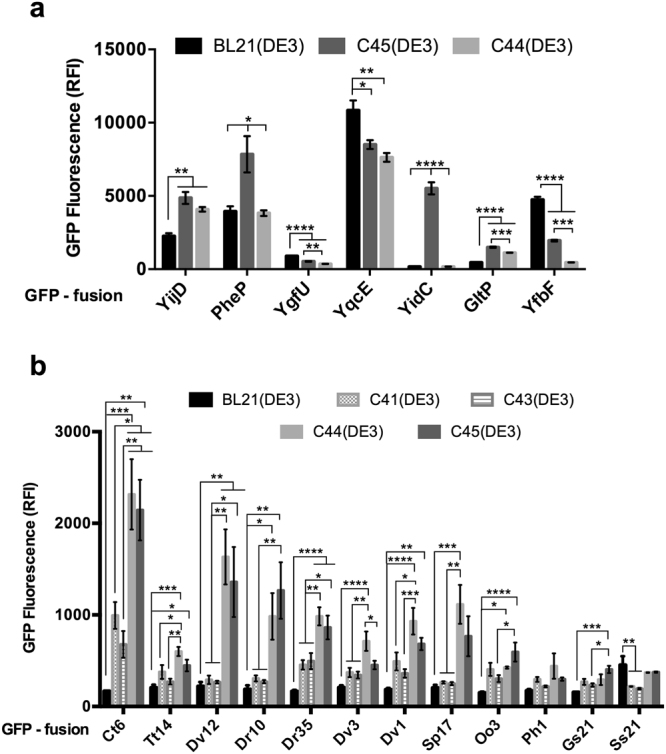
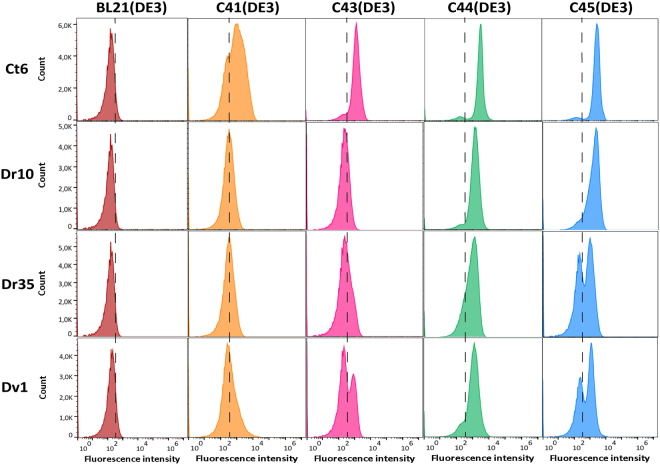
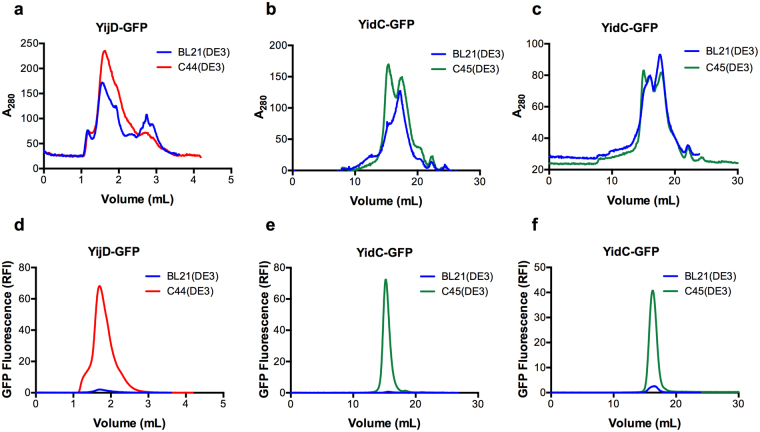
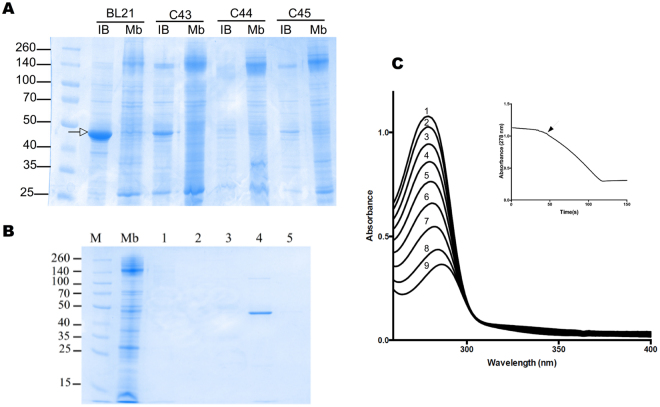
Membrane protein (MP) overproduction is one of the major bottlenecks in structural genomics and biotechnology. Despite the emergence of eukaryotic expression systems, bacteria remain a cost effective and powerful tool for protein production. The T7 RNA polymerase (T7RNAP)-based expression system is a successful and efficient expression system, which achieves high-level production of proteins. However some foreign MPs require a fine-tuning of their expression to minimize the toxicity associated with their production. Here we report a novel regulation mechanism for the T7 expression system. We have isolated two bacterial hosts, namely C44(DE3) and C45(DE3), harboring a stop codon in the T7RNAP gene, whose translation is under the control of the basal nonsense suppressive activity of the BL21(DE3) host. Evaluation of hosts with superfolder green fluorescent protein (sfGFP) revealed an unprecedented tighter control of transgene expression with a marked accumulation of the recombinant protein during stationary phase. Analysis of a collection of twenty MP fused to GFP showed an improved production yield and quality of several bacterial MPs and of one human monotopic MP. These mutant hosts are complementary to the other existing T7 hosts and will increase the versatility of the T7 expression system.
膜蛋白(MP)过表达是结构基因组学和生物技术的主要瓶颈之一。尽管真核表达系统已经出现,但细菌仍然是一种具有成本效益和强大的蛋白质生产工具。基于 T7 RNA 聚合酶(T7RNAP)的表达系统是一种成功且高效的表达系统,可实现蛋白质的高水平生产。然而,一些外来的 MPs 需要对其表达进行微调,以最大限度地减少与其生产相关的毒性。在这里,我们报告了一种新型的 T7 表达系统调控机制。我们已经分离出两种细菌宿主,即 C44(DE3)和 C45(DE3),它们在 T7RNAP 基因中带有一个终止密码子,其翻译受 BL21(DE3)宿主基本无义抑制活性的控制。用超折叠绿色荧光蛋白(sfGFP)评估宿主时,发现其对转基因表达的控制前所未有的严格,在静止期重组蛋白的积累明显增加。对二十种融合 GFP 的 MP 的分析表明,几种细菌 MP 和一种人类单拓扑 MP 的产量和质量得到了提高。这些突变宿主与其他现有的 T7 宿主互补,将增加 T7 表达系统的多功能性。