Department of Oncology, Oslo University Hospital, Oslo, Norway.
Institute of Clinical Medicine, Faculty of Medicine, University of Oslo, Oslo, Norway.
Br J Cancer. 2018 Jun;118(12):1609-1616. doi: 10.1038/s41416-018-0115-9. Epub 2018 Jun 6.
Mutation status of RAS and BRAF, as well as serum levels of carcinoembryonic antigen (CEA) and carbohydrate antigen 19-9 (CA 19-9), are biomarkers used in clinical management of patients with gastrointestinal cancers. This study aimed to examine the prognostic role of these biomarkers in a patient population that started first-line chemotherapy for unresectable metastatic colorectal cancer (mCRC) in the NORDIC-VII study.
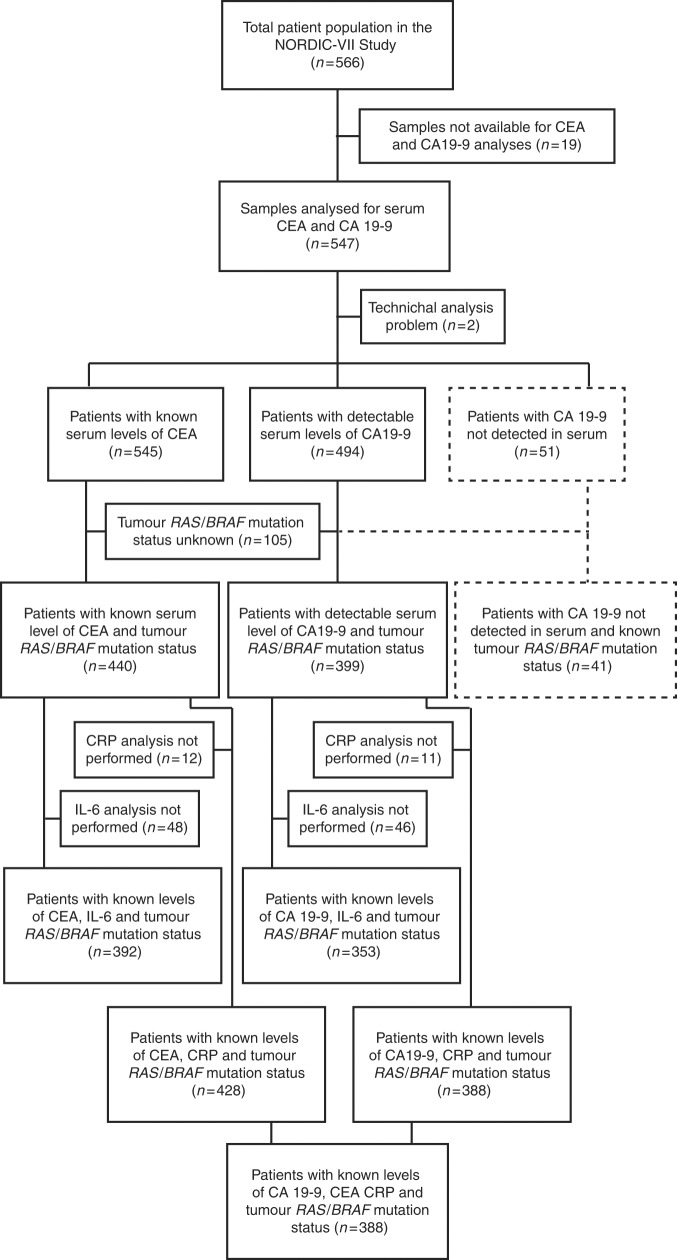
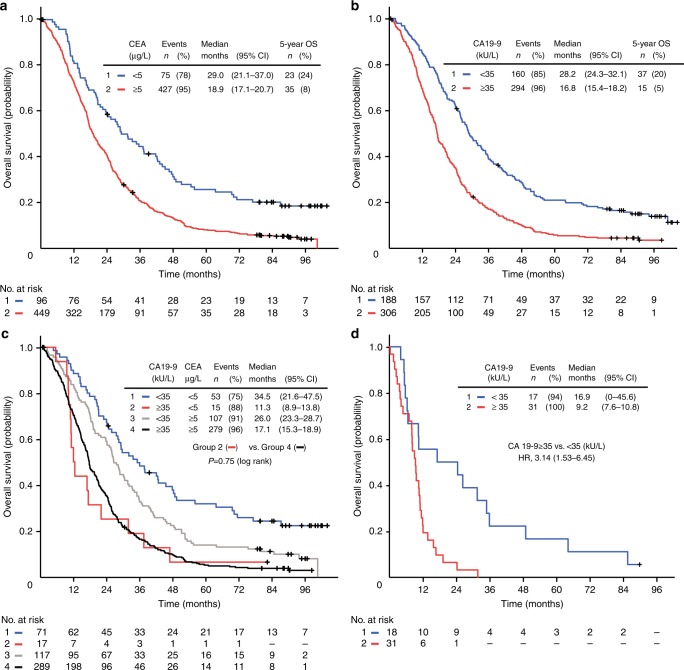
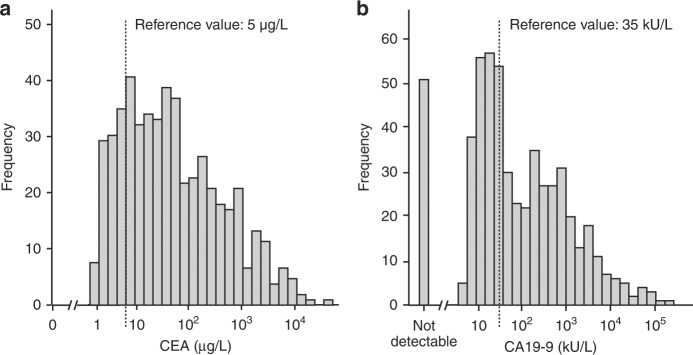
CEA and CA 19-9 were measured in serum samples from 545 patients obtained before the start of chemotherapy. Four hundred and ninety-four patients had detectable levels of carbohydrate antigen 19-9 (CA 19-9). RAS (exons 2-4) and BRAF (V600E) mutation status were available from 440 patients. Overall survival (OS) was estimated in patient groups defined by serum CEA or CA 19-9 levels using cut-off values of 5 µg/L and 35 kU/L, respectively, in the total population and in subgroups according to RAS and BRAF mutation status.
For both CEA and CA 19-9, elevated serum levels were associated with reduced OS in adjusted analyses which included RAS and BRAF mutation status, baseline World Health Organization performance status, and levels of alkaline phosphatase and C-reactive protein. The negative prognostic information provided by an elevated CA 19-9 level was particularly marked in patients with BRAF mutation (hazard ratio = 4.35, interaction P = 0.003, in an adjusted model for OS).
High baseline serum concentrations of CEA and CA 19-9 provide independent information of impaired prognosis in mCRC. In patients with BRAF-mutant tumours, elevated serum CA 19-9 may identify a subgroup with highly aggressive disease and could contribute to improving therapeutic decisions.
RAS 和 BRAF 的突变状态,以及癌胚抗原(CEA)和糖类抗原 19-9(CA 19-9)的血清水平,是用于胃肠道癌症患者临床管理的生物标志物。本研究旨在检查这些生物标志物在 NORDIC-VII 研究中接受不可切除转移性结直肠癌(mCRC)一线化疗的患者人群中的预后作用。
在化疗开始前,从 545 名患者的血清样本中测量 CEA 和 CA 19-9。494 名患者可检测到糖类抗原 19-9(CA 19-9)水平。440 名患者的 RAS(外显子 2-4)和 BRAF(V600E)突变状态可用。使用总人群中分别为 5μg/L 和 35kU/L 的截止值,以及根据 RAS 和 BRAF 突变状态的亚组,通过血清 CEA 或 CA 19-9 水平定义的患者组,估计总生存(OS)。
对于 CEA 和 CA 19-9,在调整后的分析中,升高的血清水平与 OS 降低相关,这些分析包括 RAS 和 BRAF 突变状态、基线世界卫生组织表现状态以及碱性磷酸酶和 C 反应蛋白的水平。在 BRAF 突变患者中,升高的 CA 19-9 水平提供的负面预后信息特别显著(OS 的调整模型中的危险比=4.35,交互 P=0.003)。
基线时血清 CEA 和 CA 19-9 浓度升高提供了 mCRC 预后不良的独立信息。在 BRAF 突变肿瘤患者中,升高的血清 CA 19-9 可能确定了具有高度侵袭性疾病的亚组,并且可以有助于改善治疗决策。