Renier Corinne, Pao Edward, Che James, Liu Haiyan E, Lemaire Clementine A, Matsumoto Melissa, Triboulet Melanie, Srivinas Sandy, Jeffrey Stefanie S, Rettig Matthew, Kulkarni Rajan P, Di Carlo Dino, Sollier-Christen Elodie
Vortex Biosciences Inc., 1490 O'Brien Drive, Suite E, Menlo Park, CA 94025 USA.
2Department of Bioengineering, University of California, 420 Westwood Plaza, 5121 Engineering V, PO Box 951600, Los Angeles, CA 90095 USA.
NPJ Precis Oncol. 2017 May 8;1(1):15. doi: 10.1038/s41698-017-0015-0. eCollection 2017.
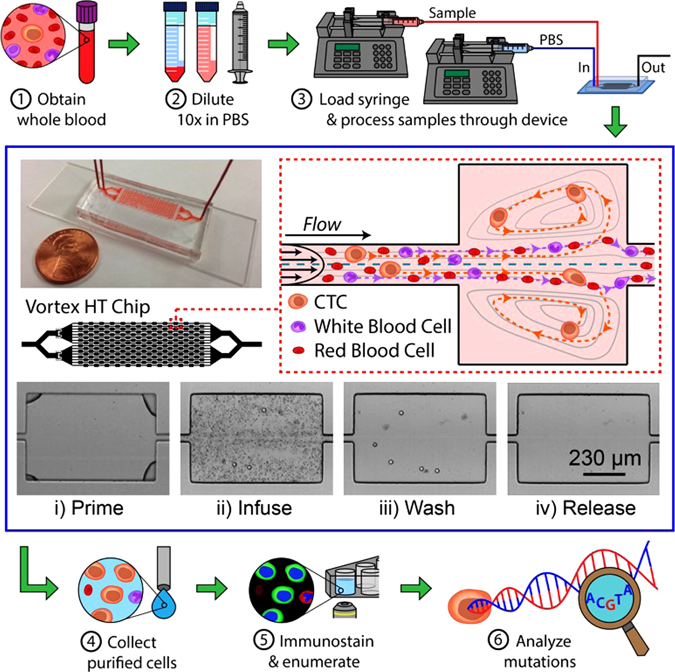
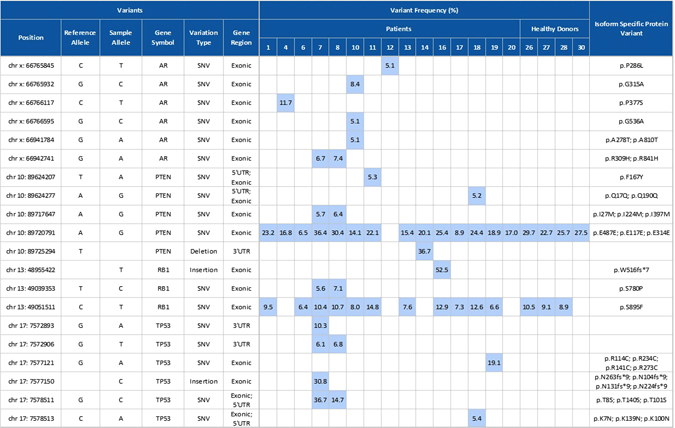
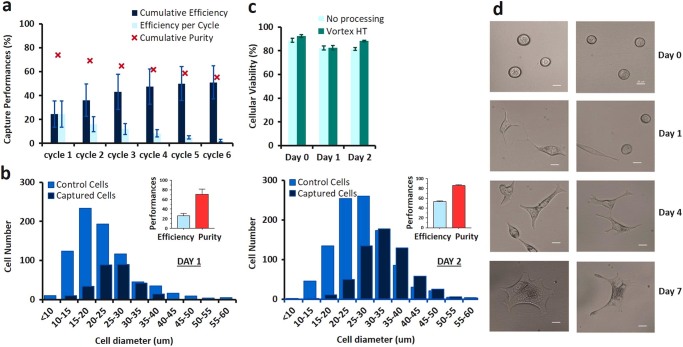
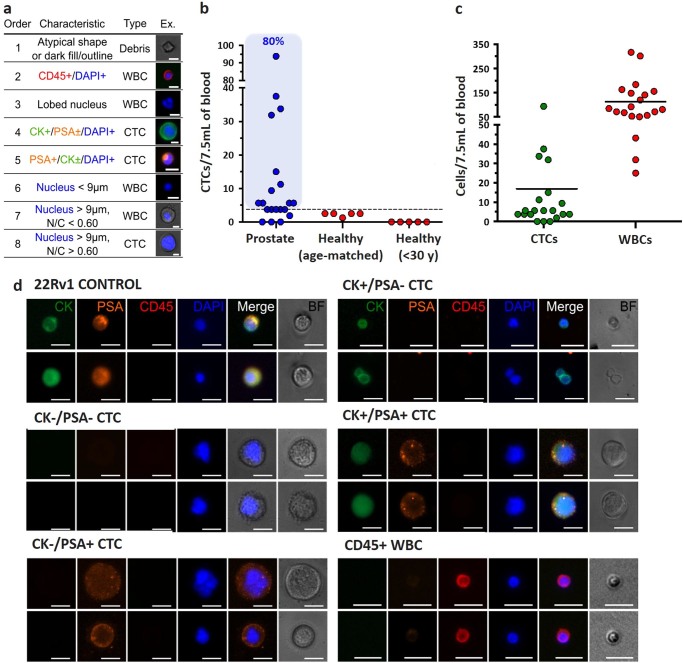
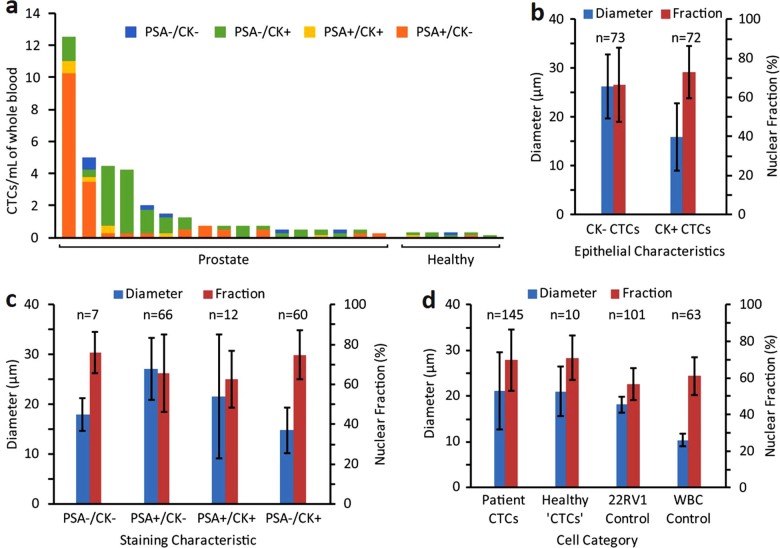
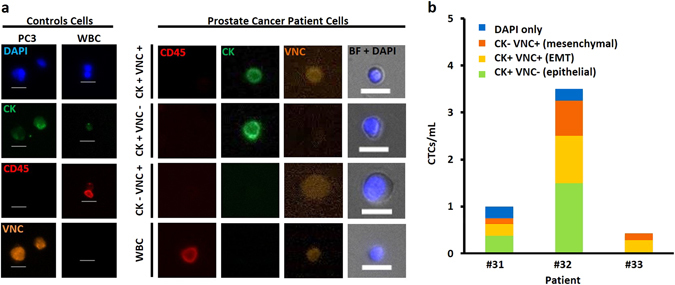
There has been increased interest in utilizing non-invasive "liquid biopsies" to identify biomarkers for cancer prognosis and monitoring, and to isolate genetic material that can predict response to targeted therapies. Circulating tumor cells (CTCs) have emerged as such a biomarker providing both genetic and phenotypic information about tumor evolution, potentially from both primary and metastatic sites. Currently, available CTC isolation approaches, including immunoaffinity and size-based filtration, have focused on high capture efficiency but with lower purity and often long and manual sample preparation, which limits the use of captured CTCs for downstream analyses. Here, we describe the use of the microfluidic Vortex Chip for size-based isolation of CTCs from 22 patients with advanced prostate cancer and, from an enumeration study on 18 of these patients, find that we can capture CTCs with high purity (from 1.74 to 37.59%) and efficiency (from 1.88 to 93.75 CTCs/7.5 mL) in less than 1 h. Interestingly, more atypical large circulating cells were identified in five age-matched healthy donors (46-77 years old; 1.25-2.50 CTCs/7.5 mL) than in five healthy donors <30 years old (21-27 years old; 0.00 CTC/7.5 mL). Using a threshold calculated from the five age-matched healthy donors (3.37 CTCs/mL), we identified CTCs in 80% of the prostate cancer patients. We also found that a fraction of the cells collected (11.5%) did not express epithelial prostate markers (cytokeratin and/or prostate-specific antigen) and that some instead expressed markers of epithelial-mesenchymal transition, i.e., vimentin and N-cadherin. We also show that the purity and DNA yield of isolated cells is amenable to targeted amplification and next-generation sequencing, without whole genome amplification, identifying unique mutations in 10 of 15 samples and 0 of 4 healthy samples.
利用非侵入性“液体活检”来识别癌症预后和监测的生物标志物,以及分离可预测靶向治疗反应的遗传物质,这方面的兴趣与日俱增。循环肿瘤细胞(CTC)已成为这样一种生物标志物,它能提供有关肿瘤演变的遗传和表型信息,这些信息可能来自原发部位和转移部位。目前,现有的CTC分离方法,包括免疫亲和法和基于大小的过滤法,都侧重于高捕获效率,但纯度较低,且样本制备通常耗时较长且需人工操作,这限制了捕获的CTC用于下游分析。在此,我们描述了使用微流控涡旋芯片从22例晚期前列腺癌患者中基于大小分离CTC,并通过对其中18例患者的计数研究发现,我们能够在不到1小时的时间内以高纯度(1.74%至37.59%)和高效率(1.88至93.75个CTC/7.5 mL)捕获CTC。有趣的是,在5名年龄匹配的健康供体(46至77岁;1.25至2.50个CTC/7.5 mL)中鉴定出的非典型大循环细胞比5名年龄小于30岁(21至27岁;0.00个CTC/7.5 mL)的健康供体中更多。使用从5名年龄匹配的健康供体计算得出的阈值(3.37个CTC/mL),我们在80%的前列腺癌患者中鉴定出了CTC。我们还发现,收集到的一部分细胞(11.5%)不表达前列腺上皮标志物(细胞角蛋白和/或前列腺特异性抗原),而是一些细胞表达上皮-间质转化标志物,即波形蛋白和N-钙黏蛋白。我们还表明,分离细胞的纯度和DNA产量适合进行靶向扩增和下一代测序,无需全基因组扩增,在15个样本中的10个和4个健康样本中的0个中鉴定出了独特的突变。