Department of Plant Biotechnology and Bioinformatics, Ghent University, 9052 Ghent, Belgium.
VIB Center for Plant Systems Biology, 9052 Ghent, Belgium.
Nucleic Acids Res. 2018 Jul 27;46(13):6480-6503. doi: 10.1093/nar/gky468.
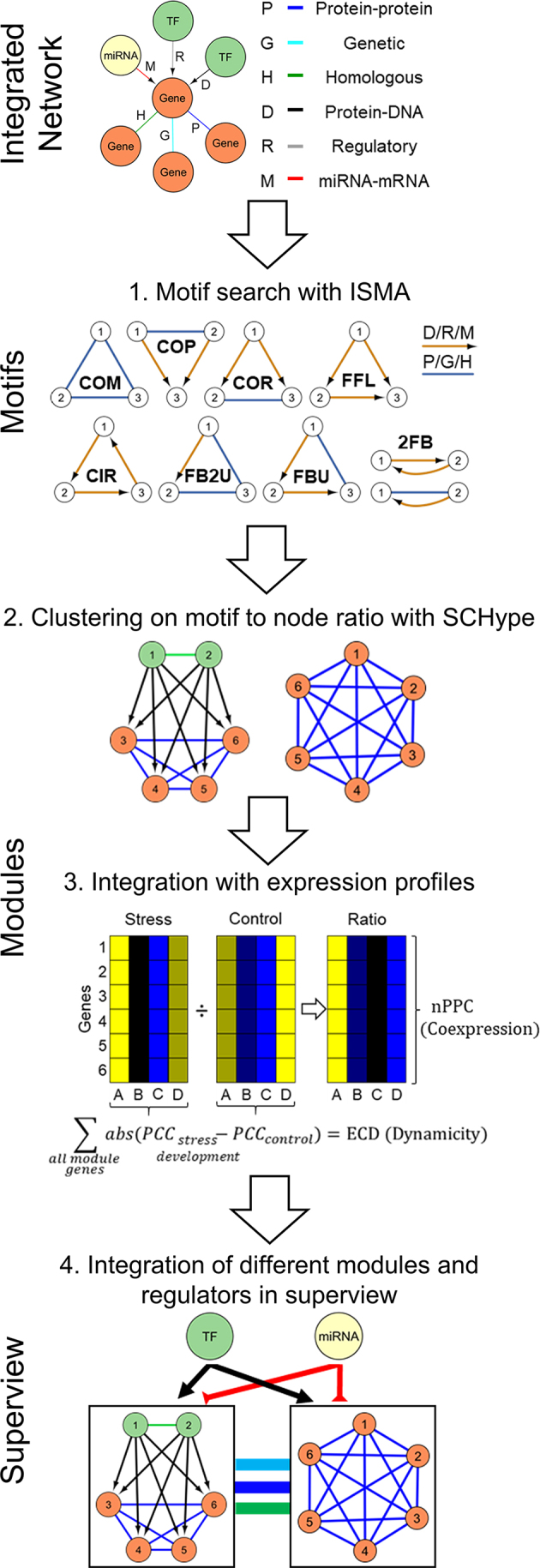
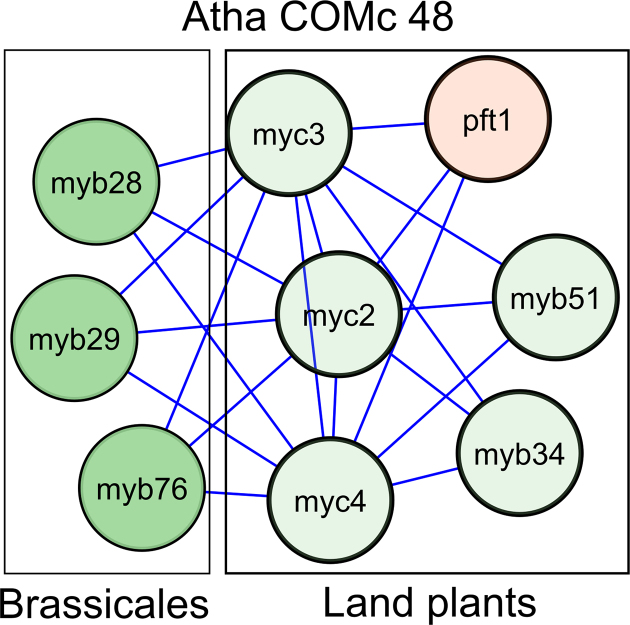
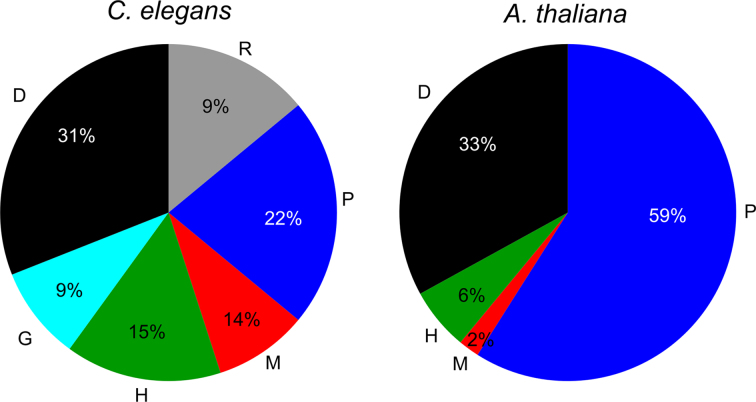
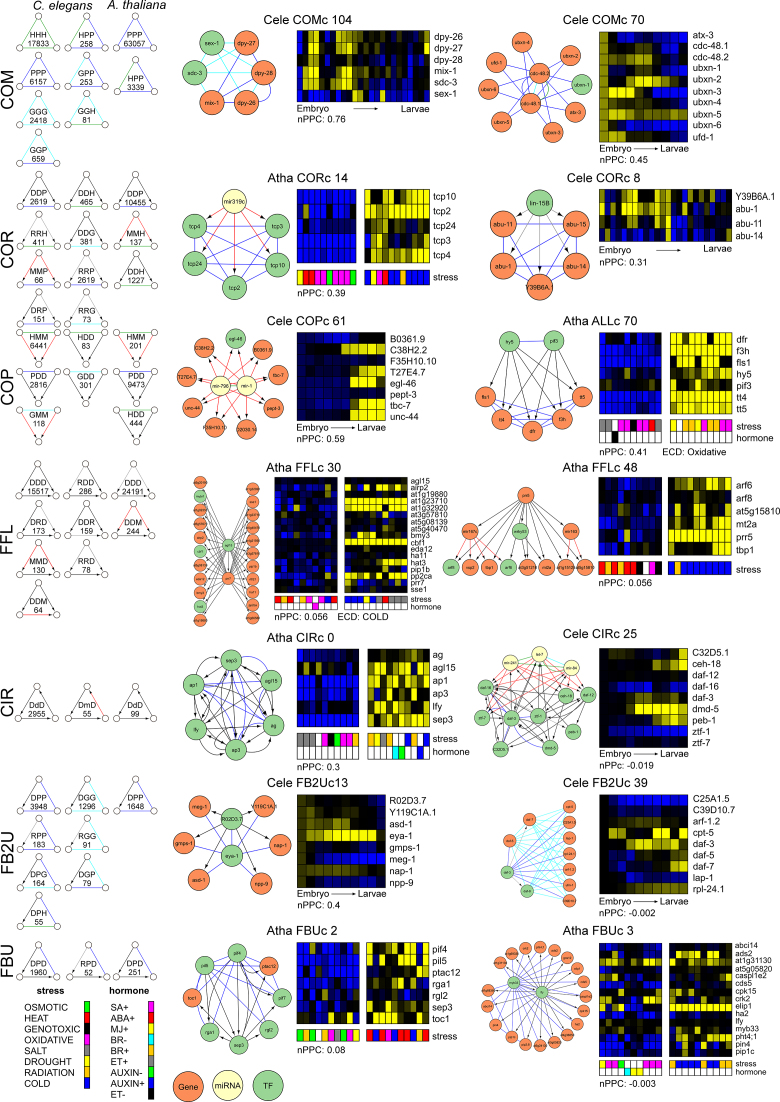
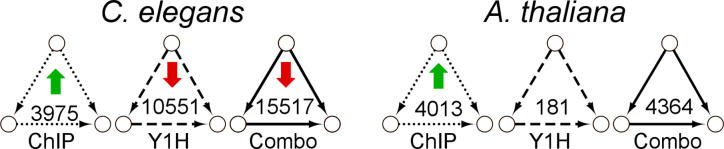
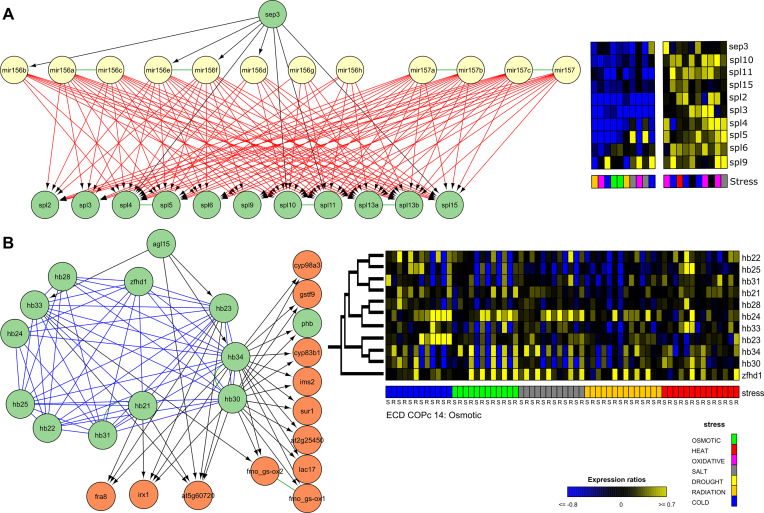
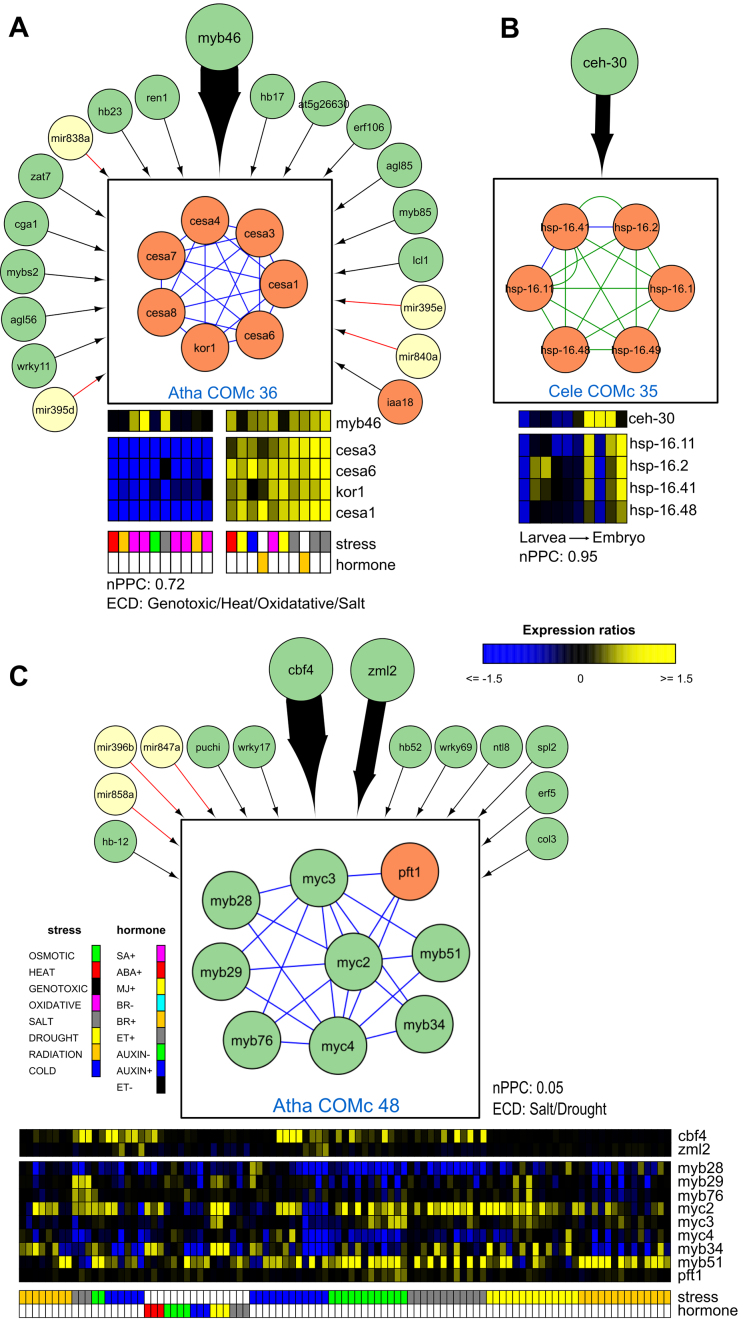
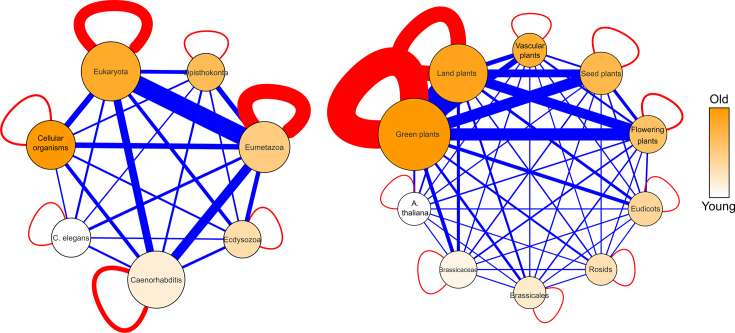
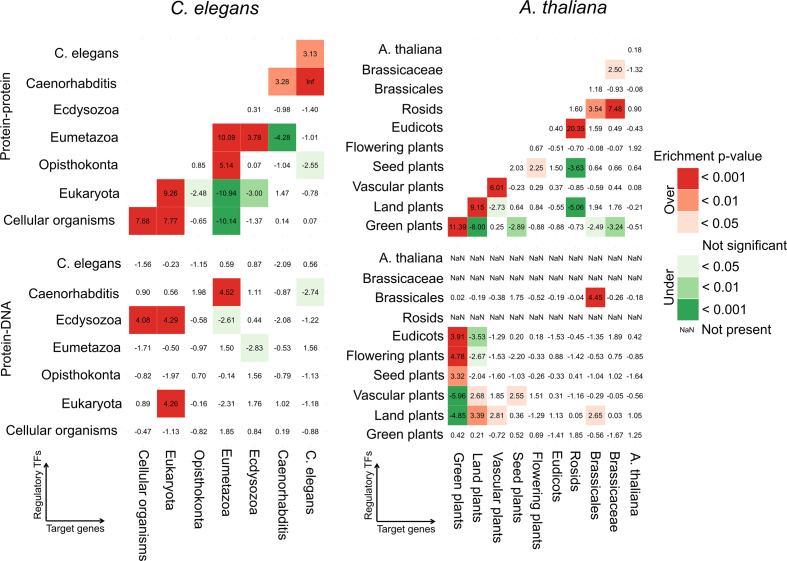
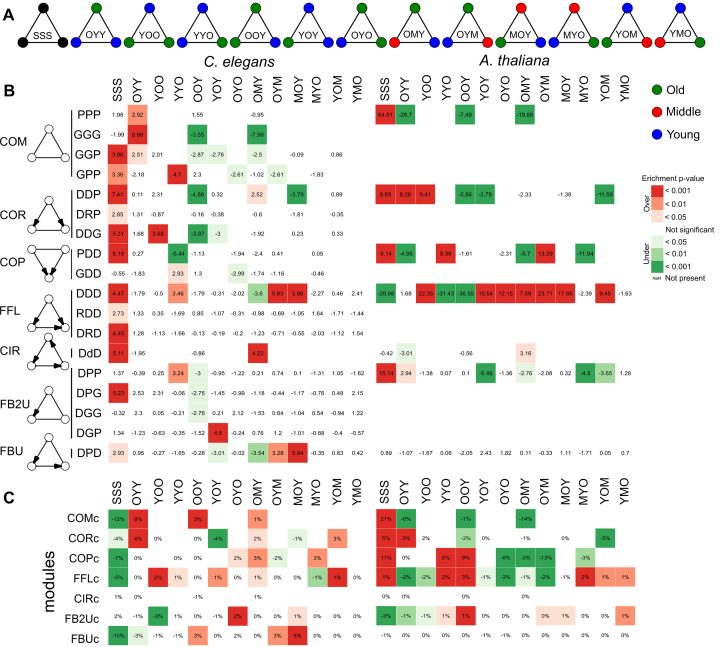
Gene regulatory networks (GRNs) consist of different molecular interactions that closely work together to establish proper gene expression in time and space. Especially in higher eukaryotes, many questions remain on how these interactions collectively coordinate gene regulation. We study high quality GRNs consisting of undirected protein-protein, genetic and homologous interactions, and directed protein-DNA, regulatory and miRNA-mRNA interactions in the worm Caenorhabditis elegans and the plant Arabidopsis thaliana. Our data-integration framework integrates interactions in composite network motifs, clusters these in biologically relevant, higher-order topological network motif modules, overlays these with gene expression profiles and discovers novel connections between modules and regulators. Similar modules exist in the integrated GRNs of worm and plant. We show how experimental or computational methodologies underlying a certain data type impact network topology. Through phylogenetic decomposition, we found that proteins of worm and plant tend to functionally interact with proteins of a similar age, while at the regulatory level TFs favor same age, but also older target genes. Despite some influence of the duplication mode difference, we also observe at the motif and module level for both species a preference for age homogeneity for undirected and age heterogeneity for directed interactions. This leads to a model where novel genes are added together to the GRNs in a specific biological functional context, regulated by one or more TFs that also target older genes in the GRNs. Overall, we detected topological, functional and evolutionary properties of GRNs that are potentially universal in all species.
基因调控网络(GRNs)由不同的分子相互作用组成,这些相互作用密切合作,在时间和空间上建立适当的基因表达。特别是在高等真核生物中,关于这些相互作用如何共同协调基因调控,仍有许多问题尚未解决。我们研究了高质量的 GRNs,这些 GRNs 由无向的蛋白质-蛋白质、遗传和同源相互作用,以及有向的蛋白质-DNA、调控和 miRNA-mRNA 相互作用组成,这些相互作用存在于线虫 Caenorhabditis elegans 和拟南芥 Arabidopsis thaliana 中。我们的数据集成框架整合了复合网络基元中的相互作用,将这些相互作用聚类为具有生物学相关性的、高阶拓扑网络基元模块,将这些模块与基因表达谱重叠,并发现模块和调节剂之间的新连接。线虫和植物的综合 GRNs 中存在类似的模块。我们展示了某种数据类型所基于的实验或计算方法如何影响网络拓扑。通过系统发育分解,我们发现线虫和植物的蛋白质倾向于与具有相似年龄的蛋白质功能相互作用,而在调控水平上,TFs 更喜欢相同年龄的,也喜欢更老的靶基因。尽管受到复制模式差异的一些影响,但我们也在基元和模块水平上观察到,对于两种物种,无向相互作用的年龄同质性和有向相互作用的年龄异质性都受到偏好。这导致了一个模型,即新基因在特定的生物学功能背景下一起被添加到 GRNs 中,由一个或多个 TFs 调控,这些 TFs 也靶向 GRNs 中的更老的基因。总的来说,我们检测到了 GRNs 的拓扑、功能和进化特性,这些特性在所有物种中都具有潜在的普遍性。