Sorbonne Université, CNRS, Institut de Biologie Paris-Seine, Laboratory of Computational and Quantitative Biology, F-75005, Paris, France.
Institute for Integrative Biology of the Cell, UMR9198, CNRS CEA Univ Paris-Sud, Université Paris-Saclay, 91190, Gif sur Yvette Cedex, France.
Nat Commun. 2018 Jun 6;9(1):2199. doi: 10.1038/s41467-018-04628-4.
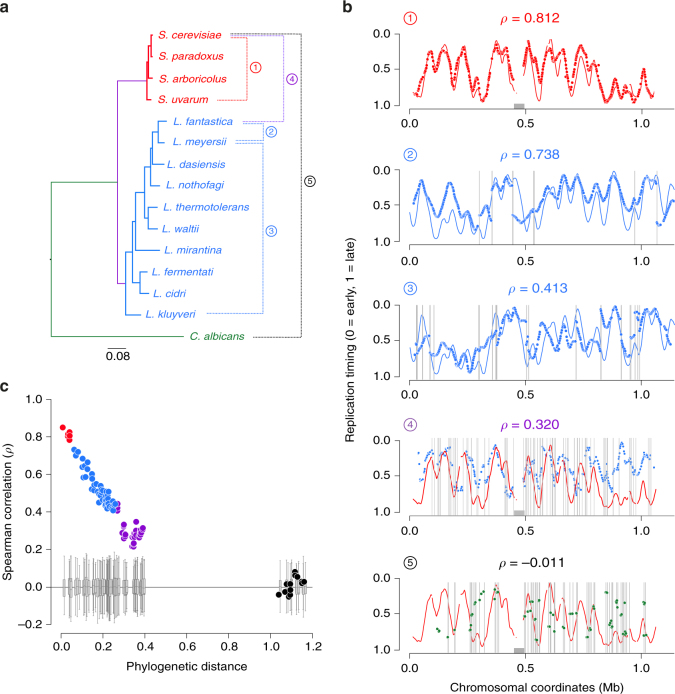
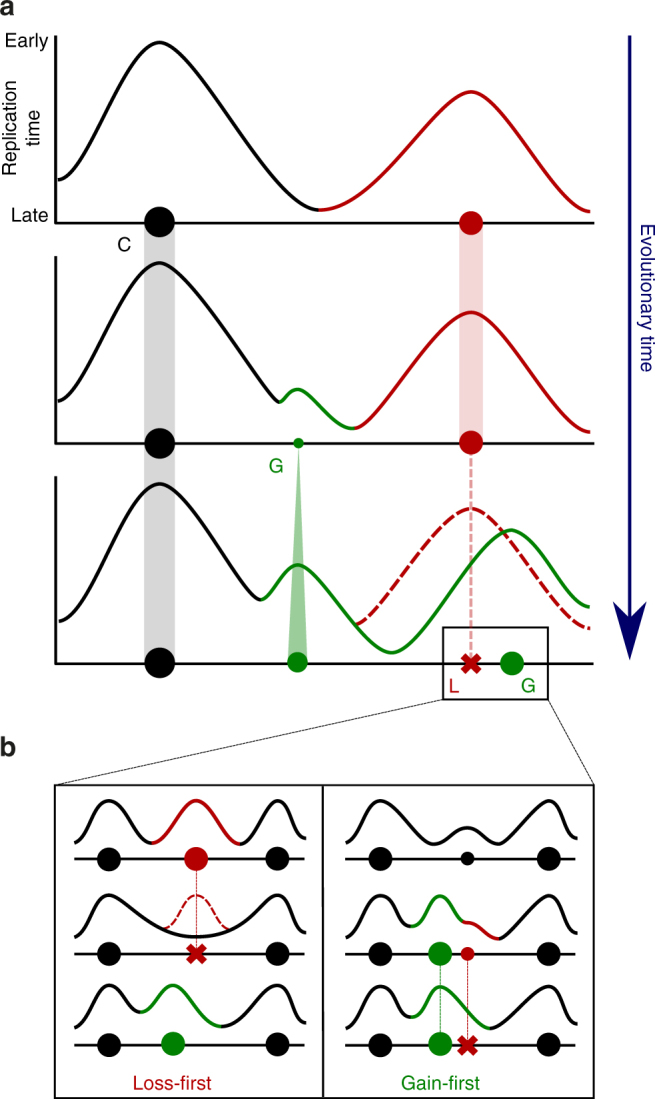
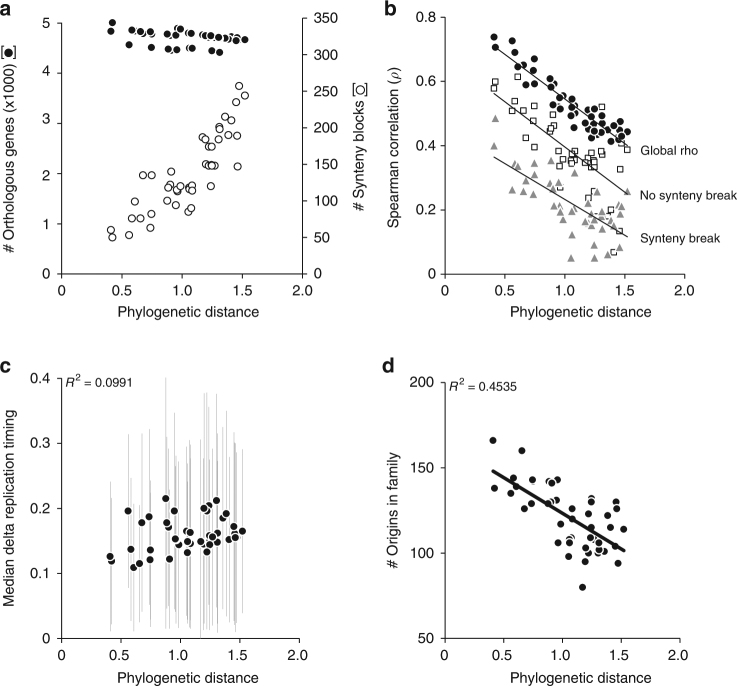
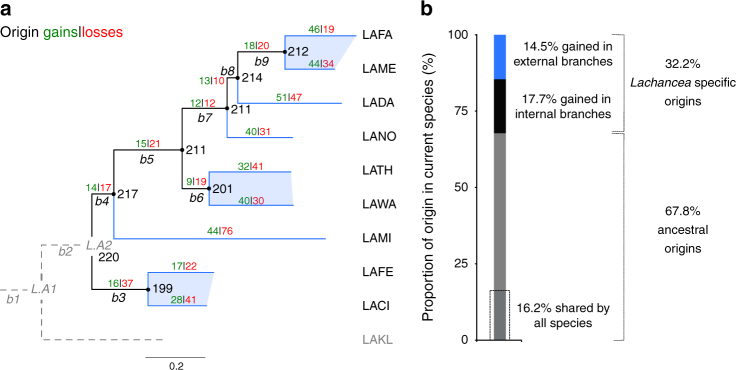
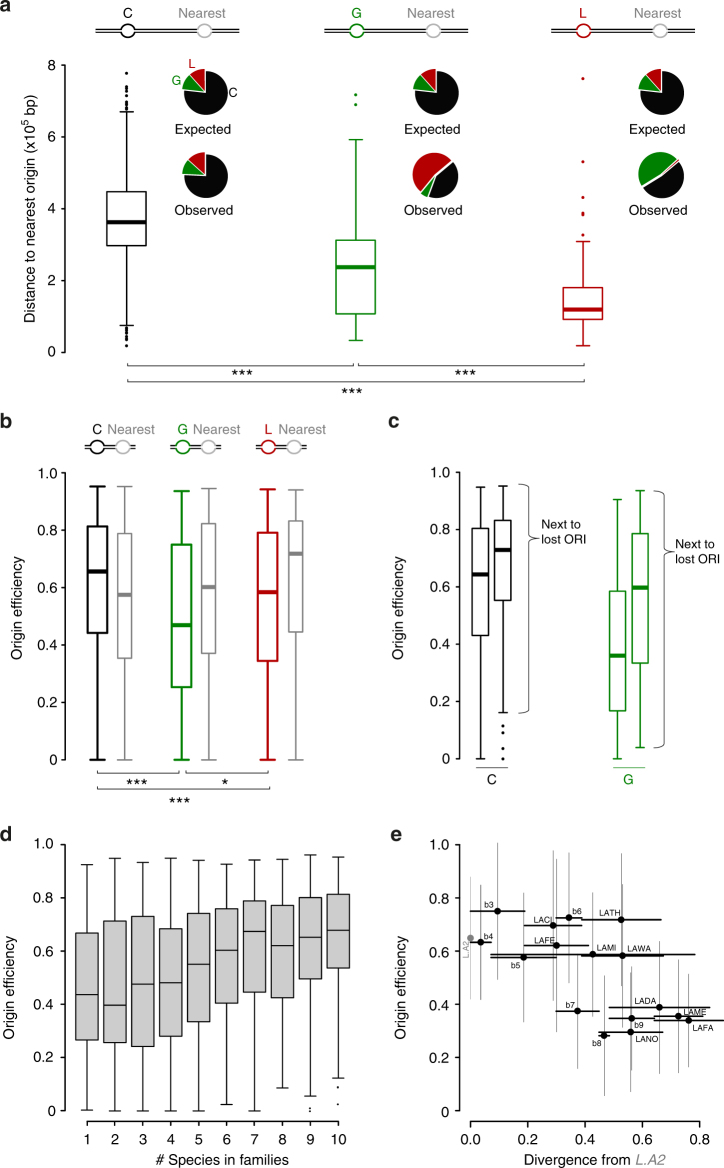
Genome replication is highly regulated in time and space, but the rules governing the remodeling of these programs during evolution remain largely unknown. We generated genome-wide replication timing profiles for ten Lachancea yeasts, covering a continuous evolutionary range from closely related to more divergent species. We show that replication programs primarily evolve through a highly dynamic evolutionary renewal of the cohort of active replication origins. We found that gained origins appear with low activity yet become more efficient and fire earlier as they evolutionarily age. By contrast, origins that are lost comprise the complete range of firing strength. Additionally, they preferentially occur in close vicinity to strong origins. Interestingly, despite high evolutionary turnover, active replication origins remain regularly spaced along chromosomes in all species, suggesting that origin distribution is optimized to limit large inter-origin intervals. We propose a model on the evolutionary birth, death, and conservation of active replication origins.
基因组复制在时间和空间上受到高度调控,但在进化过程中控制这些程序重塑的规则在很大程度上仍然未知。我们为十种 Lachancea 酵母生成了全基因组复制时间图谱,涵盖了从密切相关到更具差异的物种的连续进化范围。我们表明,复制程序主要通过活跃复制起点群体的高度动态进化更新来进化。我们发现,获得的起点起初活性较低,但随着进化年龄的增长,它们会变得更高效,更早启动。相比之下,丢失的起点包含了所有的启动强度范围。此外,它们优先发生在强起点的附近。有趣的是,尽管经历了高度的进化更替,活跃的复制起点在所有物种的染色体上仍然保持着有规律的间隔,这表明起点的分布被优化以限制大的起点间间隔。我们提出了一个关于活跃复制起点的诞生、死亡和保护的进化模型。