Descorps-Declère Stéphane, Saguez Cyril, Cournac Axel, Marbouty Martial, Rolland Thomas, Ma Laurence, Bouchier Christiane, Moszer Ivan, Dujon Bernard, Koszul Romain, Richard Guy-Franck
Institut Pasteur, Center of Bioinformatics, Biostatistics and Integrative Biology (C3BI), F-75015, Paris, France.
Institut Pasteur, Unité de Génétique Moléculaire des Levures, Département Génomes & Génétique, F-75015, Paris, France.
BMC Biol. 2015 Sep 2;13:69. doi: 10.1186/s12915-015-0177-6.
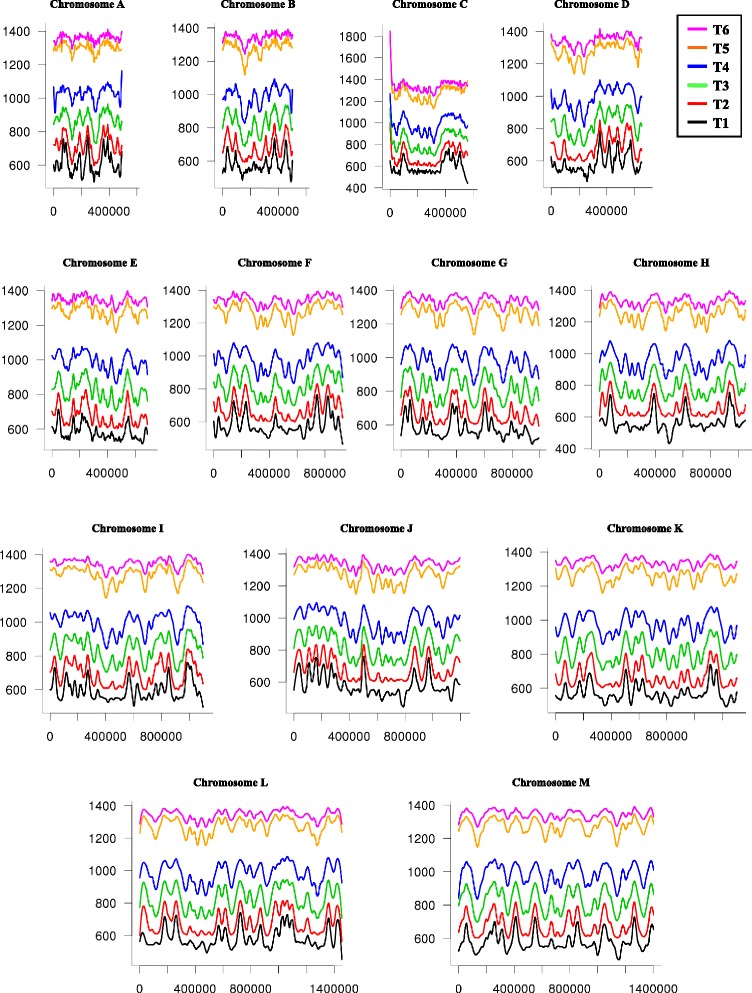
The opportunistic pathogen Candida glabrata is a member of the Saccharomycetaceae yeasts. Like its close relative Saccharomyces cerevisiae, it underwent a whole-genome duplication followed by an extensive loss of genes. Its genome contains a large number of very long tandem repeats, called megasatellites. In order to determine the whole replication program of the C. glabrata genome and its general chromosomal organization, we used deep-sequencing and chromosome conformation capture experiments.
We identified 253 replication fork origins, genome wide. Centromeres, HML and HMR loci, and most histone genes are replicated early, whereas natural chromosomal breakpoints are located in late-replicating regions. In addition, 275 autonomously replicating sequences (ARS) were identified during ARS-capture experiments, and their relative fitness was determined during growth competition. Analysis of ARSs allowed us to identify a 17-bp consensus, similar to the S. cerevisiae ARS consensus sequence but slightly more constrained. Megasatellites are not in close proximity to replication origins or termini. Using chromosome conformation capture, we also show that early origins tend to cluster whereas non-subtelomeric megasatellites do not cluster in the yeast nucleus.
Despite a shorter cell cycle, the C. glabrata replication program shares unexpected striking similarities to S. cerevisiae, in spite of their large evolutionary distance and the presence of highly repetitive large tandem repeats in C. glabrata. No correlation could be found between the replication program and megasatellites, suggesting that their formation and propagation might not be directly caused by replication fork initiation or termination.
机会致病菌光滑念珠菌是酵母科酵母的一员。与其近亲酿酒酵母一样,它经历了全基因组复制,随后基因大量丢失。其基因组包含大量非常长的串联重复序列,称为大卫星序列。为了确定光滑念珠菌基因组的整个复制程序及其一般染色体组织,我们使用了深度测序和染色体构象捕获实验。
我们在全基因组范围内鉴定出253个复制叉起始位点。着丝粒、HML和HMR位点以及大多数组蛋白基因早期复制,而天然染色体断点位于晚期复制区域。此外,在ARS捕获实验中鉴定出275个自主复制序列(ARS),并在生长竞争期间确定了它们的相对适应性。对ARS的分析使我们能够鉴定出一个17碱基对的共有序列,类似于酿酒酵母的ARS共有序列,但限制稍多。大卫星序列与复制起始点或终点并不紧邻。使用染色体构象捕获技术,我们还表明早期起始点倾向于聚集,而非亚端粒大卫星序列在酵母细胞核中不聚集。
尽管细胞周期较短,但光滑念珠菌的复制程序与酿酒酵母有着惊人的相似之处,尽管它们在进化上距离较远,且光滑念珠菌中存在高度重复的大串联重复序列。在复制程序和大卫星序列之间未发现相关性,这表明它们的形成和传播可能不是由复制叉起始或终止直接导致的。