Camera Donny M
Exercise and Nutrition Research Program, Mary MacKillop Institute for Health Research, Australian Catholic University, Melbourne, VIC, Australia.
Front Physiol. 2018 May 23;9:569. doi: 10.3389/fphys.2018.00569. eCollection 2018.
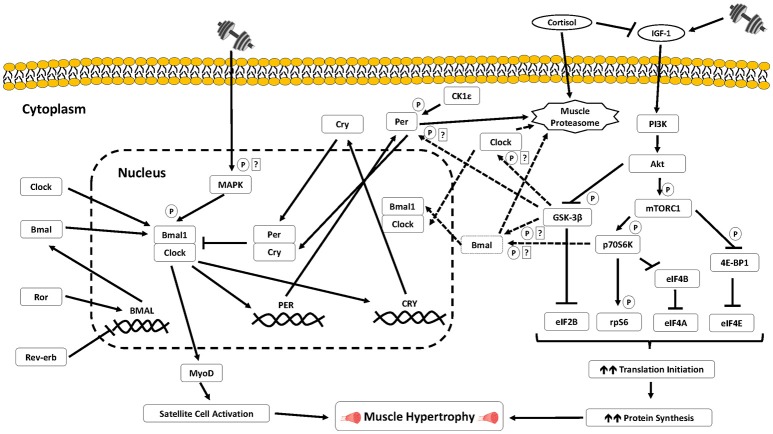
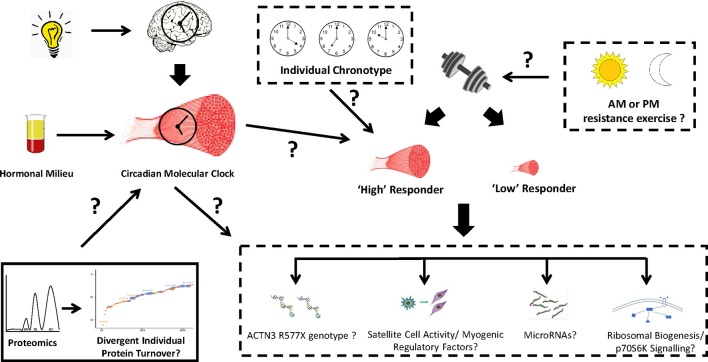
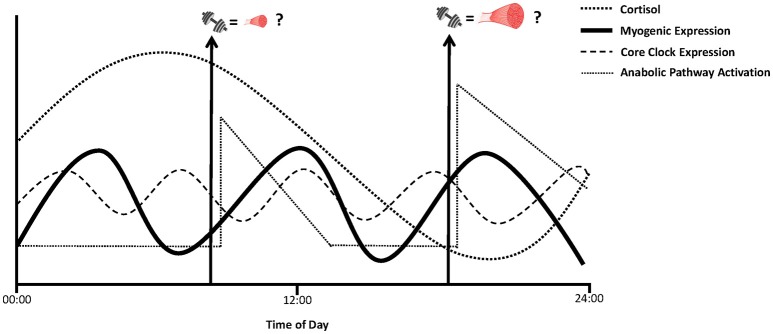
It is now well established that resistance exercise stimulates muscle protein synthesis and promotes gains in muscle mass and strength. However, considerable variability exists following standardized resistance training programs in the magnitude of muscle cross-sectional area and strength responses from one individual to another. Several studies have recently posited that alterations in satellite cell population, myogenic gene expression and microRNAs may contribute to individual variability in anabolic adaptation. One emerging factor that may also explain the variability in responses to resistance exercise is circadian rhythms and underlying molecular clock signals. The molecular clock is found in most cells within the body, including skeletal muscle, and principally functions to optimize the timing of specific cellular events around a 24 h cycle. Accumulating evidence investigating the skeletal muscle molecular clock indicates that exercise-induced contraction and its timing may regulate gene expression and protein synthesis responses which, over time, can influence and modulate key physiological responses such as muscle hypertrophy and increased strength. Therefore, the circadian clock may play a key role in the heterogeneous anabolic responses with resistance exercise. The central aim of this Hypothesis and Theory is to discuss and propose the potential interplay between the circadian molecular clock and established molecular mechanisms mediating muscle anabolic responses with resistance training. This article begins with a current review of the mechanisms associated with the heterogeneity in muscle anabolism with resistance training before introducing the molecular pathways regulating circadian function in skeletal muscle. Recent work showing members of the core molecular clock system can regulate myogenic and translational signaling pathways is also discussed, forming the basis for a possible role of the circadian clock in the variable anabolic responses with resistance exercise.
现已充分证实,抗阻运动可刺激肌肉蛋白质合成,并促进肌肉质量和力量的增加。然而,在标准化抗阻训练计划之后,个体之间肌肉横截面积和力量反应的大小存在相当大的差异。最近有几项研究认为,卫星细胞数量、成肌基因表达和微小RNA的改变可能导致合成代谢适应的个体差异。另一个可能解释抗阻运动反应差异的新因素是昼夜节律和潜在的分子时钟信号。分子时钟存在于体内大多数细胞中,包括骨骼肌,其主要功能是在24小时周期内优化特定细胞事件的时间安排。越来越多关于骨骼肌分子时钟的研究证据表明,运动诱导的收缩及其时间可能调节基因表达和蛋白质合成反应,随着时间的推移,这些反应会影响和调节肌肉肥大和力量增加等关键生理反应。因此,昼夜节律时钟可能在抗阻运动的异质性合成代谢反应中起关键作用。本假说与理论的核心目的是讨论并提出昼夜分子时钟与介导抗阻训练肌肉合成代谢反应的既定分子机制之间的潜在相互作用。本文首先综述了与抗阻训练肌肉合成代谢异质性相关的机制,然后介绍了调节骨骼肌昼夜节律功能的分子途径。还讨论了最近的研究工作,这些工作表明核心分子时钟系统的成员可以调节成肌和翻译信号通路,这为昼夜节律时钟在抗阻运动可变合成代谢反应中可能发挥的作用奠定了基础。