Maunder Ed, Plews Daniel J, Kilding Andrew E
Sports Performance Research Institute New Zealand, Auckland University of Technology, Auckland, New Zealand.
Front Physiol. 2018 May 23;9:599. doi: 10.3389/fphys.2018.00599. eCollection 2018.
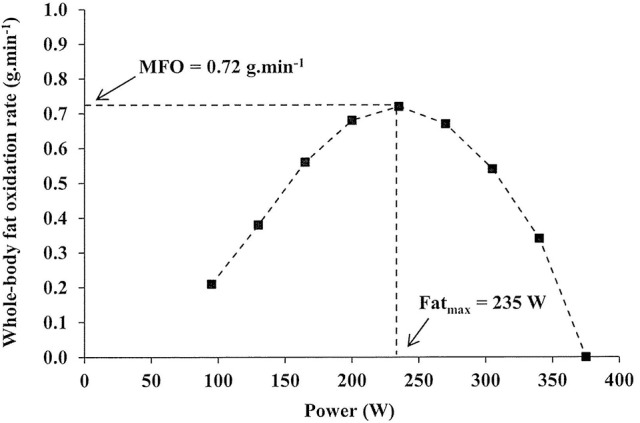
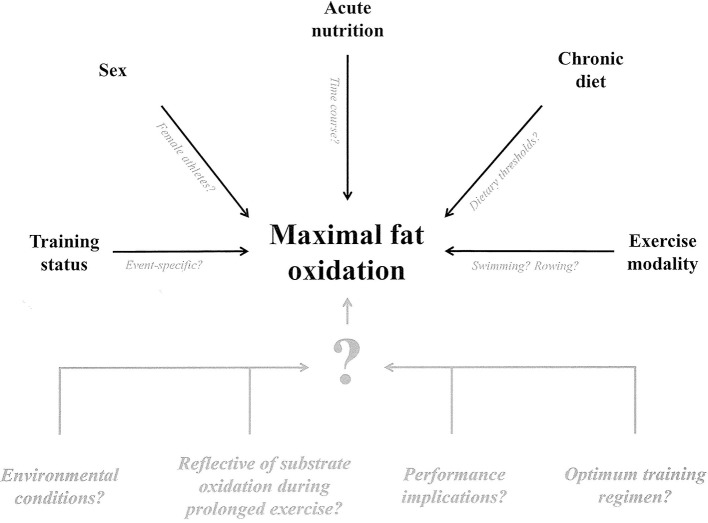
Using a short-duration step protocol and continuous indirect calorimetry, whole-body rates of fat and carbohydrate oxidation can be estimated across a range of exercise workloads, along with the individual maximal rate of fat oxidation (MFO) and the exercise intensity at which MFO occurs (Fat). These variables appear to have implications both in sport and health contexts. After discussion of the key determinants of MFO and Fat that must be considered during laboratory measurement, the present review sought to synthesize existing data in order to contextualize individually measured fat oxidation values. Data collected in homogenous cohorts on cycle ergometers after an overnight fast was synthesized to produce normative values in given subject populations. These normative values might be used to contextualize individual measurements and define research cohorts according their capacity for fat oxidation during exercise. Pertinent directions for future research were identified.
使用短期阶梯式方案和连续间接测热法,可以估算一系列运动负荷下全身脂肪和碳水化合物的氧化速率,以及个体最大脂肪氧化速率(MFO)和发生MFO时的运动强度(Fat)。这些变量似乎在运动和健康方面都有影响。在讨论实验室测量过程中必须考虑的MFO和Fat的关键决定因素之后,本综述试图综合现有数据,以便将个体测量的脂肪氧化值置于具体情境中。对空腹过夜后在自行车测力计上同质队列中收集的数据进行综合,以得出特定受试者群体的标准值。这些标准值可用于将个体测量结果置于具体情境中,并根据他们在运动期间的脂肪氧化能力来定义研究队列。确定了未来研究的相关方向。