Wu Shuxing, Hui Kwan San, Hui Kwun Nam
Institute of Applied Physics and Materials Engineering University of Macau Avenida da Universidade Taipa Macau China.
School of Mathematics University of East Anglia Norwich NR4 7TJ UK.
Adv Sci (Weinh). 2018 Feb 23;5(5):1700491. doi: 10.1002/advs.201700491. eCollection 2018 May.
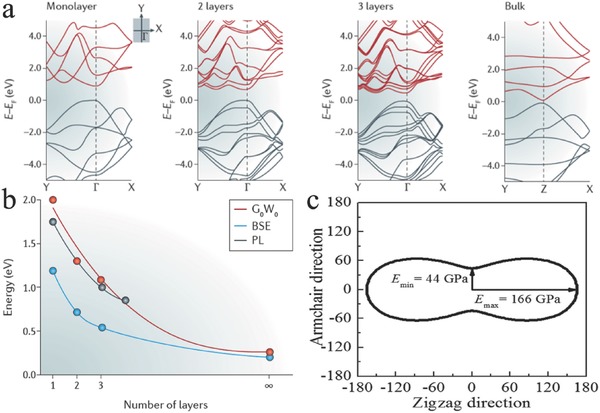
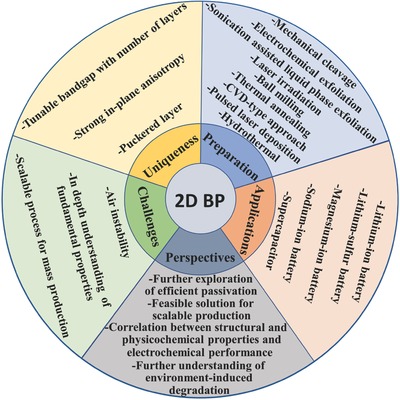
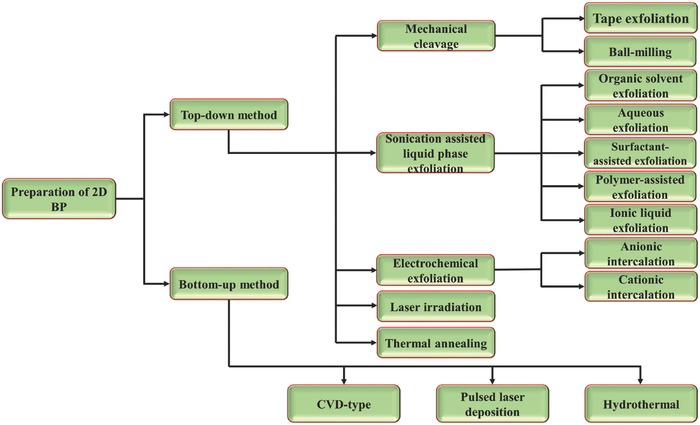
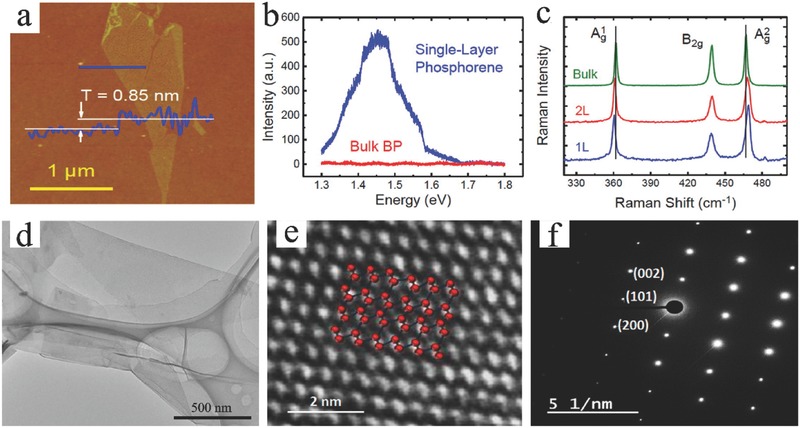
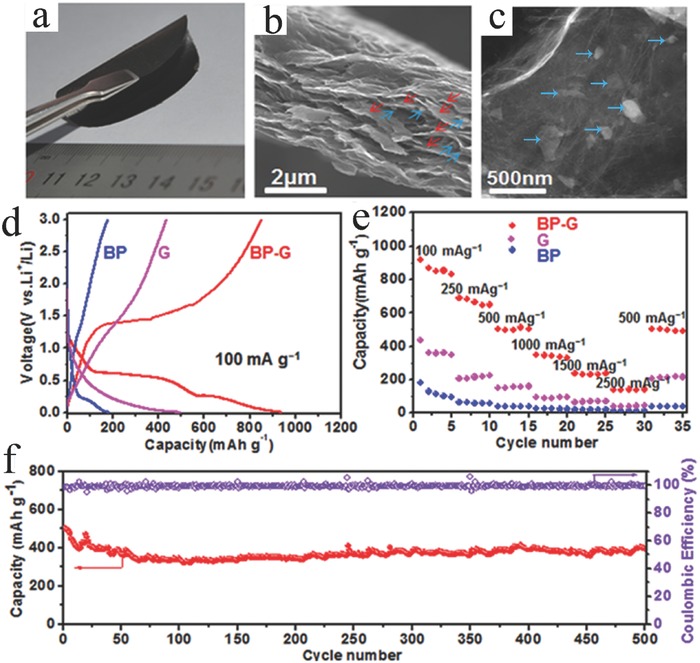
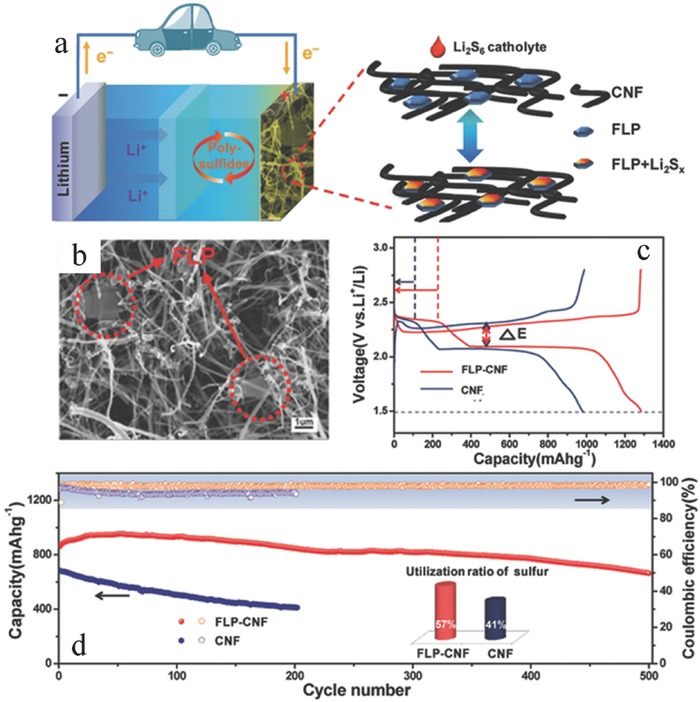
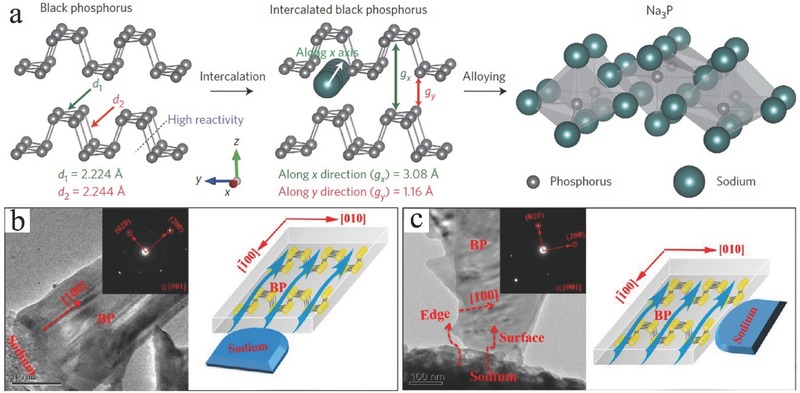
Black phosphorus (BP) is rediscovered as a 2D layered material. Since its first isolation in 2014, 2D BP has triggered tremendous interest in the fields of condensed matter physics, chemistry, and materials science. Given its unique puckered monolayer geometry, 2D BP displays many unprecedented properties and is being explored for use in numerous applications. The flexibility, large surface area, and good electric conductivity of 2D BP make it a promising electrode material for electrochemical energy storage devices (EESDs). Here, the experimental and theoretical progress of 2D BP is presented on the basis of its preparation methods. The structural and physiochemical properties, air instability, passivation, and EESD applications of 2D BP are discussed systemically. Specifically, the latest research findings on utilizing 2D BP in EESDs, such as lithium-ion batteries, supercapacitors, and emerging technologies (lithium-sulfur batteries, magnesium-ion batteries, and sodium-ion batteries), are summarized. On the basis of the current progress, a few personal perspectives on the existing challenges and future research directions in this developing field are provided.
黑磷(BP)作为一种二维层状材料被重新发现。自2014年首次分离以来,二维BP在凝聚态物理、化学和材料科学领域引发了极大的兴趣。鉴于其独特的褶皱单层几何结构,二维BP展现出许多前所未有的特性,并正在被探索用于众多应用。二维BP的柔韧性、大表面积和良好的导电性使其成为电化学储能装置(EESD)中一种很有前景的电极材料。在此,基于二维BP的制备方法介绍其实验和理论进展。系统地讨论了二维BP的结构和物理化学性质、空气不稳定性、钝化以及在EESD中的应用。具体而言,总结了在锂离子电池、超级电容器等EESD中利用二维BP的最新研究成果,以及新兴技术(锂硫电池、镁离子电池和钠离子电池)。基于当前的进展,对这个发展中的领域中存在的挑战和未来研究方向提供了一些个人观点。