Yousefi Mahmood, Saleh Hossein Najafi, Yaseri Mehdi, Mahvi Amir Hossein, Soleimani Hamed, Saeedi Zhyar, Zohdi Sara, Mohammadi Ali Akbar
Department of Environmental Health Engineering, School of Public Health, Tehran University of Medical Sciences, Tehran, Iran.
Torbat Heydariyeh University of Medical Sciences, Torbat Heydariyeh, Iran.
Data Brief. 2018 Feb 7;17:763-769. doi: 10.1016/j.dib.2018.02.003. eCollection 2018 Apr.
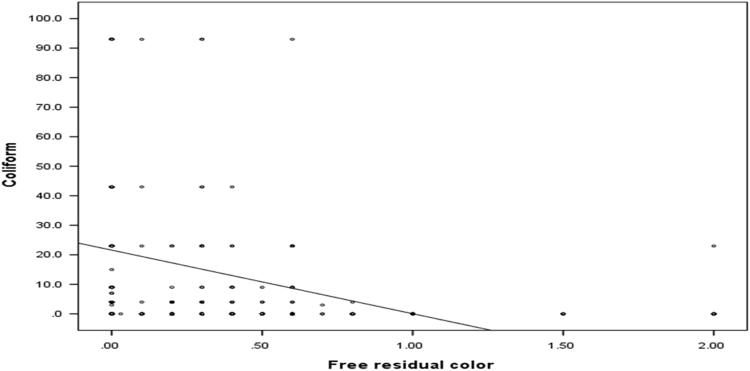
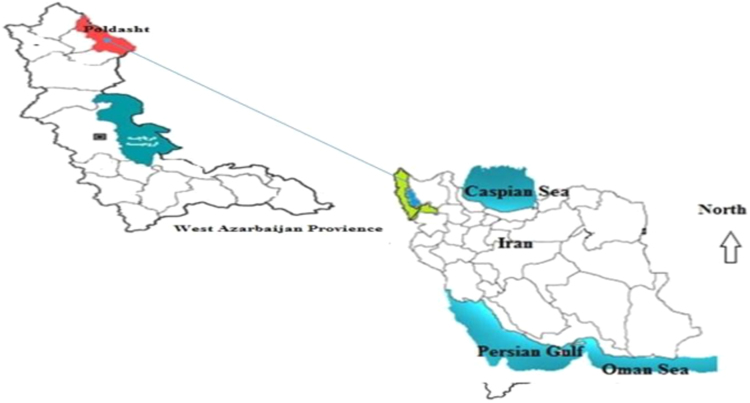
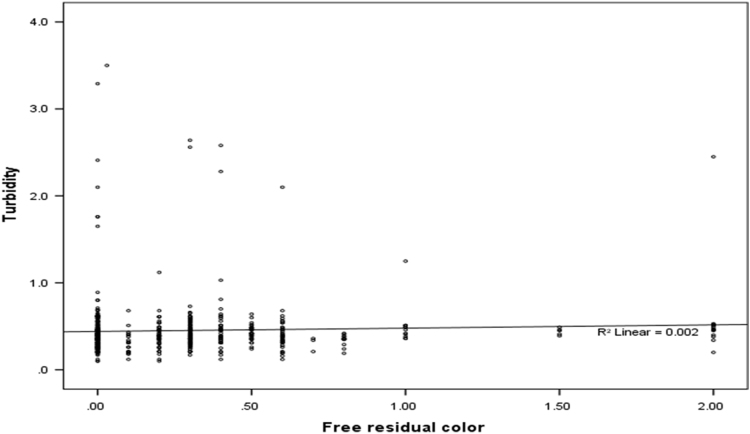
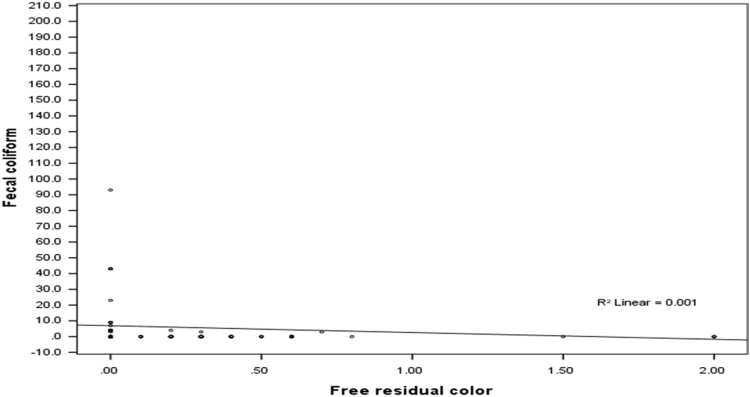
In this research, the villages with water supply systems under the supervision of the Water and Wastewater Company in Poldasht County, Iran in 2015 was studied. 648 samples were taken from 57 villages during 12month period to test for microbial quality according to the latest guidelines of WHO. Fecal coliform, coliform, turbidity, pH and free residual chlorine were analyzed. Also we used linear Regression statistical analysis for collected data. Result of Data showed that 13.6% of the villages under study had contaminated water resources. In 100 percent of the water sample resource the turbidity level was less than Iranian maximum permissible levels (5 NTU). There was a linear relation between the Free residual color and Coliform in different month of follow up ( = -0.154, < 0.001). Data suggests water resources should be comprehensively planned and monitored keeping in view the WHO recommended parameters.
本研究对2015年伊朗波尔达什特县水与污水处理公司监管下拥有供水系统的村庄进行了调查。在12个月的时间里,从57个村庄采集了648个样本,按照世界卫生组织的最新指南检测微生物质量。分析了粪大肠菌群、总大肠菌群、浊度、pH值和自由余氯。我们还对收集的数据进行了线性回归统计分析。数据结果显示,所研究的村庄中有13.6%的水资源受到污染。在100%的水样资源中,浊度水平低于伊朗最大允许水平(5 NTU)。在不同的随访月份中,自由余氯与总大肠菌群之间存在线性关系(=-0.154,<0.001)。数据表明,应参照世界卫生组织推荐的参数,对水资源进行全面规划和监测。