College of Medicine, Al-Imam Mohammad Ibn Saud Islamic University (IMSIU), Riyadh, Saudi Arabia.
Department of Parasitology, College of Medicine, Umm Al-Qura University, Mecca, Saudi Arabia.
BMC Public Health. 2018 Jun 8;18(1):710. doi: 10.1186/s12889-018-5626-z.
Malaria, Dengue and Chikungunya are vector borne diseases with shared endemic profiles and symptoms. Coinfections with any of these diseases could have fatal outcomes if left undiagnosed. Understanding the prevalence and distribution of coinfections is necessary to improve diagnosis and designing therapeutic interventions.
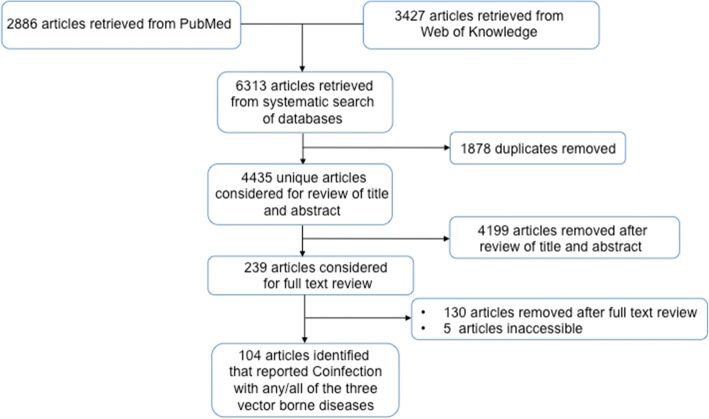
We have carried out a systematic search of the published literature based on PRISMA guidelines to identify cases of Malaria, Dengue and Chikungunya coinfections. We systematically reviewed the literature to identify eligible studies and extracted data regarding cases of coinfection from cross sectional studies, case reports, retrospective studies, prospective observational studies and surveillance reports.
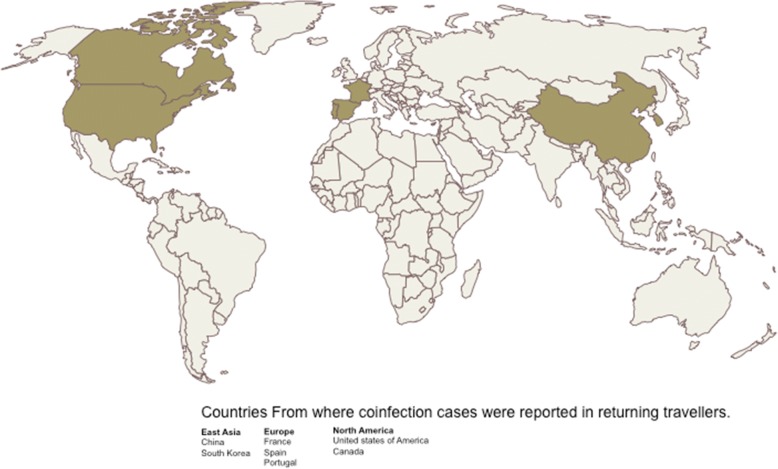
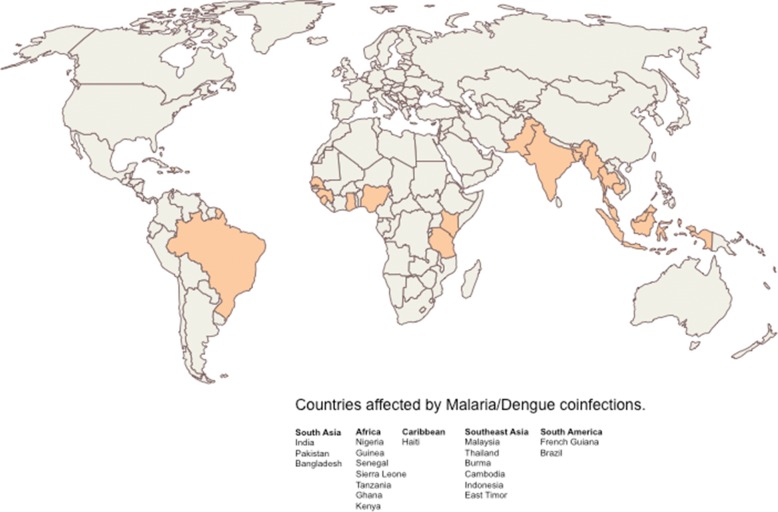
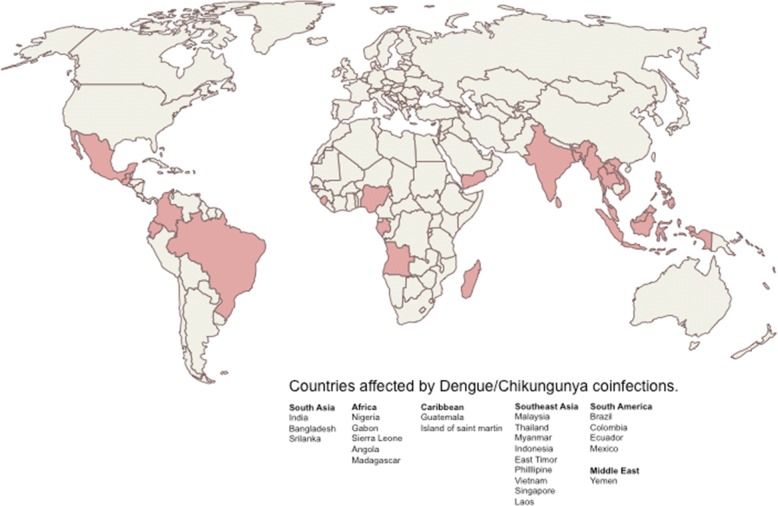
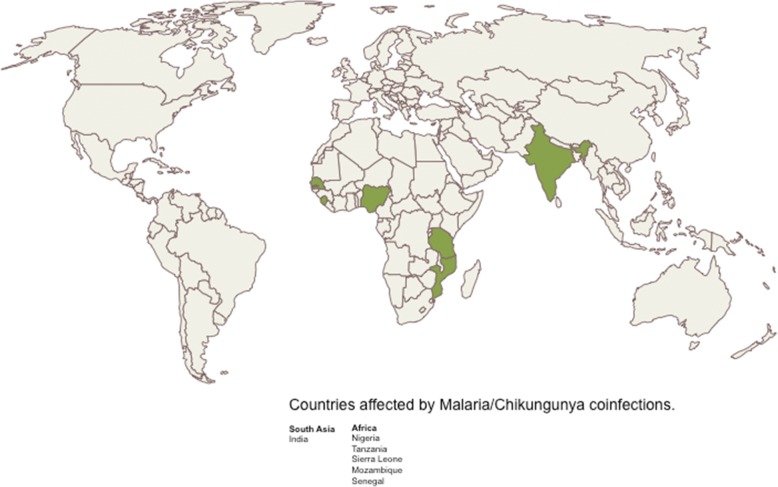
Care full screening resulted in 104 publications that met the eligibility criteria and reported Malaria/Dengue, Dengue/Chikungunya, Malaria/Chikungunya and Malaria/Dengue/Chikungunya coinfections. These coinfections were spread over six geographical locations and 42 different countries and are reported more frequently in the last 15 years possibly due to expanding epidemiology of Dengue and Chikungunya. Few of these reports have also analysed distinguishing features of coinfections. Malaria/Dengue coinfections were the most common coinfection followed by Dengue/Chikungunya, Malaria/Chikungunya and Malaria/Dengue/Chikungunya coinfections. P. falciparum and P. vivax were the commonest species found in cases of malaria coinfections and Dengue serotype-4 commonest serotype in cases of dengue coinfections. Most studies were reported from India. Nigeria and India were the only two countries from where all possible combinations of coinfections were reported.
We have comprehensively reviewed the literature associated with cases of coinfections of three important vector borne diseases to present a clear picture of their prevalence and distribution across the globe. The frequency of coinfections presented in the study suggests proper diagnosis, surveillance and management of cases of coinfection to avoid poor prognosis of the underlying etiology.
疟疾、登革热和基孔肯雅热是具有共同流行特征和症状的虫媒病。如果不进行诊断,这些疾病中的任何一种与其他疾病同时感染都可能导致致命后果。了解合并感染的流行情况和分布情况对于提高诊断水平和设计治疗干预措施非常必要。
我们按照 PRISMA 指南进行了系统的文献检索,以确定疟疾、登革热和基孔肯雅热合并感染的病例。我们系统地回顾了文献,以确定符合条件的研究,并从横断面研究、病例报告、回顾性研究、前瞻性观察性研究和监测报告中提取关于合并感染病例的数据。
经过仔细筛选,有 104 篇符合入选标准的文献报道了疟疾/登革热、登革热/基孔肯雅热、疟疾/基孔肯雅热和疟疾/登革热/基孔肯雅热合并感染。这些合并感染分布在六个地理位置和 42 个不同的国家,在过去 15 年中报告更为频繁,这可能是由于登革热和基孔肯雅热的流行病学不断扩大。其中一些报告还分析了合并感染的特征。疟疾/登革热合并感染最为常见,其次是登革热/基孔肯雅热、疟疾/基孔肯雅热和疟疾/登革热/基孔肯雅热合并感染。在疟疾合并感染病例中,最常见的疟原虫种类是恶性疟原虫和间日疟原虫,在登革热合并感染病例中,最常见的登革热血清型是血清型 4。大多数研究来自印度。尼日利亚和印度是仅有的两个报告了所有可能的合并感染组合的国家。
我们全面审查了与三种重要虫媒病合并感染相关的文献,以清晰呈现其在全球的流行情况和分布情况。研究中报告的合并感染频率表明,需要对合并感染病例进行正确诊断、监测和管理,以避免潜在病因预后不良。