Justice Nicholas J
Institute of Molecular Medicine, University of Texas Health Sciences Center, Houston, TX, 77030, USA.
Neurobiol Stress. 2018 Apr 21;8:127-133. doi: 10.1016/j.ynstr.2018.04.002. eCollection 2018 Feb.
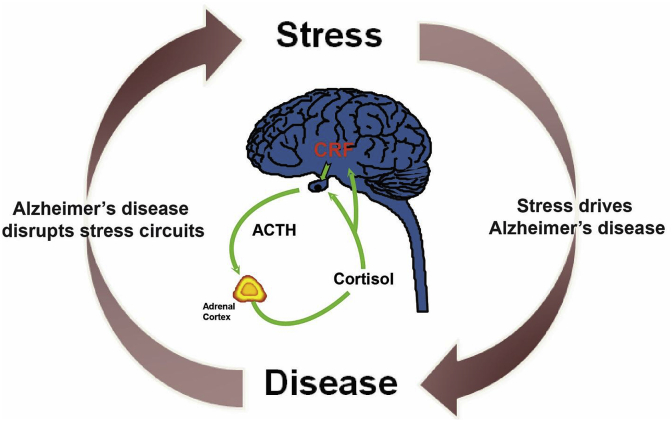
Stress is critically involved in the development and progression of disease. From the stress of undergoing treatments to facing your own mortality, the physiological processes that stress drives have a serious detrimental effect on the ability to heal, cope and maintain a positive quality of life. This is becoming increasingly clear in the case of neurodegenerative diseases. Neurodegenerative diseases involve the devastating loss of cognitive and motor function which is stressful in itself, but can also disrupt neural circuits that mediate stress responses. Disrupting these circuits produces aberrant emotional and aggressive behavior that causes long-term care to be especially difficult. In addition, added stress drives progression of the disease and can exacerbate symptoms. In this review, I describe how neural and endocrine pathways activated by stress interact with ongoing neurodegenerative disease from both a clinical and experimental perspective.
压力与疾病的发生和发展密切相关。从接受治疗的压力到面对自身的死亡,压力所驱动的生理过程对愈合、应对能力以及维持积极的生活质量产生严重的不利影响。在神经退行性疾病的情况下,这一点正变得越来越明显。神经退行性疾病涉及认知和运动功能的毁灭性丧失,这本身就具有压力,而且还会破坏介导应激反应的神经回路。破坏这些回路会产生异常的情绪和攻击性行为,使得长期护理变得尤为困难。此外,额外的压力会推动疾病的进展并加重症状。在这篇综述中,我从临床和实验的角度描述了由压力激活的神经和内分泌途径如何与正在发生的神经退行性疾病相互作用。