Ding Y H, Floren M, Tan W
Department of Mechanical Engineering, University of Colorado at Boulder, Boulder, CO 80309, USA.
Cardiovascular Pulmonary Research and Developmental Lung Biology Laboratories, University of Colorado Denver, Aurora, CO 80045, USA.
Biosurf Biotribol. 2016 Dec;2(4):121-136. doi: 10.1016/j.bsbt.2016.11.001. Epub 2016 Nov 17.
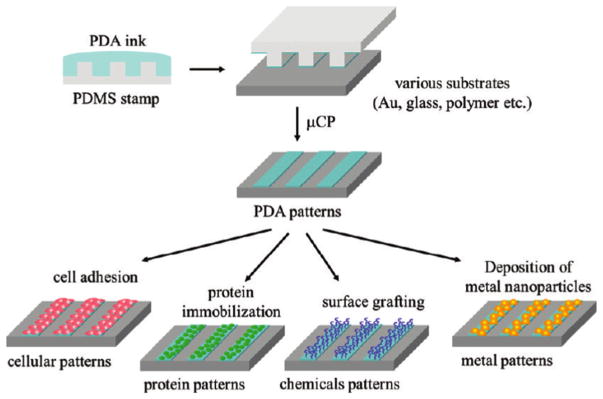
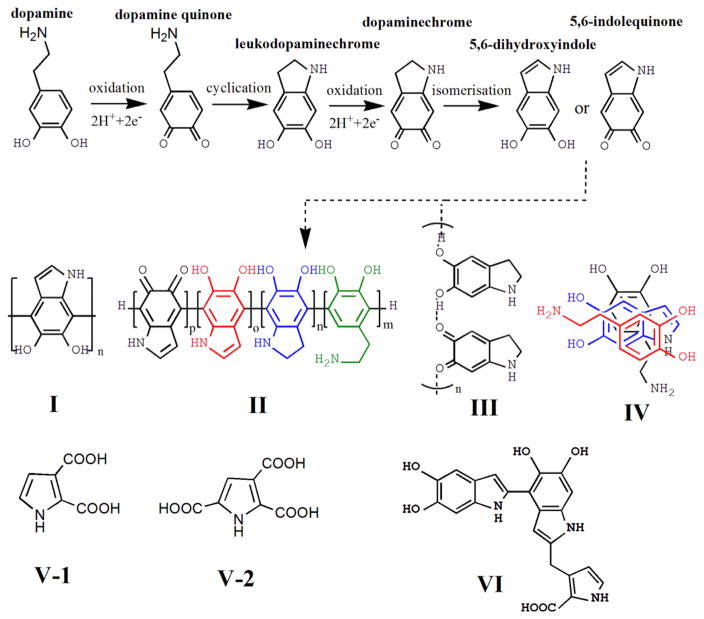
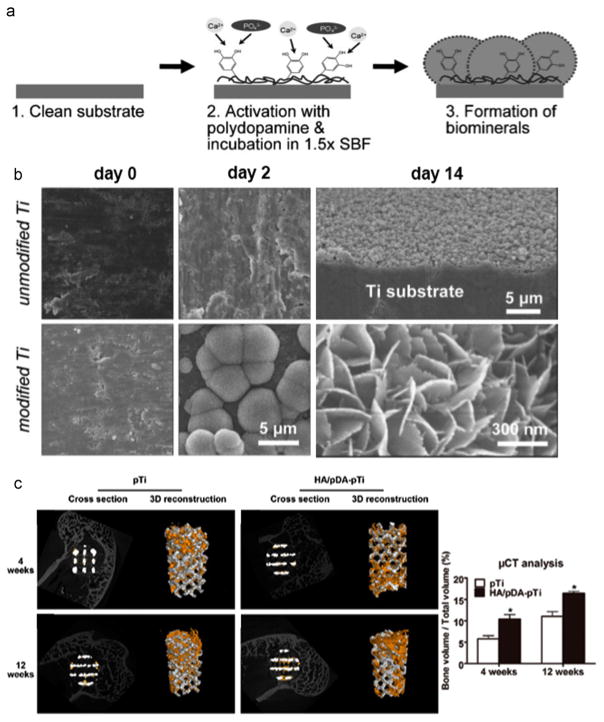
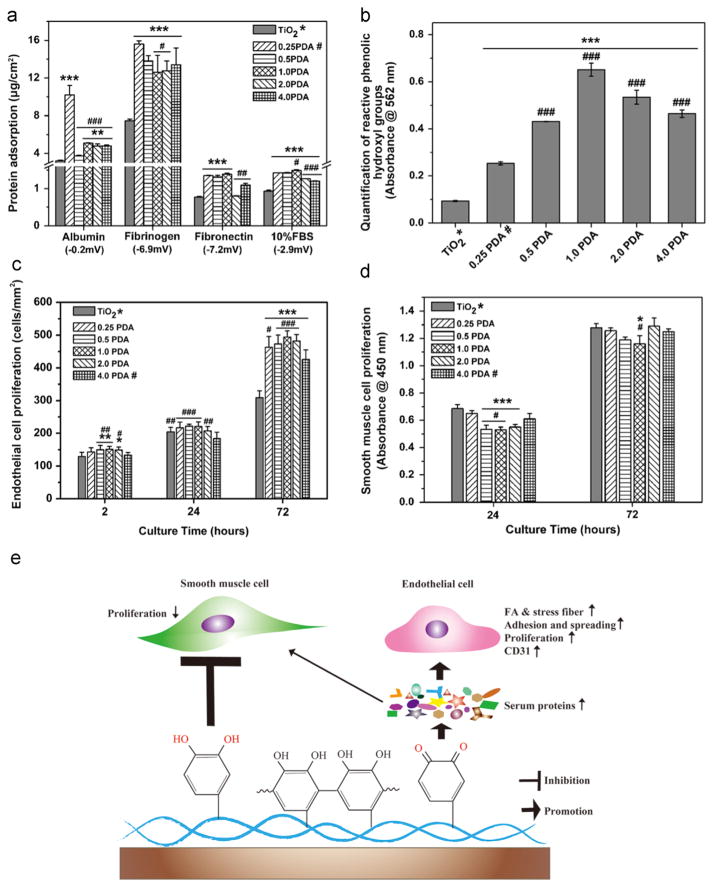
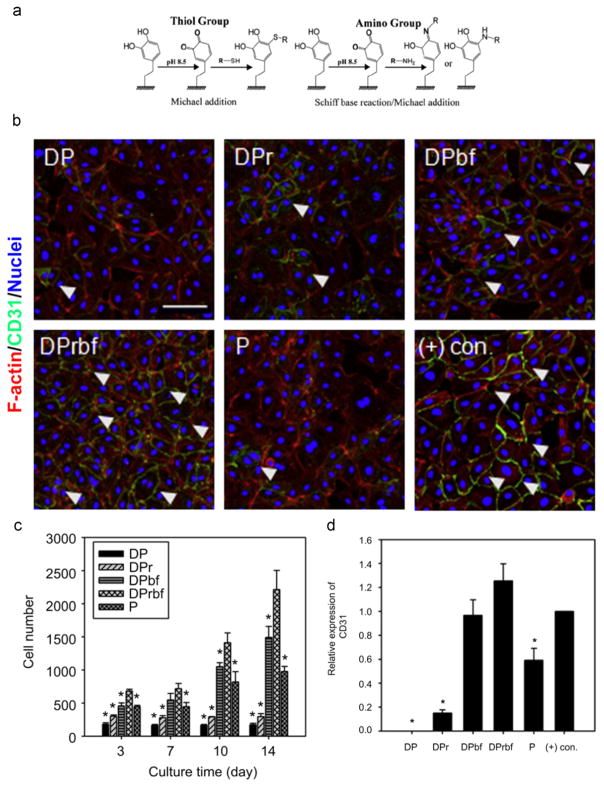
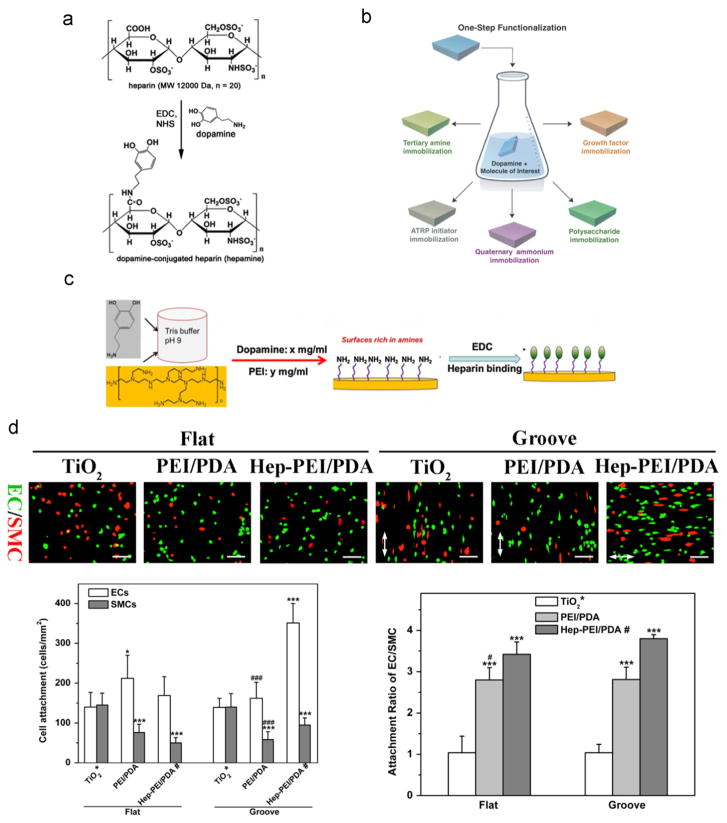
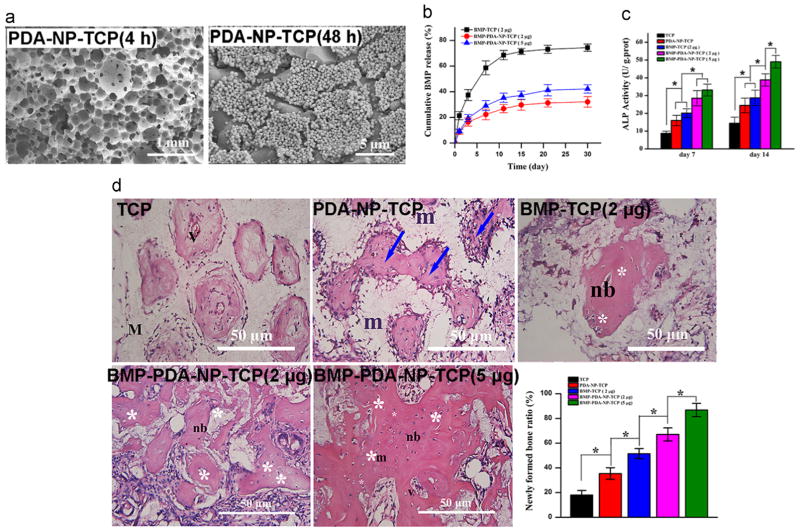
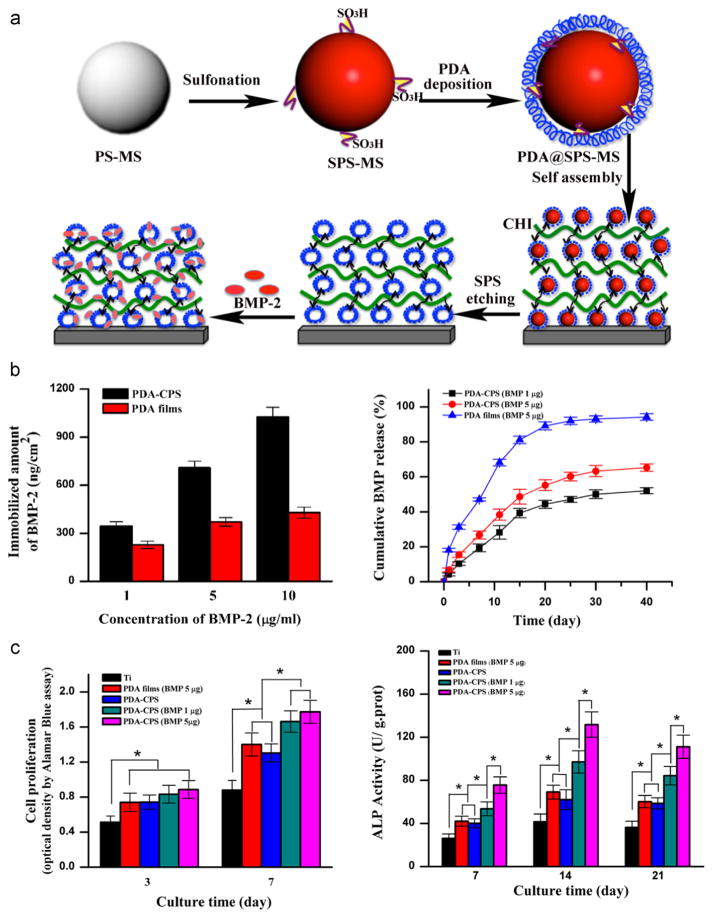
Surface functionalization via molecular design has been a key approach to incorporate new functionalities into existing biomaterials for biomedical application. Mussel-inspired polydopamine (PDA) has aroused great interest as a new route to the functionalization of biomaterials, due to its simplicity and material independency in deposition, favorable interactions with cells, and strong reactivity for secondary functionalization. Herein, this review attempts to highlight the recent findings and progress of PDA in bio-surface functionalization for biomedical applications. The efforts made to elucidate the polymerization mechanism, PDA structure, and the preparation parameters have been discussed. Interactions between PDA coatings and the various cell types involved in different biomedical applications including general cell adhesion, bone regeneration, blood compatibility, and antimicrobial activity have also been highlighted. A brief discussion of post-functionalization of PDA and nanostructured PDA is also provided.
通过分子设计进行表面功能化一直是将新功能整合到现有生物材料中以用于生物医学应用的关键方法。受贻贝启发的聚多巴胺(PDA)作为一种生物材料功能化的新途径引起了极大兴趣,这是由于其沉积过程的简单性和材料无关性、与细胞的良好相互作用以及二次功能化的强反应性。在此,本综述试图突出PDA在生物医学应用的生物表面功能化方面的最新发现和进展。已讨论了为阐明聚合机制、PDA结构和制备参数所做的努力。还强调了PDA涂层与不同生物医学应用中涉及的各种细胞类型之间的相互作用,包括一般细胞粘附、骨再生、血液相容性和抗菌活性。还简要讨论了PDA的后功能化和纳米结构PDA。