Charité - Universitätsmedizin Berlin, Corporate Member of Freie Universität Berlin, Humboldt-Universität zu Berlin, Berlin, Germany.
Department of ORL, Head and Neck Surgery, Berlin Institute of Health, Berlin, Germany.
Ear Hear. 2019 Mar/Apr;40(2):219-226. doi: 10.1097/AUD.0000000000000614.
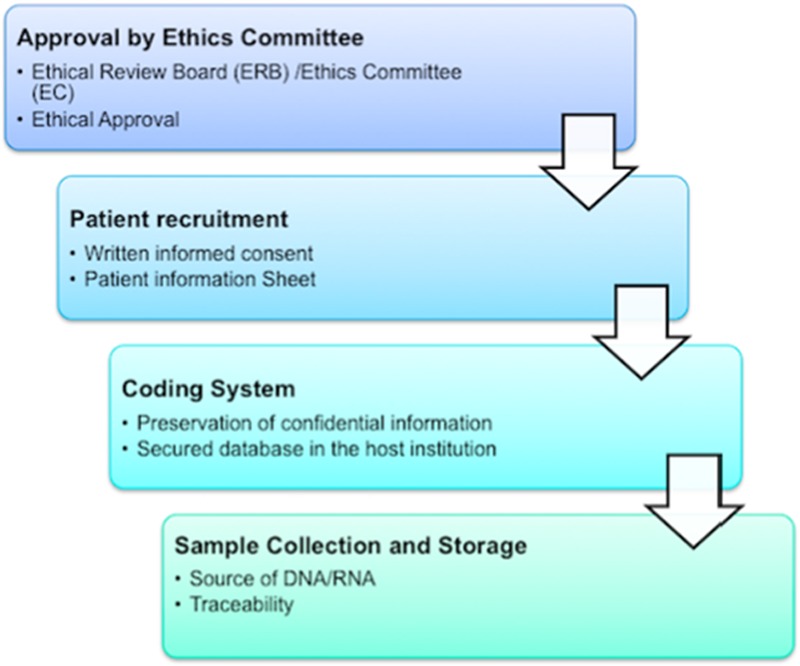
Research on the genetic basis of tinnitus is still in its first steps. A group of scientists dedicated to tinnitus genetics within European Tinnitus Network (TINNET) network recognize that further progress requires multicenter collaborative efforts for defining contributing genes. The purpose of the present work is to provide instructions regarding collection, processing, storage, and shipment of samples intended for genetic studies in auditory research.
One part of the recommendations has a general character; another part is of particular importance for auditory healthcare practitioners such as otolaryngology physicians, audiologists, and general practitioners.
We provide a set of instructions and various options for obtaining samples. We give advice regarding sample processing, storage, and shipment and define the minimal and essential clinical information that should accompany the samples collected for genetic processing.
These recommendations offer a basis to standardize and optimize collaborations between geneticists and healthcare practitioners specialized in tinnitus and hearing disorders.
耳鸣的遗传学研究仍处于起步阶段。一组致力于耳鸣遗传学研究的科学家在欧洲耳鸣网络(TINNET)中认识到,进一步的进展需要多中心协作努力来确定致病基因。本研究的目的是为拟用于听觉研究的遗传研究的样本收集、处理、存储和运输提供指导。
建议的一部分具有一般性;另一部分对于耳鼻喉科医生、听力学家和全科医生等听觉保健从业者尤为重要。
我们提供了一组指令和获取样本的各种选项。我们就样本处理、存储和运输提供建议,并定义了应随样本收集的用于遗传处理的最小和必要的临床信息。
这些建议为遗传学家和专门从事耳鸣和听力障碍的保健医生之间的合作提供了标准化和优化的基础。