Moulder David E, Hatoum Diana, Tay Enoch, Lin Yiguang, McGowan Eileen M
School of Life Sciences, University of Technology Sydney, 15 Broadway, Ultimo NSW 2007, Australia.
Viral Hepatitis Pathogenesis Group, The Westmead Institute for Medical Research, University of Sydney, 176 Hawkesbury Road, Westmead NSW 2145, Australia.
Cancers (Basel). 2018 Jun 8;10(6):189. doi: 10.3390/cancers10060189.
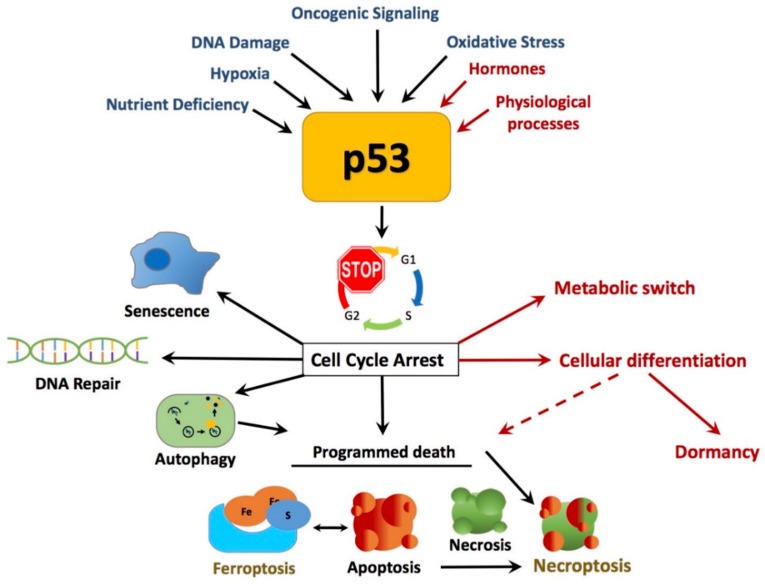
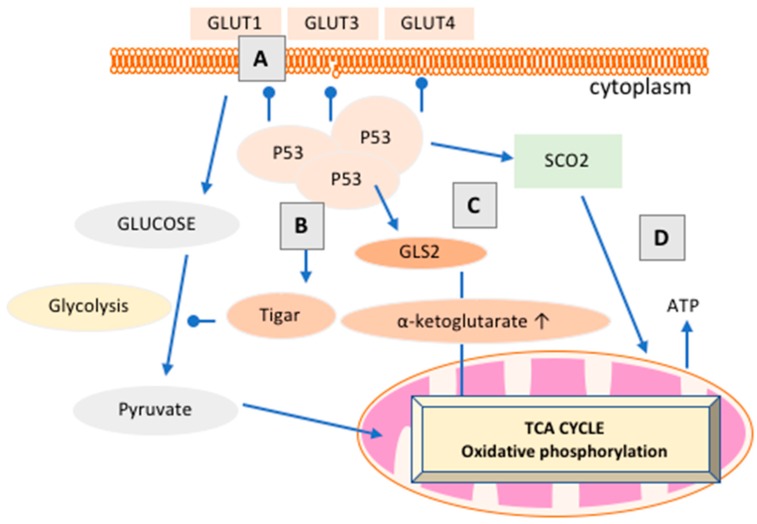
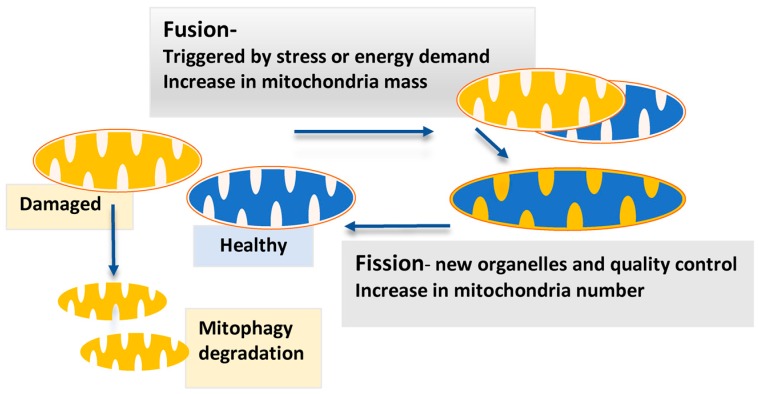
Cancer research has been heavily geared towards genomic events in the development and progression of cancer. In contrast, metabolic regulation, such as aberrant metabolism in cancer, is poorly understood. Alteration in cellular metabolism was once regarded simply as a consequence of cancer rather than as playing a primary role in cancer promotion and maintenance. Resurgence of cancer metabolism research has identified critical metabolic reprogramming events within biosynthetic and bioenergetic pathways needed to fulfill the requirements of cancer cell growth and maintenance. The tumor suppressor protein p53 is emerging as a key regulator of metabolic processes and metabolic reprogramming in cancer cells—balancing the pendulum between cell death and survival. This review provides an overview of the classical and emerging non-classical tumor suppressor roles of p53 in regulating mitochondrial dynamics: mitochondrial engagement in cell death processes in the prevention of cancer. On the other hand, we discuss p53 as a key metabolic switch in cellular function and survival. The focus is then on the conceivable roles of p53 in breast cancer metabolism. Understanding the metabolic functions of p53 within breast cancer metabolism will, in due course, reveal critical metabolic hotspots that cancers advantageously re-engineer for sustenance. Illustration of these events will pave the way for finding novel therapeutics that target cancer metabolism and serve to overcome the breast cancer burden.
癌症研究一直高度关注癌症发生和发展过程中的基因组事件。相比之下,人们对代谢调节,如癌症中的异常代谢,了解甚少。细胞代谢的改变曾一度仅被视为癌症的结果,而非在癌症促进和维持过程中发挥主要作用。癌症代谢研究的复兴已经确定了生物合成和生物能量途径中关键的代谢重编程事件,这些事件是满足癌细胞生长和维持需求所必需的。肿瘤抑制蛋白p53正成为癌细胞代谢过程和代谢重编程的关键调节因子——在细胞死亡和存活之间保持平衡。本综述概述了p53在调节线粒体动力学方面的经典和新出现的非经典肿瘤抑制作用:线粒体参与细胞死亡过程以预防癌症。另一方面,我们讨论p53作为细胞功能和存活中的关键代谢开关。重点随后放在p53在乳腺癌代谢中可能发挥的作用上。了解p53在乳腺癌代谢中的代谢功能,将适时揭示癌症为维持生存而有利地重新构建的关键代谢热点。阐明这些事件将为寻找针对癌症代谢的新型疗法铺平道路,并有助于克服乳腺癌负担。