School of Public Health, Georgia State University, Atlanta, GA 30303, USA.
Department of Geosciences, College of Arts and Sciences, Georgia State University, Atlanta, GA 30303, USA.
Int J Environ Res Public Health. 2018 Jun 9;15(6):1216. doi: 10.3390/ijerph15061216.
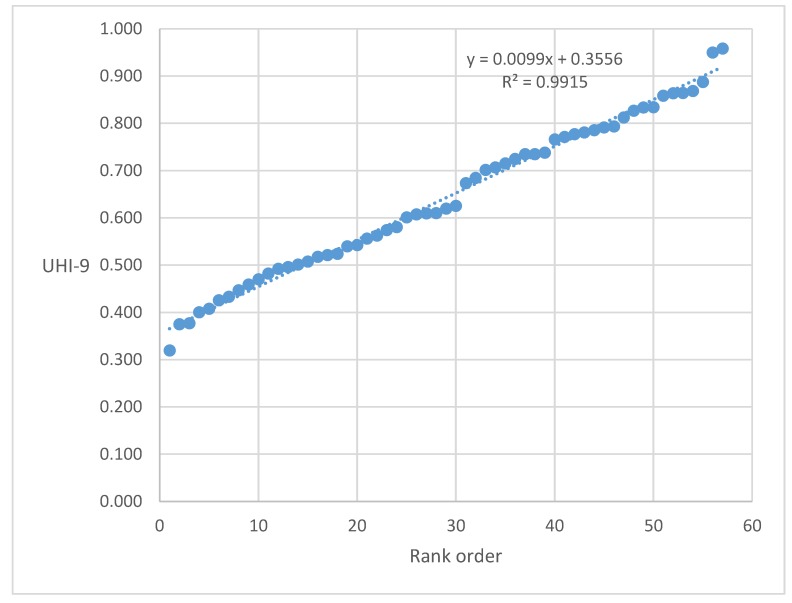
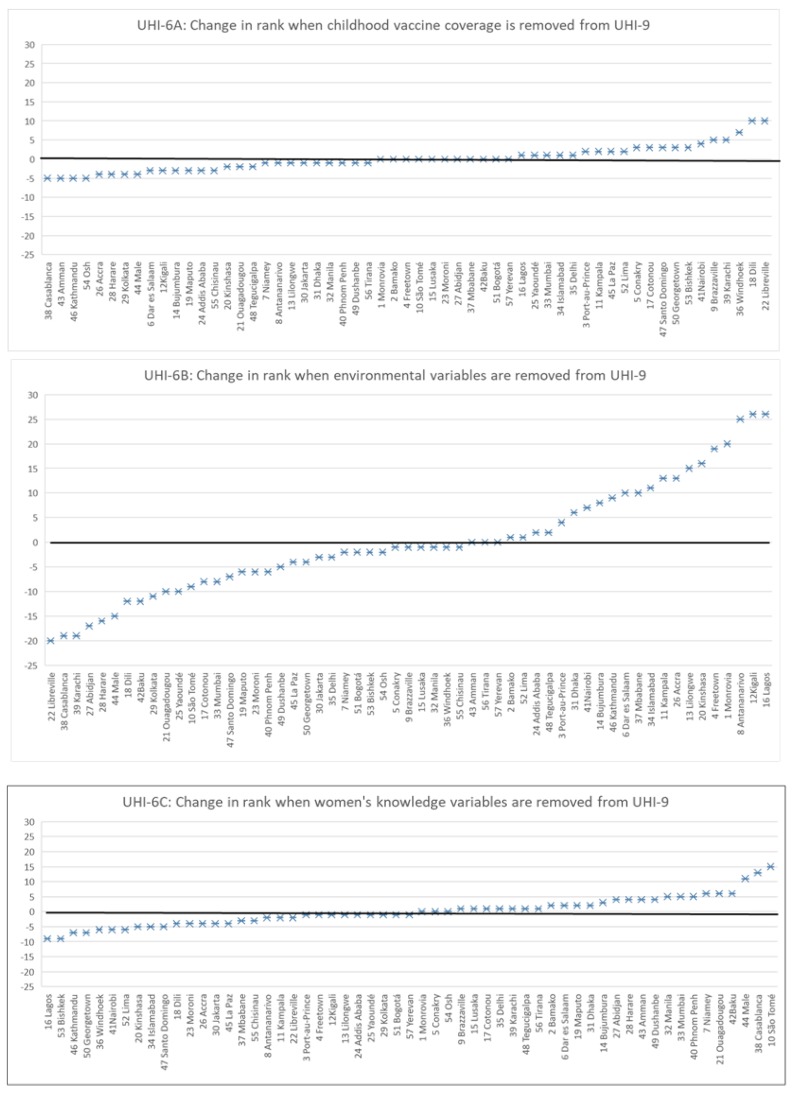
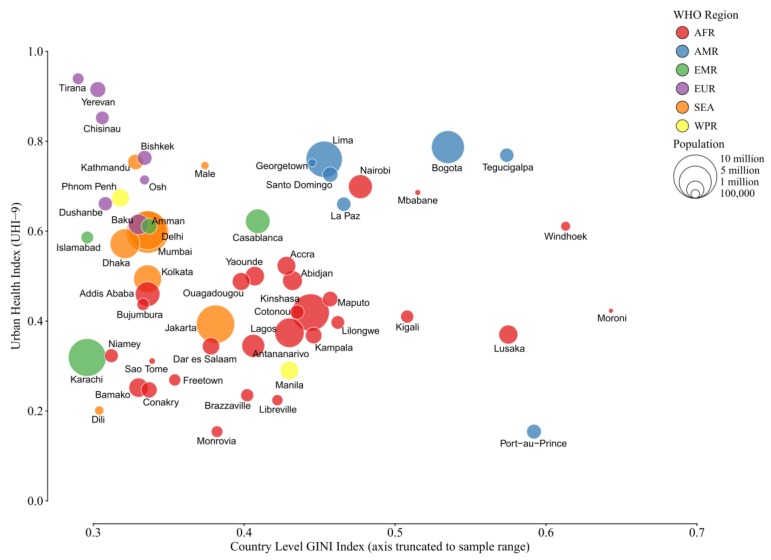
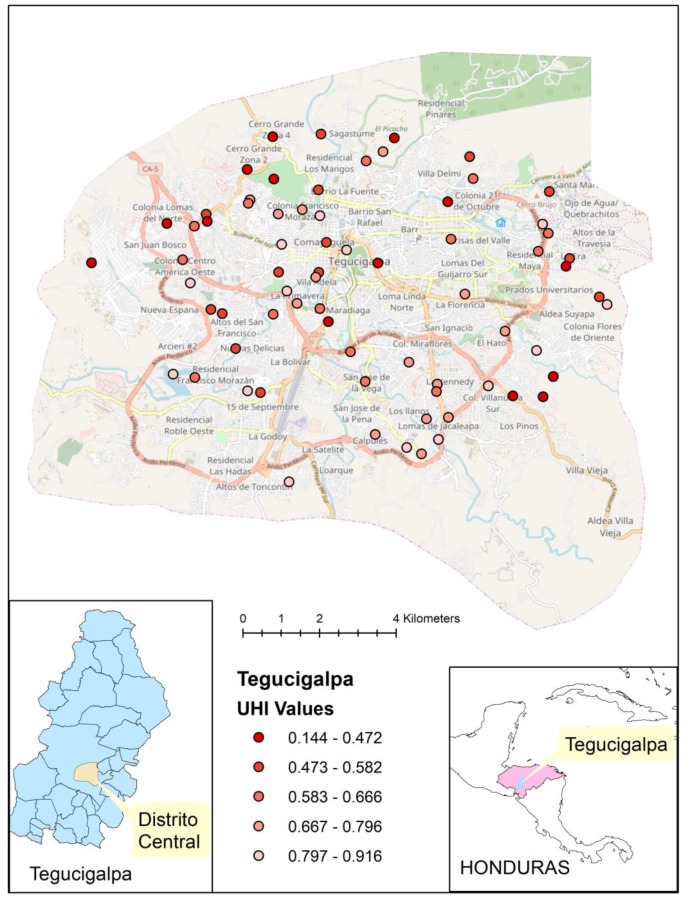
The relative significance of indicators and determinants of health is important for local public health workers and planners. Of similar importance is a method for combining and evaluating such markers. We used a recently developed index, the Urban Health Index (UHI), to examine the impact of environmental variables on the overall health of cities. We used the UHI to rank 57 of the world’s largest cities (based on population size) in low- and middle-income countries. We examined nine variables in various combinations that were available from the Demographic and Health Surveys conducted in these countries. When arranged in ascending order, the distribution of UHIs follows the previously described pattern of gradual linear increase, with departures at each tail. The rank order of cities did not change materially with the omission of variables about women’s health knowledge or childhood vaccinations. Omission of environmental variables (a central water supply piped into homes, improved sanitation, and indoor solid fuel use) altered the rank order considerably. The data suggest that environmental indicators, measures of key household level risk to health, may play a vital role in the overall health of urban communities.
健康指标和决定因素的相对重要性对当地公共卫生工作者和规划者很重要。同样重要的是一种组合和评估这些标志物的方法。我们使用了最近开发的指标,即城市健康指数 (UHI),来研究环境变量对城市整体健康的影响。我们使用 UHI 对全球 57 个人口最多的中低收入国家的城市进行了排名。我们检查了这些国家的人口与健康调查中提供的各种组合的九个变量。按照 UHI 从低到高的顺序排列,分布情况呈现出先前描述的逐渐线性增加模式,每个尾部都有偏离。在排除了有关妇女健康知识或儿童疫苗接种的变量后,城市的排名并没有实质性变化。如果省略环境变量(家庭用水的中央管道、改善的卫生设施和室内固体燃料使用),排名顺序会发生很大变化。这些数据表明,环境指标,即衡量家庭层面健康风险的关键指标,可能在城市社区的整体健康中发挥重要作用。