Department of Orthopedics, Shanghai Tenth People's Hospital, Tongji University School of Medicine, Shanghai 200072, China.
Department of Orthopedics, Changhai Hospital of Shanghai, The Second Military Medical University, Shanghai 200433, China.
Mol Cells. 2018 Jun;41(6):523-531. doi: 10.14348/molcells.2018.2200. Epub 2018 Jun 11.
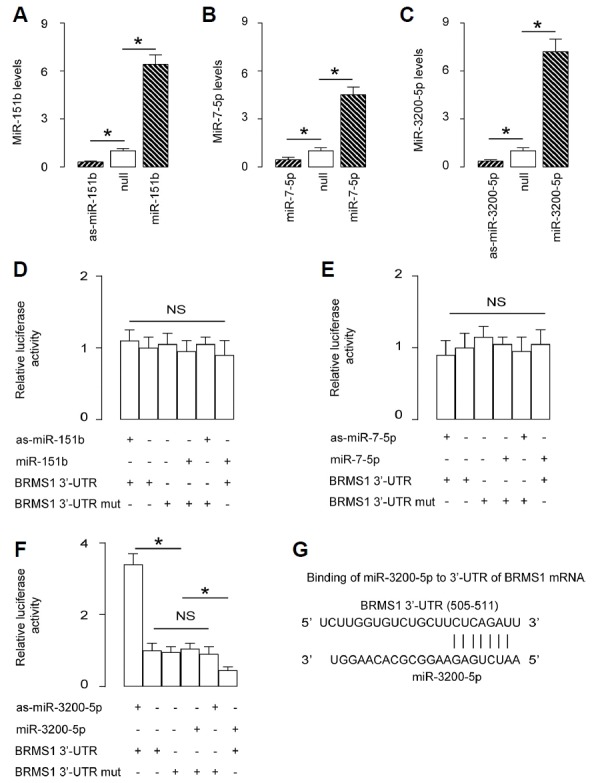
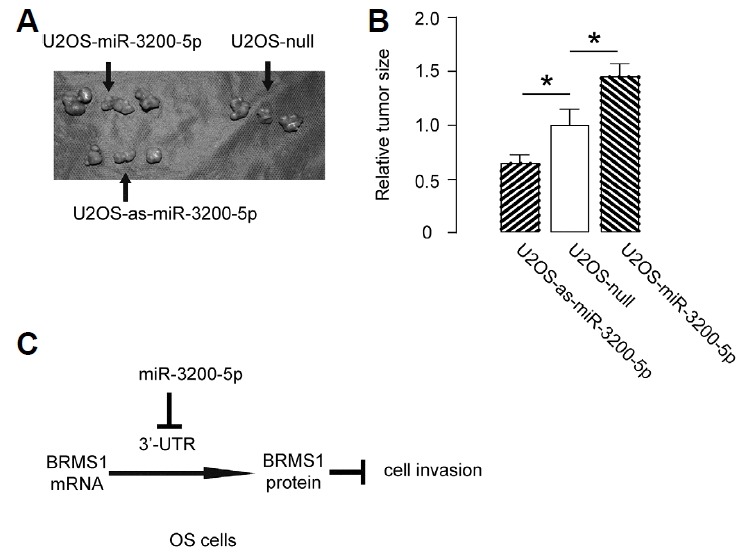
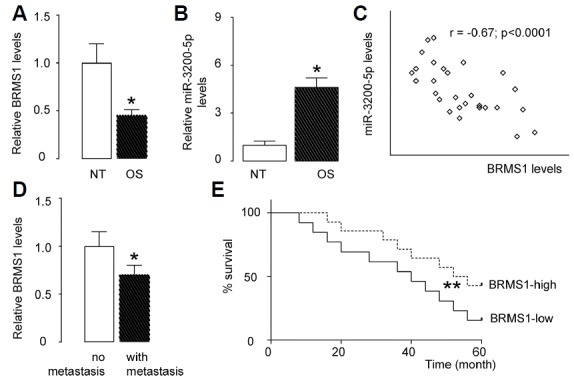
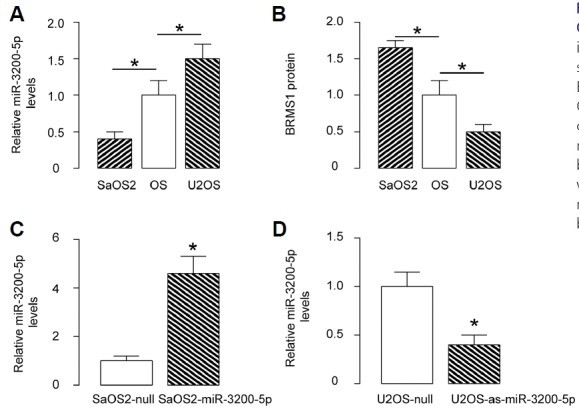
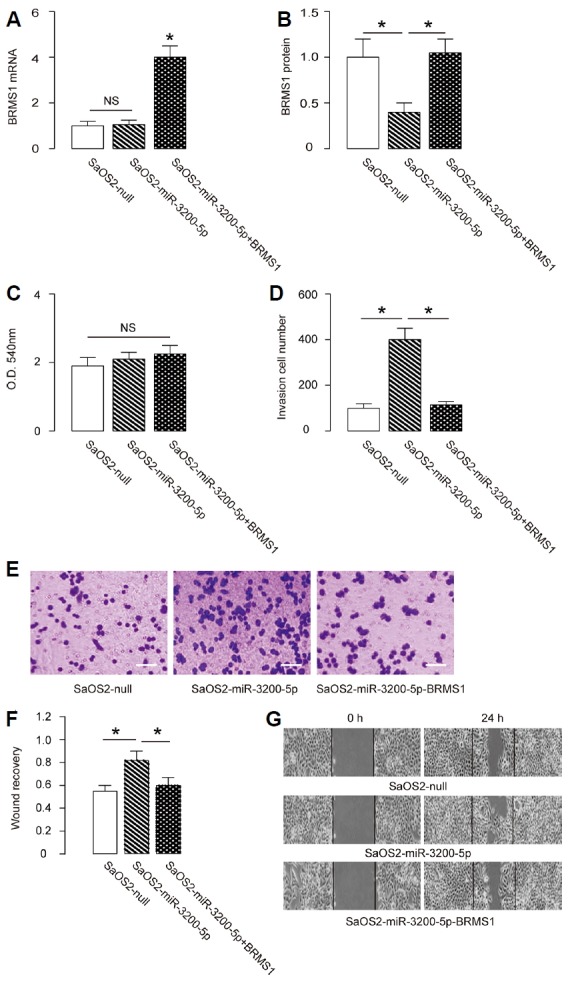
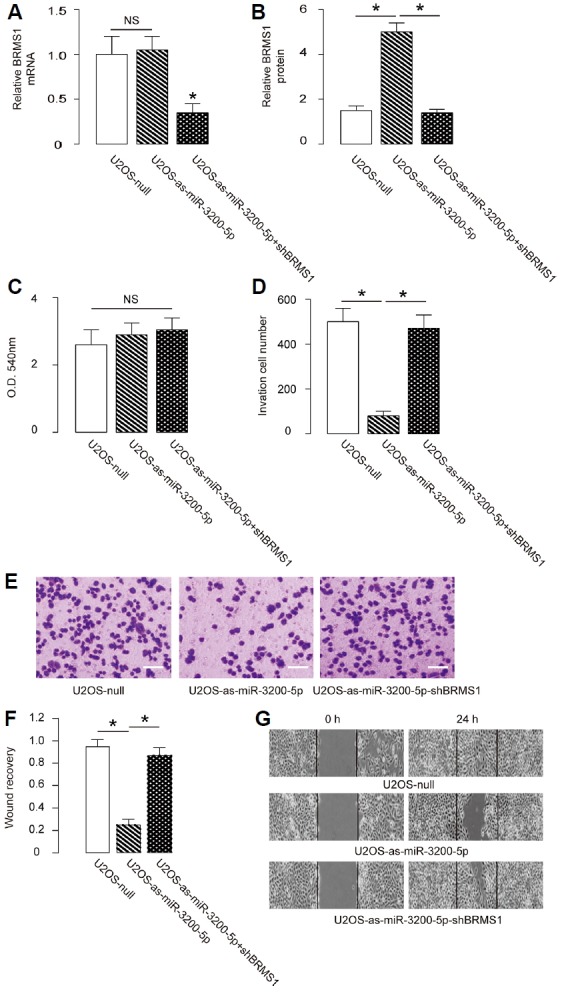
Tumour metastasis is one of the most serious challenges of cancer as it is the major cause of mortality in patients with solid tumours, including osteosarcoma (OS). In this regard, anti-metastatic genes have potential for metastasis inhibition strategies. Recent evidence showed the importance of breast cancer metastasis suppressor 1 (BRMS1) in control of OS invasiveness, but the regulation of BRMS1 in OS remains largely unknown. Here, we used bioinformatics analyses to predict BRMS1-targeting microRNAs (miRNAs), and the functional binding of miRNAs to BRMS1 mRNA was evaluated using a dual luciferase reporter assay. Among all BRMS1-targeting miRNAs, only miR-151b, miR-7-5p and miR-3200-5p showed significant expression in OS specimens. Specifically, we found that only miR-3200-5p significantly inhibited protein translation of BRMS1 via pairing to the 3'-UTR of the BRMS1 mRNA. Moreover, we detected significantly lower BRMS1 and significantly higher miR-3200-5p in the OS specimens compared to the paired adjacent non-tumour bone tissues. Furthermore, BRMS1 and miR-3200-5p levels were inversely correlated to each other. Low BRMS1 was correlated with metastasis and poor patient survival. In vitro, overexpression of miR-3200-5p significantly decreased BRMS1 levels and promoted OS cell invasion and migration, while depletion of miR-3200-5p significantly increased BRMS1 levels and inhibited OS cell invasion and migration. Thus, our study revealed that miR-3200-5p may be a critical regulator of OS cell invasiveness.
肿瘤转移是癌症面临的最严峻挑战之一,因为它是包括骨肉瘤(OS)在内的实体瘤患者死亡的主要原因。在这方面,抗转移基因具有抑制转移的策略潜力。最近的证据表明乳腺癌转移抑制因子 1(BRMS1)在控制 OS 侵袭性方面的重要性,但 BRMS1 在 OS 中的调控仍知之甚少。在这里,我们使用生物信息学分析预测 BRMS1 靶向 microRNAs(miRNAs),并通过双荧光素酶报告基因检测评估 miRNA 与 BRMS1 mRNA 的功能结合。在所有靶向 BRMS1 的 miRNAs 中,只有 miR-151b、miR-7-5p 和 miR-3200-5p 在 OS 标本中显示出显著表达。具体来说,我们发现只有 miR-3200-5p 通过与 BRMS1 mRNA 的 3'-UTR 配对,才能显著抑制 BRMS1 的蛋白质翻译。此外,与配对的相邻非肿瘤骨组织相比,我们在 OS 标本中检测到 BRMS1 明显降低,而 miR-3200-5p 明显升高。此外,BRMS1 和 miR-3200-5p 水平呈负相关。BRMS1 低表达与转移和患者预后不良相关。在体外,miR-3200-5p 的过表达显著降低了 BRMS1 水平,促进了 OS 细胞的侵袭和迁移,而 miR-3200-5p 的耗竭则显著增加了 BRMS1 水平并抑制了 OS 细胞的侵袭和迁移。因此,我们的研究表明,miR-3200-5p 可能是 OS 细胞侵袭性的关键调节因子。