Institute of Neurology, Medical University of Vienna, AKH 4J, Währinger Gürtel 18-20, 1097, Vienna, Austria.
Center for Neurodegenerative Disease Research (CNDR), Institute on Aging and Department of Pathology & Laboratory Medicine, Perelman School of Medicine (PSOM) at the University of Pennsylvania, HUP Maloney 3rd Floor, 36th and Spruce Street, Philadelphia, PA, 19104 - 4283, USA.
Acta Neuropathol Commun. 2018 Jun 11;6(1):50. doi: 10.1186/s40478-018-0552-y.
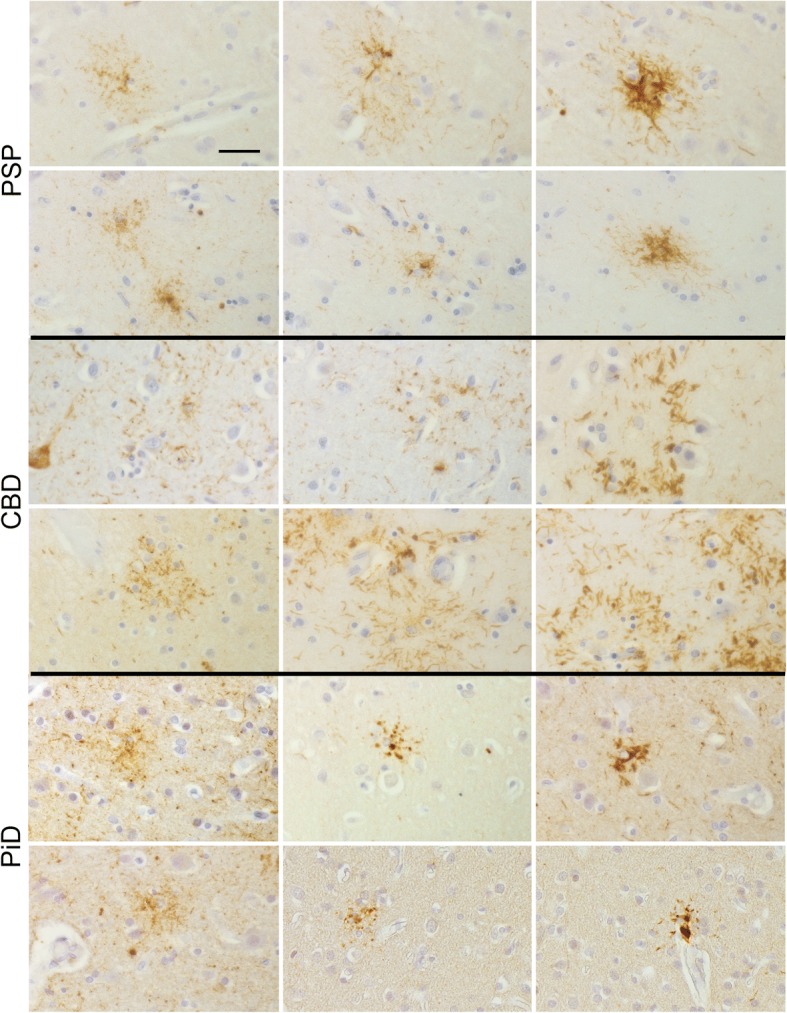
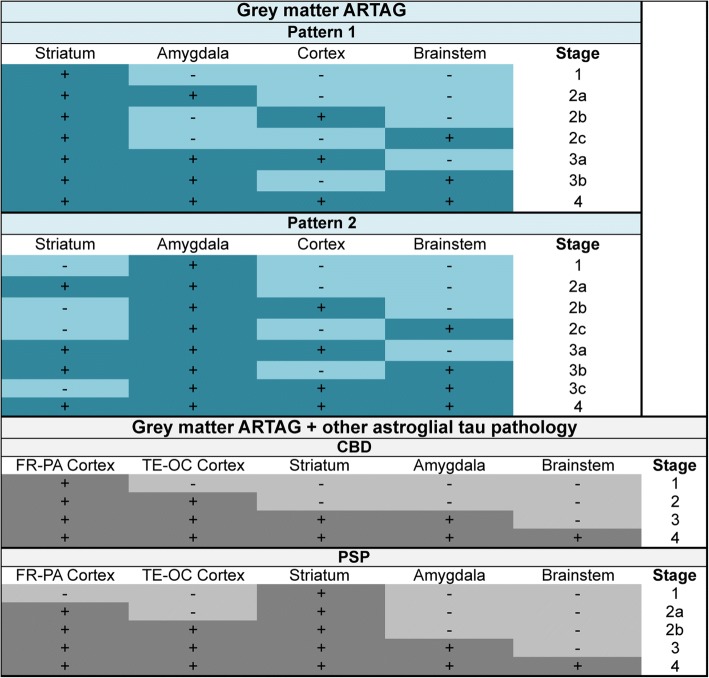
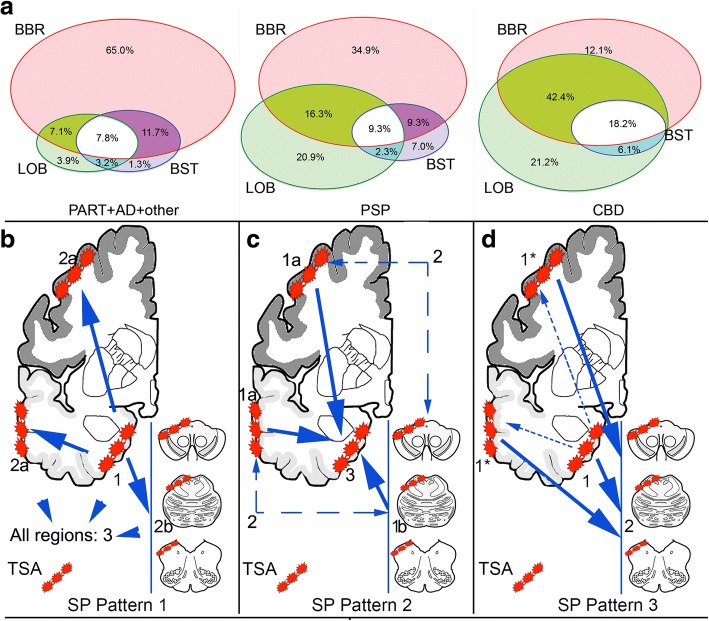
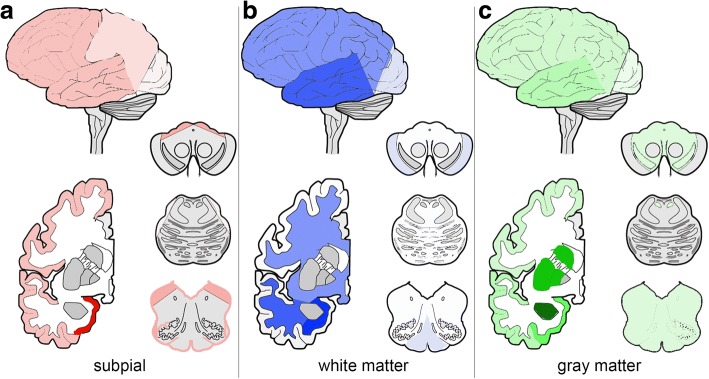
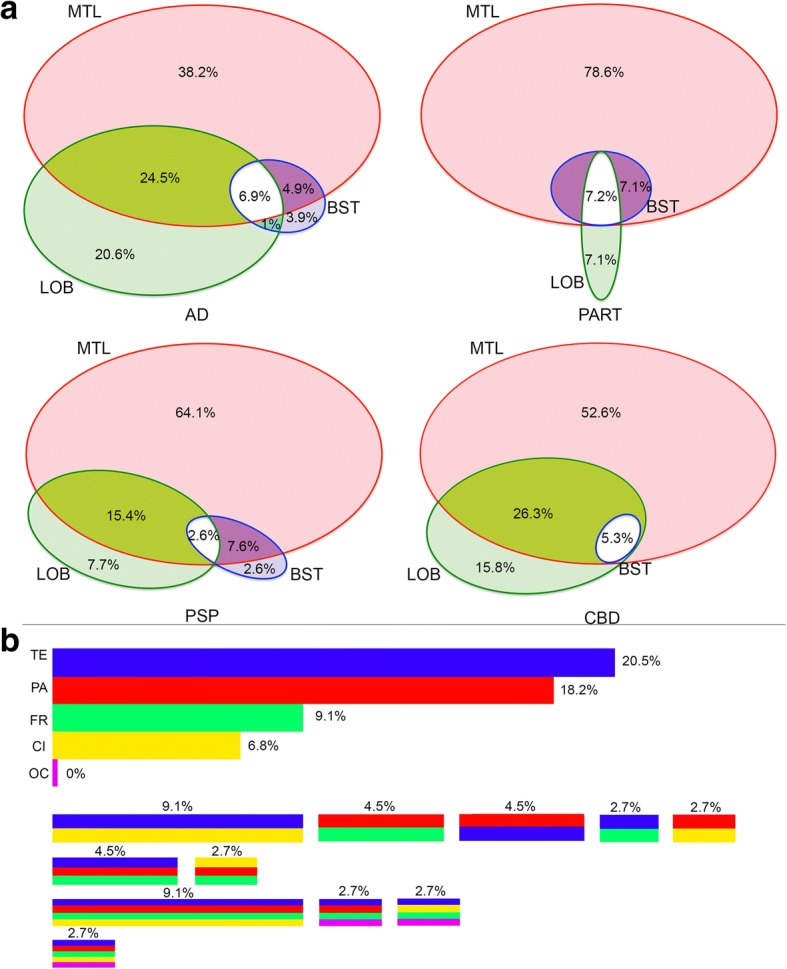
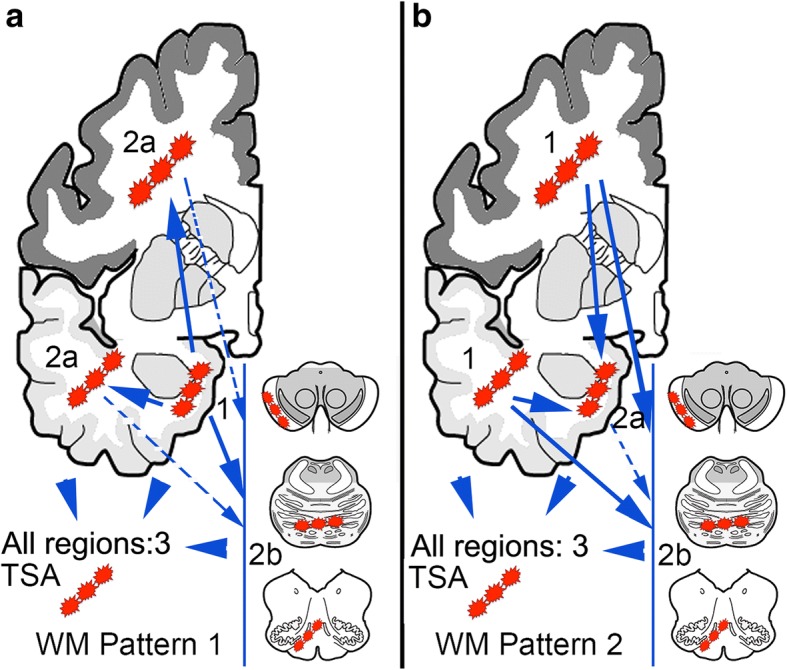
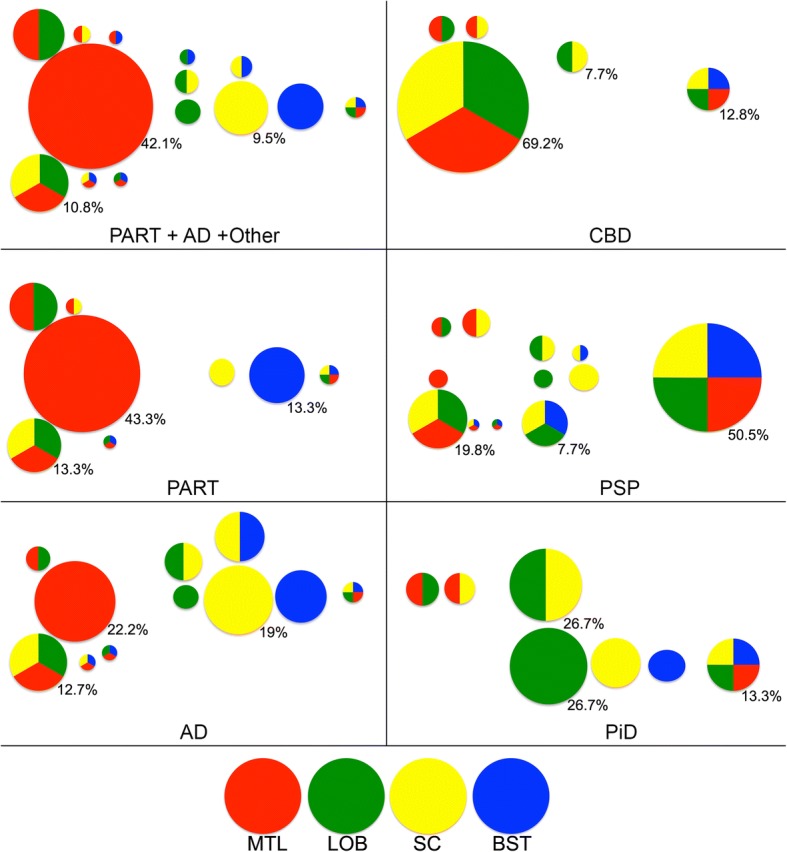
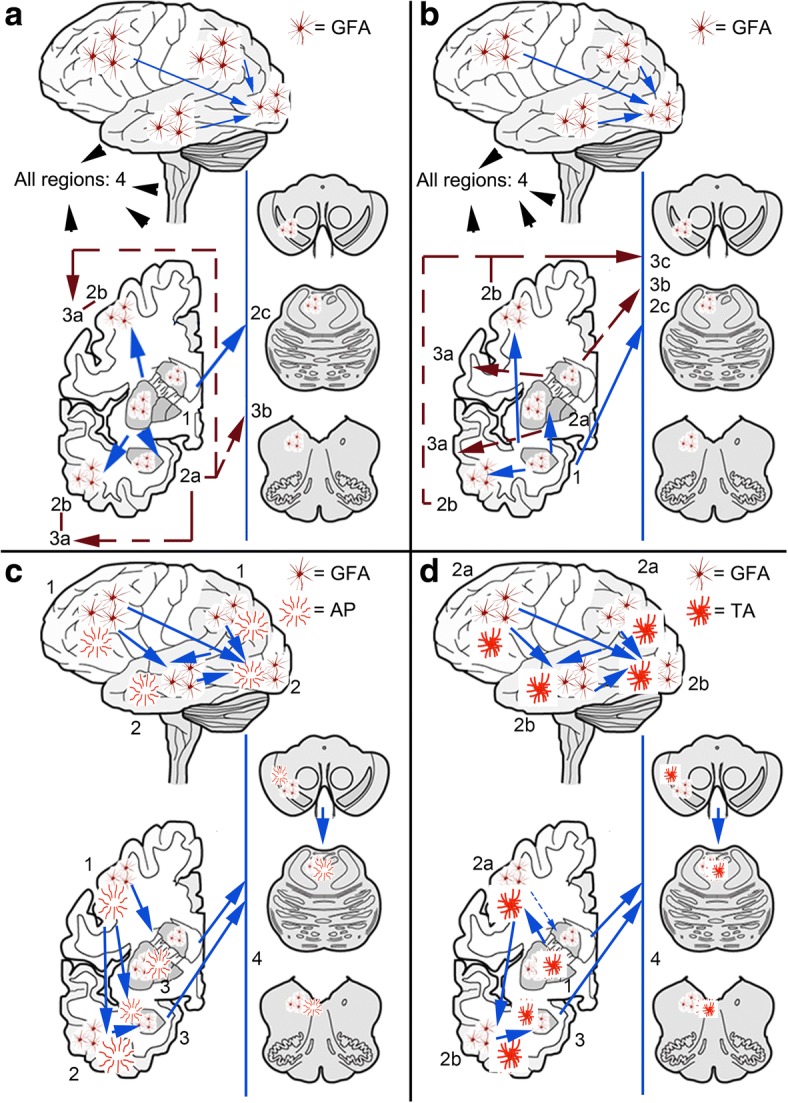
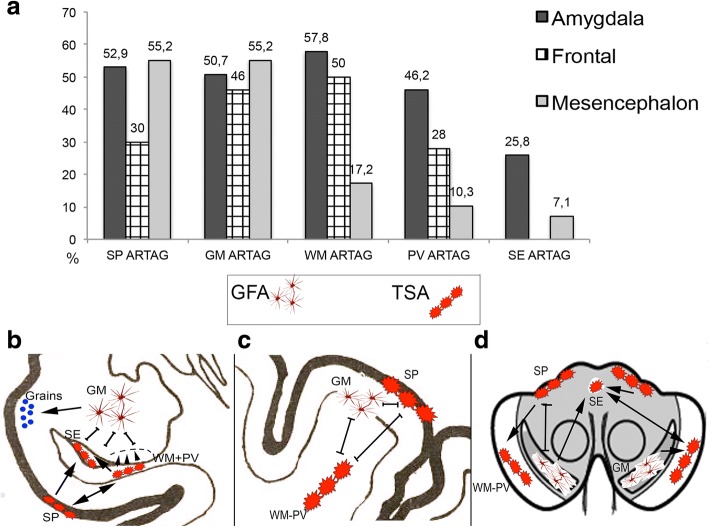
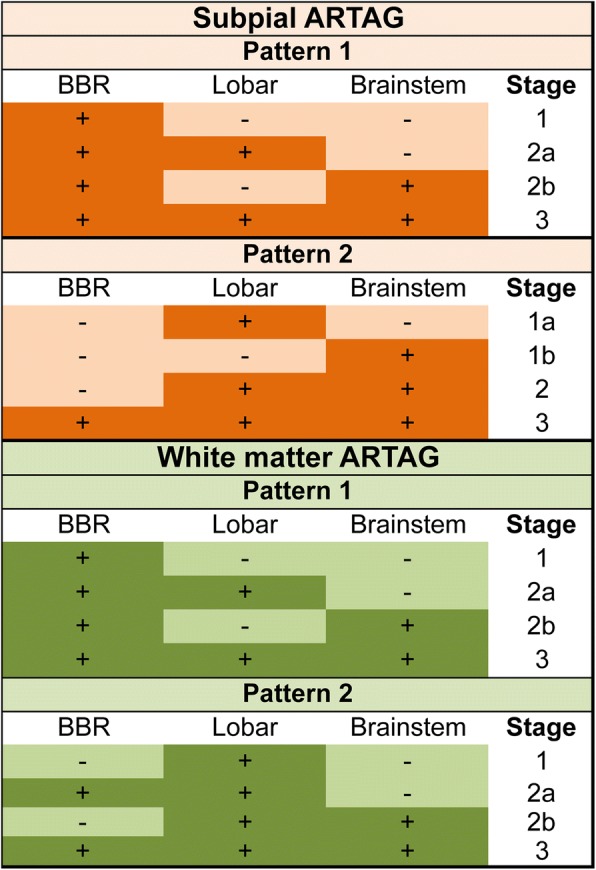
Aging-related tau astrogliopathy (ARTAG) describes tau pathology in astrocytes in different locations and anatomical regions. In the present study we addressed the question of whether sequential distribution patterns can be recognized for ARTAG or astroglial tau pathologies in both primary FTLD-tauopathies and non-FTLD-tauopathy cases. By evaluating 687 postmortem brains with diverse disorders we identified ARTAG in 455. We evaluated frequencies and hierarchical clustering of anatomical involvement and used conditional probability and logistic regression to model the sequential distribution of ARTAG and astroglial tau pathologies across different brain regions. For subpial and white matter ARTAG we recognize three and two patterns, respectively, each with three stages initiated or ending in the amygdala. Subependymal ARTAG does not show a clear sequential pattern. For grey matter (GM) ARTAG we recognize four stages including a striatal pathway of spreading towards the cortex and/or amygdala, and the brainstem, and an amygdala pathway, which precedes the involvement of the striatum and/or cortex and proceeds towards the brainstem. GM ARTAG and astrocytic plaque pathology in corticobasal degeneration follows a predominantly frontal-parietal cortical to temporal-occipital cortical, to subcortical, to brainstem pathway (four stages). GM ARTAG and tufted astrocyte pathology in progressive supranuclear palsy shows a striatum to frontal-parietal cortical to temporal to occipital, to amygdala, and to brainstem sequence (four stages). In Pick's disease cases with astroglial tau pathology an overlapping pattern with PSP can be appreciated. We conclude that tau-astrogliopathy type-specific sequential patterns cannot be simplified as neuron-based staging systems. The proposed cytopathological and hierarchical stages provide a conceptual approach to identify the initial steps of the pathogenesis of tau pathologies in ARTAG and primary FTLD-tauopathies.
衰老相关的 tau 星形胶质病(ARTAG)描述了不同位置和解剖区域的星形胶质细胞中的 tau 病理学。在本研究中,我们提出了这样一个问题,即是否可以识别 ARTAG 或原发性 FTLD-tau 病和非-FTLD-tau 病病例中星形胶质细胞 tau 病理学的连续分布模式。通过评估 687 例具有不同疾病的尸检大脑,我们在 455 例中发现了 ARTAG。我们评估了解剖学受累的频率和层次聚类,并使用条件概率和逻辑回归来模拟 ARTAG 和星形胶质细胞 tau 病理学在不同脑区的连续分布。对于皮质下和白质中的 ARTAG,我们分别识别出三种和两种模式,每种模式都有三个阶段,起始或结束于杏仁核。室管膜下的 ARTAG 没有显示出明确的顺序模式。对于灰质(GM)中的 ARTAG,我们识别出四个阶段,包括向皮质和/或杏仁核和脑干扩散的纹状体途径,以及先于纹状体和/或皮质受累并向脑干发展的杏仁核途径。GM 中的 ARTAG 和皮质基底节变性中的星形胶质斑块病理学遵循主要是额顶叶皮质到颞枕叶皮质、皮质下、脑干的途径(四个阶段)。GM 中的 ARTAG 和进行性核上性麻痹中的丛状星形胶质细胞病理学显示出纹状体到额顶叶皮质到颞叶到枕叶、杏仁核和脑干的序列(四个阶段)。在具有星形胶质细胞 tau 病理学的 Pick 病病例中,可以观察到与 PSP 重叠的模式。我们得出结论,tau-星形胶质病特定类型的连续模式不能简化为基于神经元的分期系统。所提出的细胞病理学和层次阶段为识别 ARTAG 和原发性 FTLD-tau 病中 tau 病理学发病机制的初始步骤提供了一个概念方法。