Plant Ecophysiology, Institute of Environmental Biology, Utrecht University, 3584 CH Utrecht, The Netherlands.
Programa de Pós-Graduação em Genética e Biologia Molecular, Departamento de Genética, Universidade Federal do Rio Grande do Sul, Porto Alegre, 91509-900 Brazil.
Proc Natl Acad Sci U S A. 2018 Jun 26;115(26):E6085-E6094. doi: 10.1073/pnas.1803841115. Epub 2018 Jun 11.
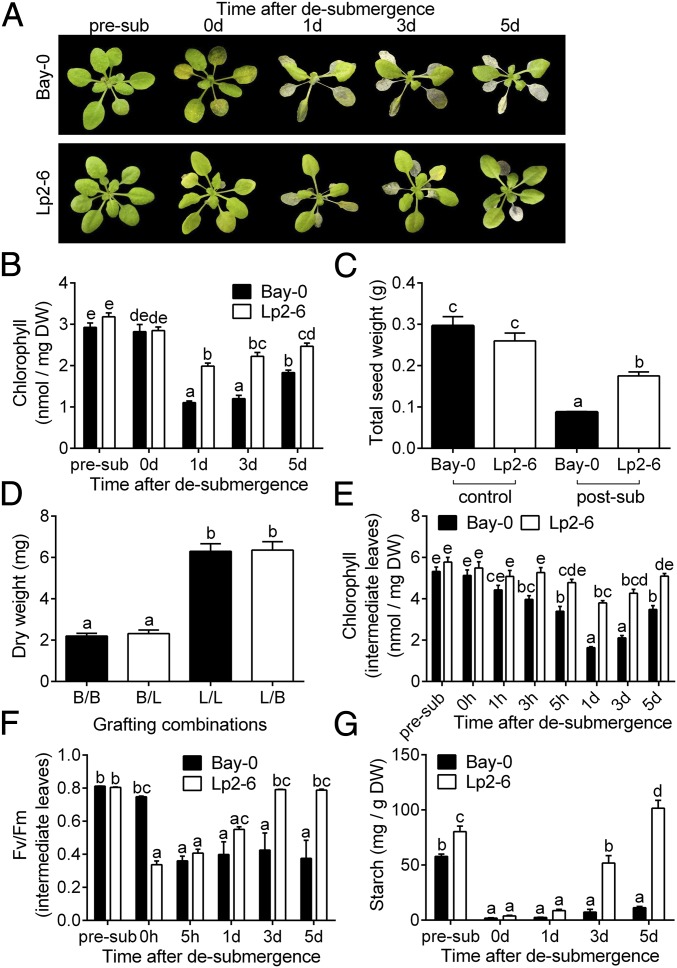
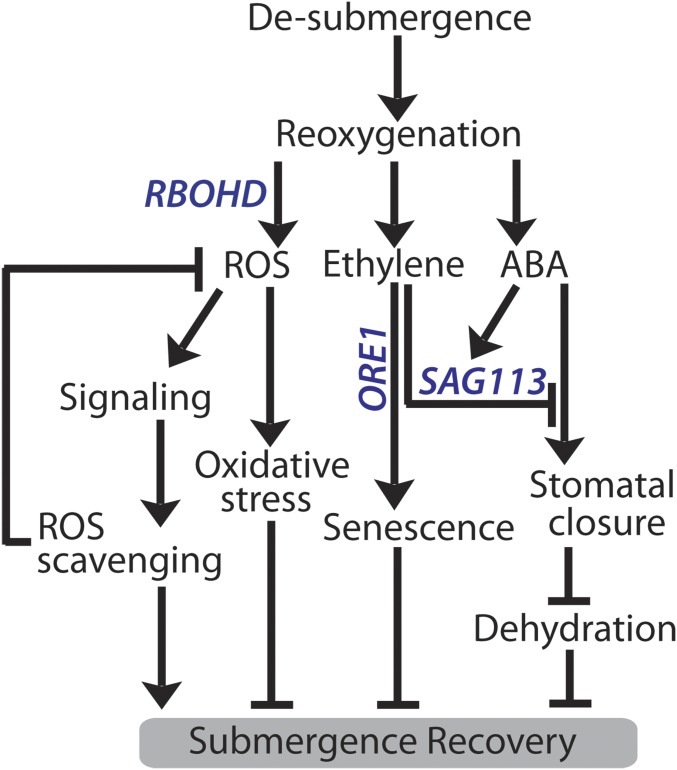
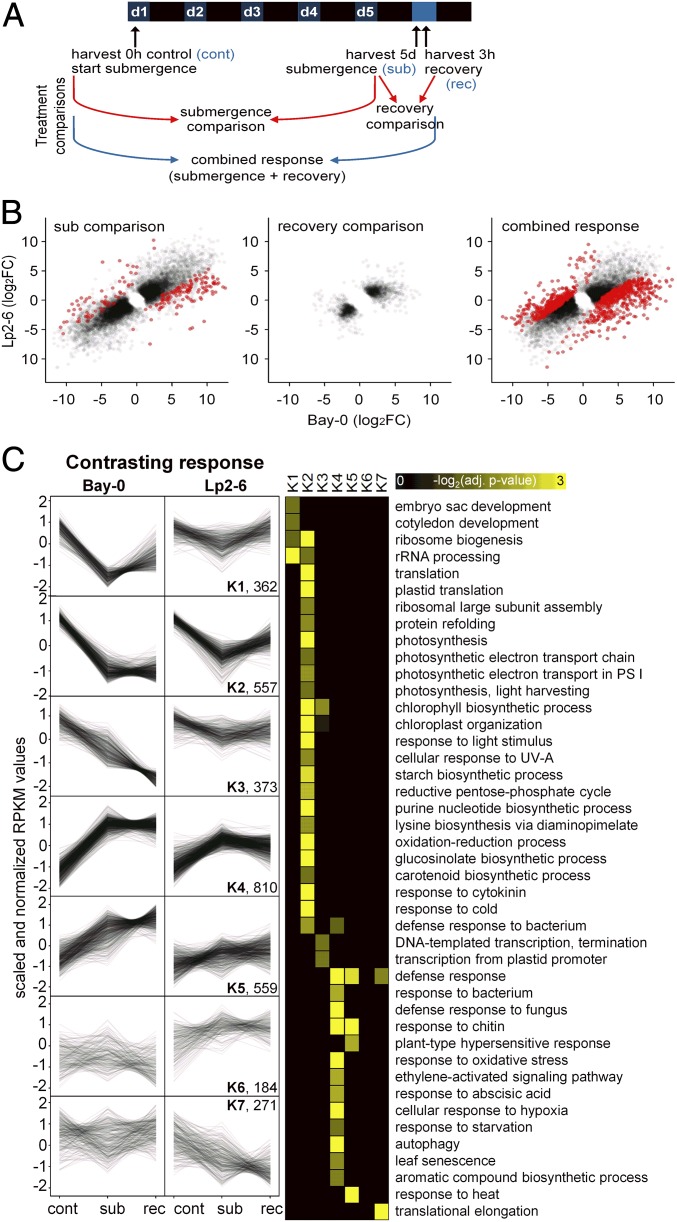
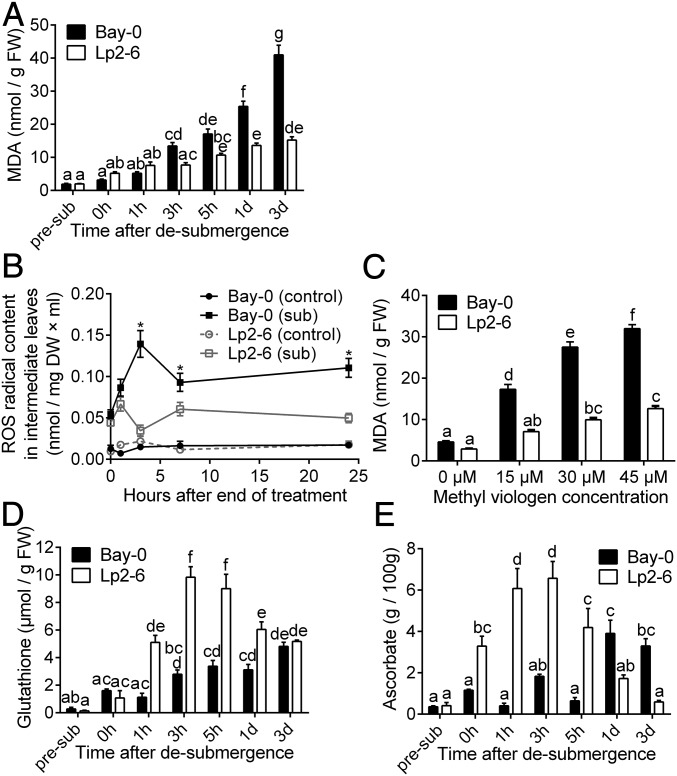
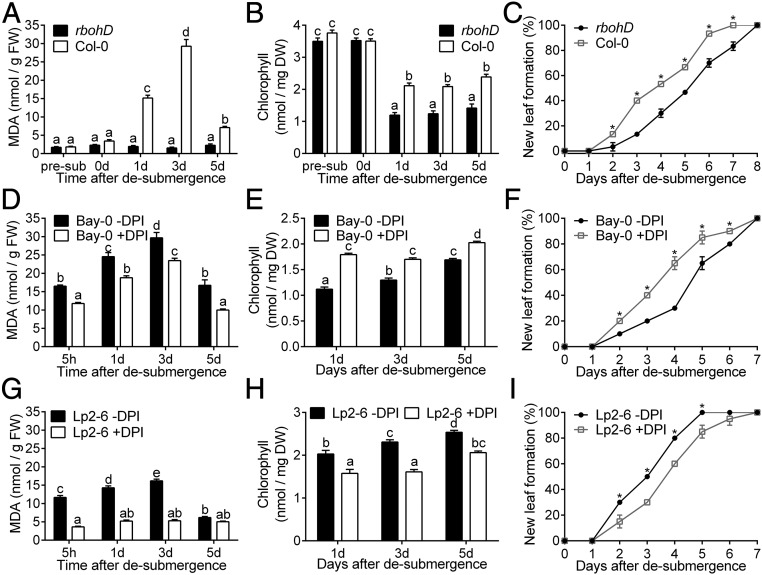
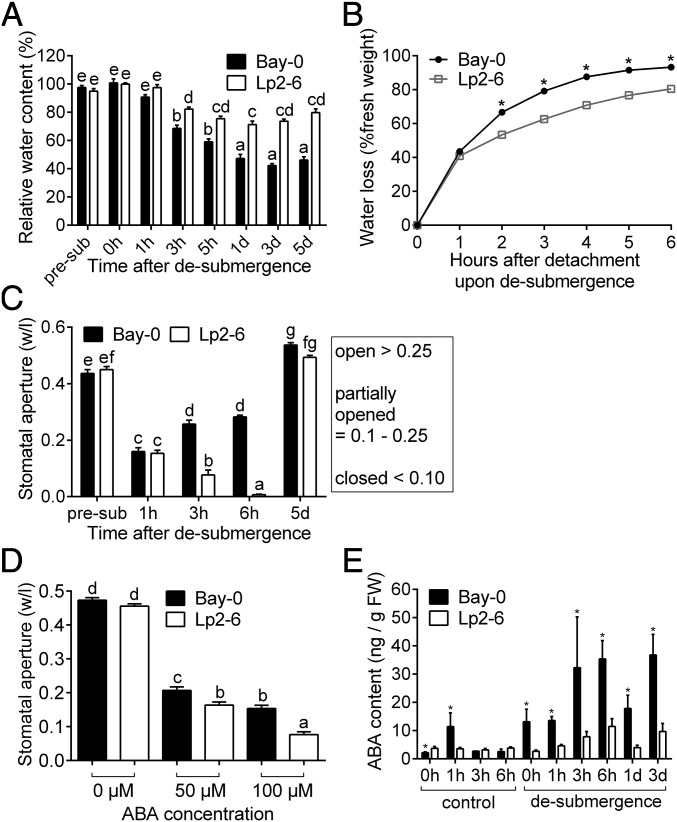
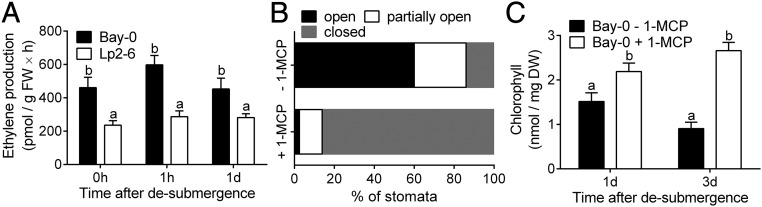
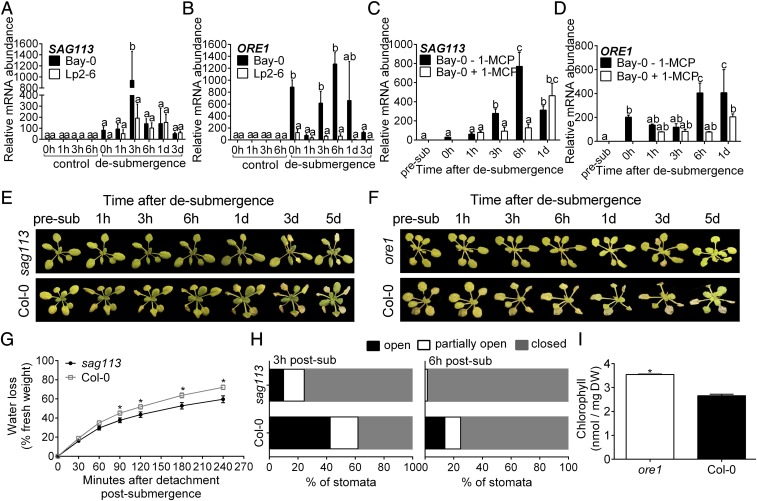
Abiotic stresses in plants are often transient, and the recovery phase following stress removal is critical. Flooding, a major abiotic stress that negatively impacts plant biodiversity and agriculture, is a sequential stress where tolerance is strongly dependent on viability underwater and during the postflooding period. Here we show that in accessions (Bay-0 and Lp2-6), different rates of submergence recovery correlate with submergence tolerance and fecundity. A genome-wide assessment of ribosome-associated transcripts in Bay-0 and Lp2-6 revealed a signaling network regulating recovery processes. Differential recovery between the accessions was related to the activity of three genes: , , and , which function in a regulatory network involving a reactive oxygen species (ROS) burst upon desubmergence and the hormones abscisic acid and ethylene. This regulatory module controls ROS homeostasis, stomatal aperture, and chlorophyll degradation during submergence recovery. This work uncovers a signaling network that regulates recovery processes following flooding to hasten the return to prestress homeostasis.
植物的非生物胁迫通常是短暂的,去除胁迫后的恢复阶段至关重要。洪水是一种主要的非生物胁迫,它对植物生物多样性和农业产生负面影响,是一种连续的胁迫,其耐受性强烈依赖于水下和洪水后的生存能力。在这里,我们表明,在不同的(Bay-0 和 Lp2-6)品种中,不同的淹没恢复速率与耐淹性和繁殖力相关。Bay-0 和 Lp2-6 中核糖体相关转录物的全基因组评估揭示了一个调节恢复过程的信号网络。品种之间的差异恢复与三个基因的活性有关: 、 、和 ,它们在一个涉及活性氧(ROS)爆发的调节网络中起作用,这种爆发发生在去淹没和激素脱落酸和乙烯之后。这个调节模块控制着淹没恢复过程中的 ROS 动态平衡、气孔开度和叶绿素降解。这项工作揭示了一个调节洪水后恢复过程的信号网络,以加速恢复到胁迫前的稳态。