State Key Laboratory of Respiratory Disease, The First Affiliated Hospital of Guangzhou Medical University, Guangzhou, China.
Health Quarantine Laboratory, Guangdong Inspection and Quarantine Technology Center, Guangzhou, China.
Emerg Microbes Infect. 2018 Jun 13;7(1):107. doi: 10.1038/s41426-018-0113-2.
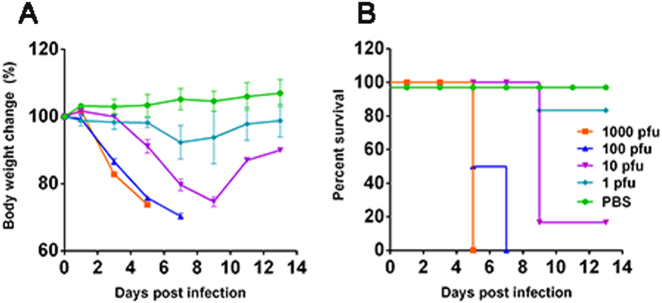
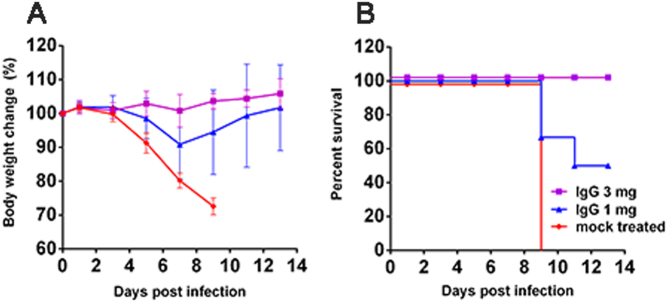
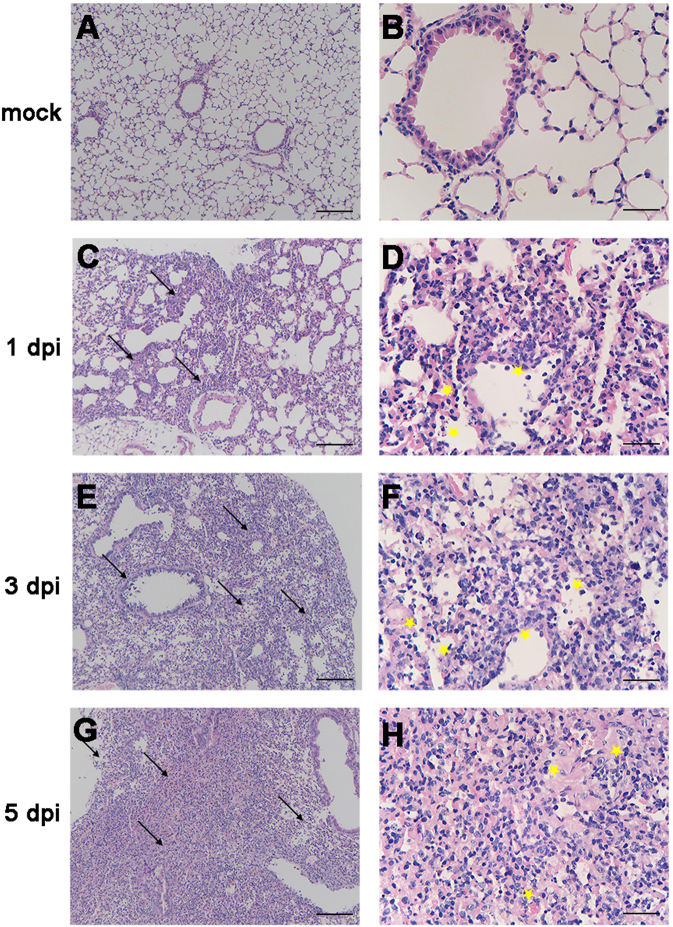
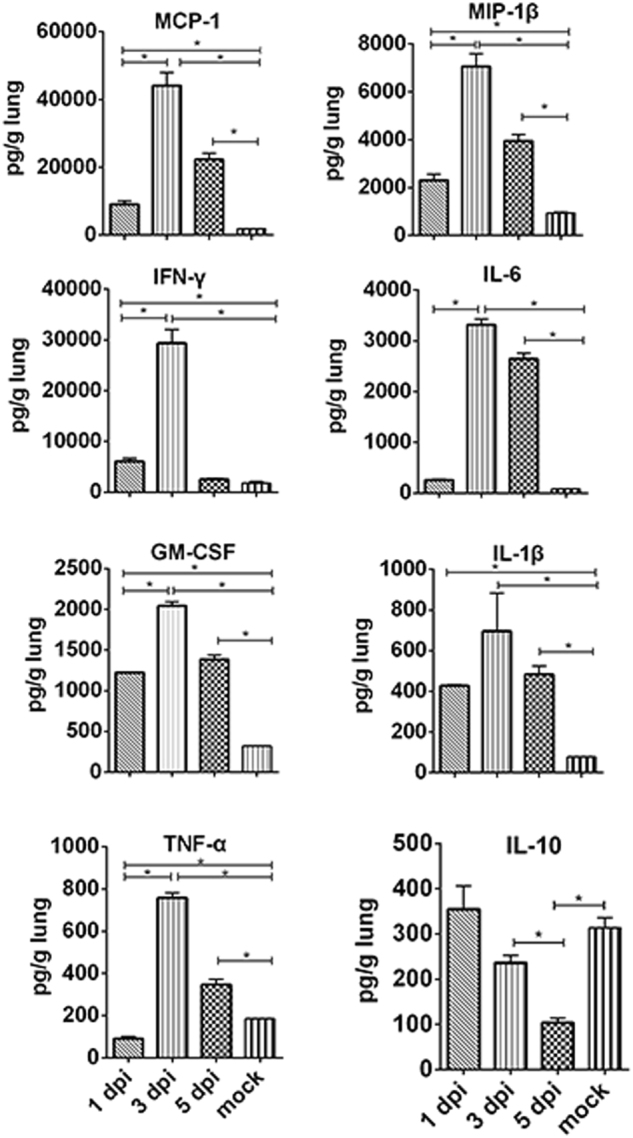
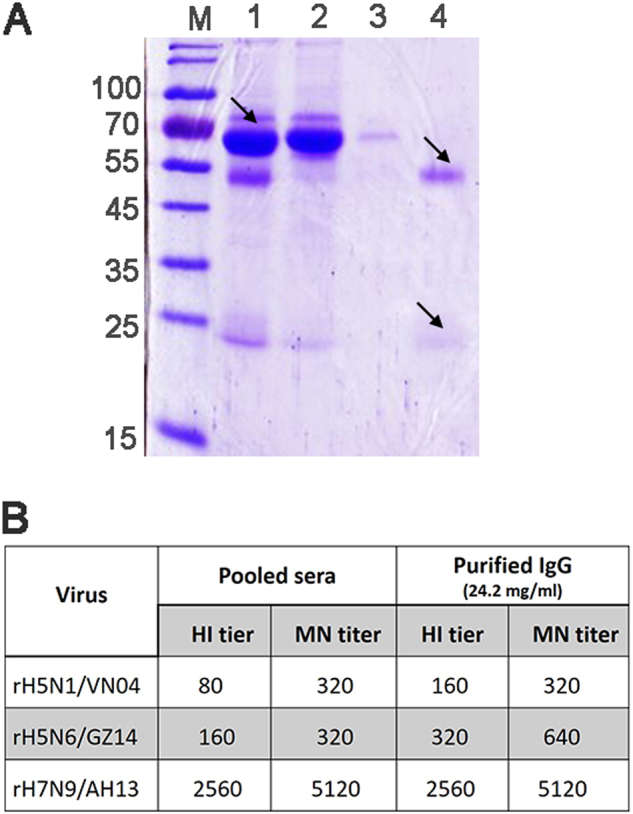
Highly pathogenic avian influenza A (H5N6) virus has been circulating in poultry since 2013 and causes sporadic infections and fatalities in humans. Due to the re-occurrence and continuous evolution of this virus subtype, there is an urgent need to better understand the pathogenicity of the H5N6 virus and to identify effective preventative and therapeutic strategies. We established a mouse model to evaluate the virulence of H5N6 A/Guangzhou/39715/2014 (H5N6/GZ14), which was isolated from an infected patient. BALB/c mice were inoculated intranasally with H5N6/GZ14 and monitored for morbidity, mortality, cytokine production, lung injury, viral replication, and viral dissemination to other organs. H5N6/GZ14 is highly pathogenic and can kill 50% of mice at a very low infectious dose of 5 plaque-forming units (pfu). Infection with H5N6/GZ14 showed rapid disease progression, viral replication to high titers in the lung, a strongly induced pro-inflammatory cytokine response, and severe lung injury. Moreover, infectious H5N6/GZ14 could be detected in the heart and brain of the infected mice. We also demonstrated that anti-influenza polyclonal antibodies generated by immunizing rhesus macaques could protect mice from lethal infection. Our results provide insights into the pathogenicity of the H5N6 human isolate.
高致病性禽流感病毒(H5N6)自 2013 年以来一直在禽类中传播,并导致人类散发性感染和死亡。由于该病毒亚型的再次出现和持续进化,迫切需要更好地了解 H5N6 病毒的致病性,并确定有效的预防和治疗策略。我们建立了一个小鼠模型来评估 H5N6 A/Guangzhou/39715/2014(H5N6/GZ14)的毒力,该病毒是从感染患者中分离出来的。BALB/c 小鼠通过鼻腔接种 H5N6/GZ14,并监测发病率、死亡率、细胞因子产生、肺损伤、病毒复制以及病毒向其他器官的传播情况。H5N6/GZ14 具有高度致病性,在非常低的感染剂量 5 噬菌斑形成单位(pfu)下即可杀死 50%的小鼠。H5N6/GZ14 感染后疾病迅速进展,病毒在肺部复制到高滴度,强烈诱导促炎细胞因子反应,并导致严重的肺损伤。此外,感染的 H5N6/GZ14 可在感染小鼠的心脏和脑中检测到。我们还证明了用恒河猴免疫产生的抗流感多克隆抗体可以保护小鼠免受致死性感染。我们的研究结果提供了对 H5N6 人源分离株致病性的深入了解。