Department of Head and Neck Surgery, Fudan University Shanghai Cancer Center, Shanghai 200032, P.R. China.
Fudan University Shanghai Cancer Center and Institutes of Biomedical Sciences, Collaborative Innovation Center of Cancer Medicine, Shanghai Medical College, Fudan University, Shanghai 200032, P.R. China.
Int J Oncol. 2018 Aug;53(2):685-693. doi: 10.3892/ijo.2018.4426. Epub 2018 May 31.
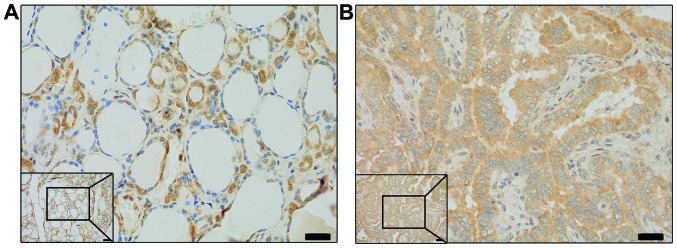
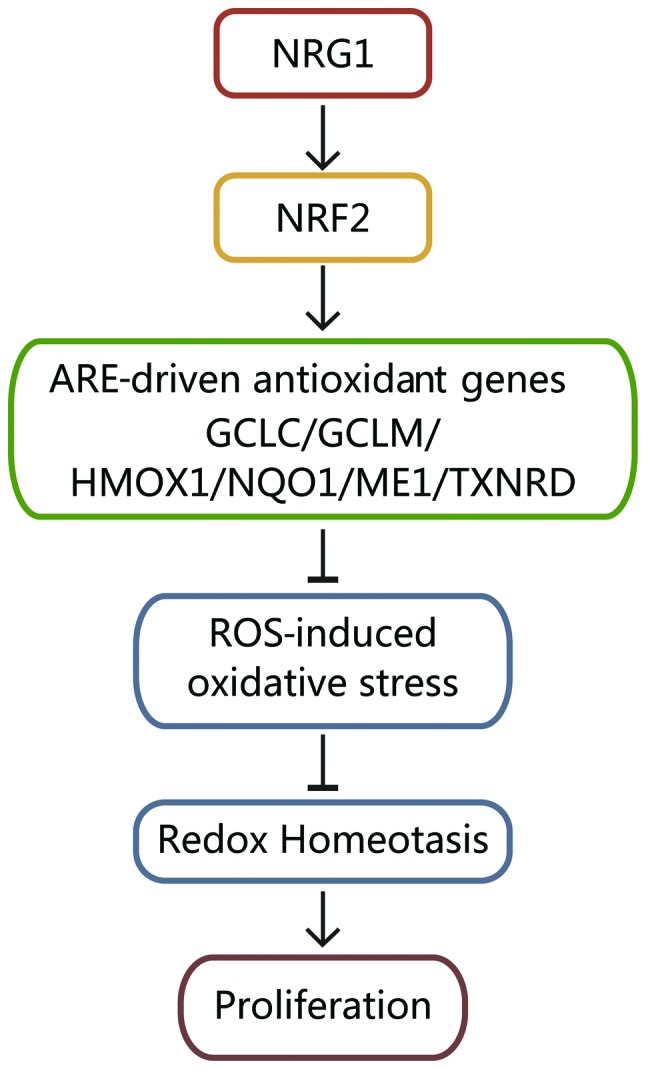
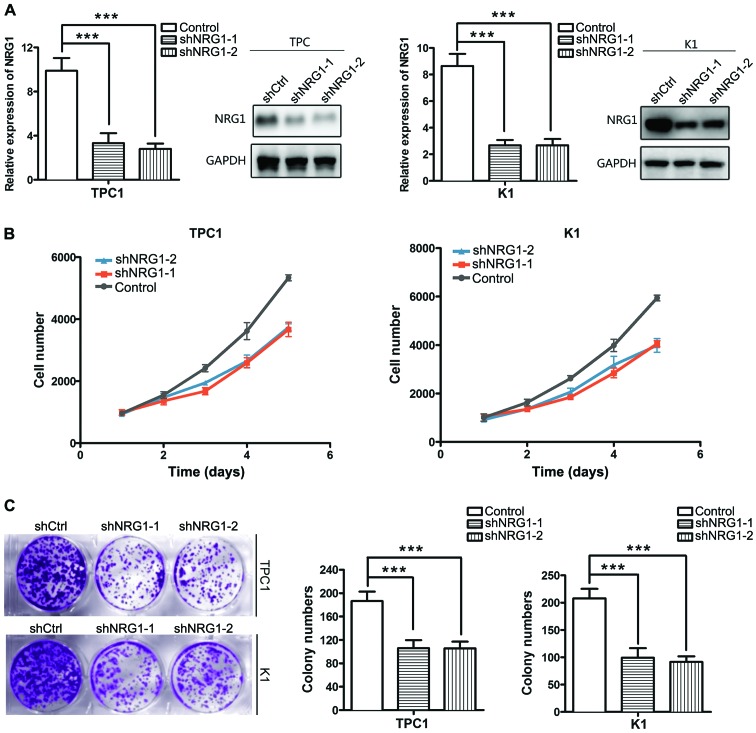
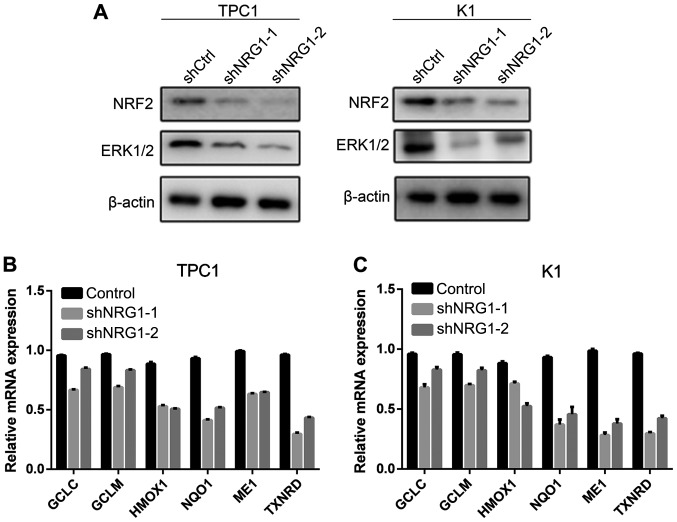
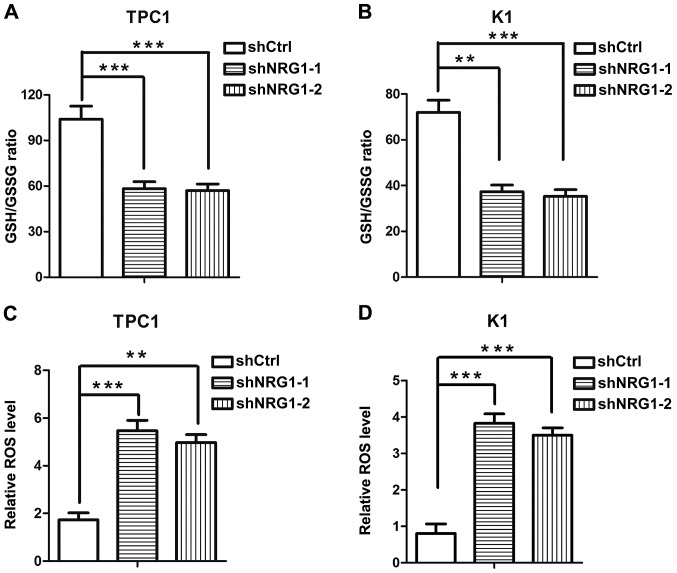
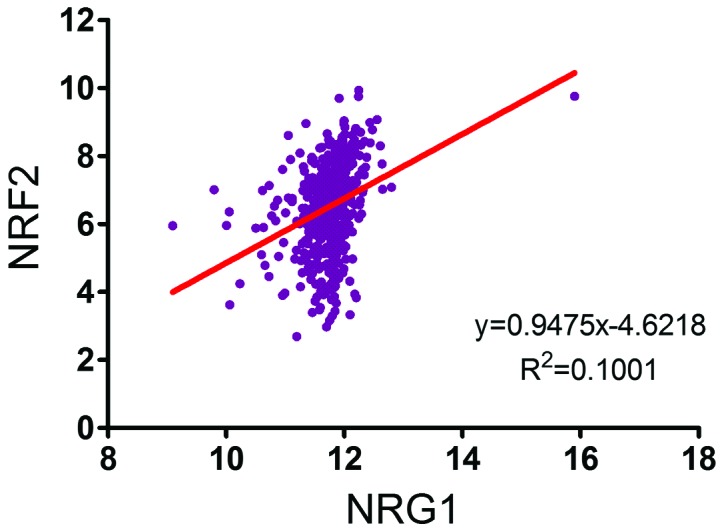
Thyroid cancer is a common endocrine cancer, of which papillary thyroid cancer (PTC) is the most common type. Neuregulin 1 (NRG1), a glycoprotein mediating cell‑cell signaling, plays vital roles in cellular activities; however, its role in PTC progression remains poorly understood. In this study, we performed immunohistochemistry in 196 samples from patients and found that NRG1, a potential prognostic marker is highly expressed in PTC compared with adjacent normal tissues. Cell Counting kit‑8 (CCK‑8) and clone formation assays indicated that NRG1 is essential for PTC cell viability and proliferation, probably by regulating redox homeostasis, which was implied by ROS generation analysis and intracellular GSH activity assay. Western blot analysis and RT‑qPCR revealed that NRG1 regulates ERK pathway and the pivotal regulator of cellular redox status, nuclear factor E2‑related factor 2 (NRF2), which maintains moderate reactive oxygen species (ROS) levels through a set of antioxidant response element (ARE)‑containing genes. The immunohistochemical scoring of 196 PTC samples and the analysis of the data of 490 patients from The Cancer Genome Atlas (TCGA) reveled a positive association between the expression of NRG1 and NRF2. Since the presence of NRG1 regulates redox homeostasis through NRF2, protecting PTC cells from the accumulation of ROS and ROS‑induced cell death, NRG1 may thus prove to be a potential therapeutic target in the treatment of thyroid cancer.
甲状腺癌是一种常见的内分泌癌,其中甲状腺乳头状癌(PTC)是最常见的类型。神经调节蛋白 1(NRG1)是一种介导细胞间信号传递的糖蛋白,在细胞活动中发挥着重要作用;然而,其在 PTC 进展中的作用仍知之甚少。在这项研究中,我们对 196 例患者样本进行了免疫组织化学分析,发现 NRG1 作为一种潜在的预后标志物,在 PTC 中表达水平显著高于相邻正常组织。细胞计数试剂盒-8(CCK-8)和克隆形成实验表明,NRG1 对 PTC 细胞活力和增殖是必需的,可能通过调节氧化还原稳态来实现,这一点可以通过 ROS 生成分析和细胞内 GSH 活性测定来暗示。Western blot 分析和 RT-qPCR 显示,NRG1 调节 ERK 通路和细胞氧化还原状态的关键调节因子核因子 E2 相关因子 2(NRF2),通过一组含有抗氧化反应元件(ARE)的基因来维持适度的活性氧(ROS)水平。对 196 例 PTC 样本的免疫组化评分和来自癌症基因组图谱(TCGA)的 490 例患者的数据进行分析,揭示了 NRG1 的表达与 NRF2 之间存在正相关。由于 NRG1 的存在通过 NRF2 调节氧化还原稳态,从而保护 PTC 细胞免受 ROS 积累和 ROS 诱导的细胞死亡,因此 NRG1 可能成为治疗甲状腺癌的潜在治疗靶点。