Li Xianwei, Chen Bo, Chi Decai, Zhang Yingnan, Jiang Weiliang
Department of Vascular Surgery, The Second Affiliated Hospital of Harbin Medical University, Harbin 150001, Heilongjiang, People's Republic of China,
Onco Targets Ther. 2019 Jan 7;12:423-432. doi: 10.2147/OTT.S181914. eCollection 2019.
Despite being one of the most common benign tumors, the prevalence and pathogenesis of hemangiomas (HAs) are poorly understood. We aimed to identify the biological role of the long non-coding RNA (lncRNA) CASC9 in the HA-derived endothelial cell (HDECs) phenotype as well as elucidate the mechanism involved.
The expression of CASC9 was identified by reverse transcription-quantitative polymerase chain reaction (RT-qPCR). the effect of CASC9 on cell proliferation, migration and invasion of HDECs were examined by CCK8, wound healing, and transwell assay, respectively. Bioinformatics analysis and a luciferase reporter assay were utilized to investigated the mechanisms involved. The in vivo tumorigenesis capability of CASC9 on HA was also evaluated.
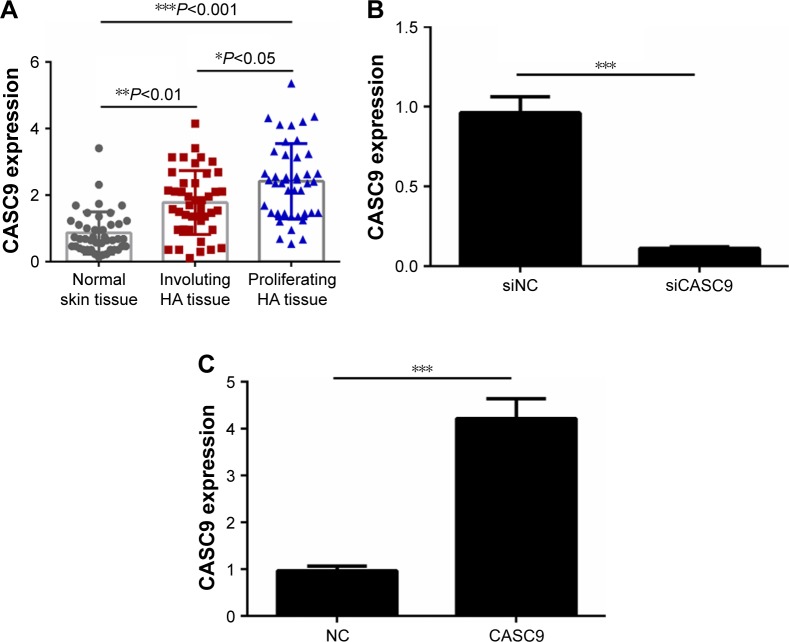
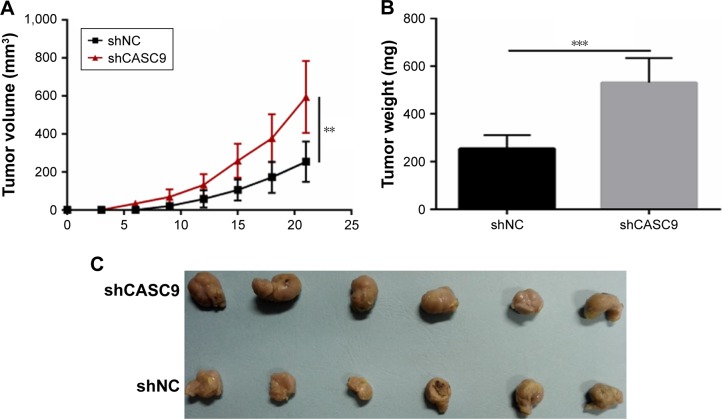
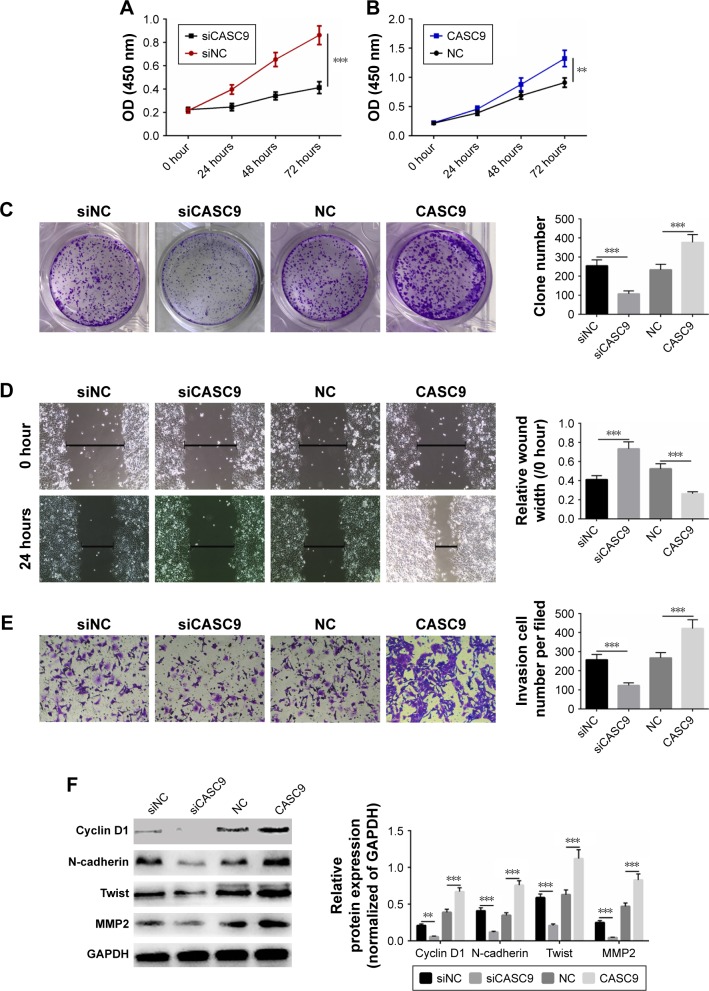
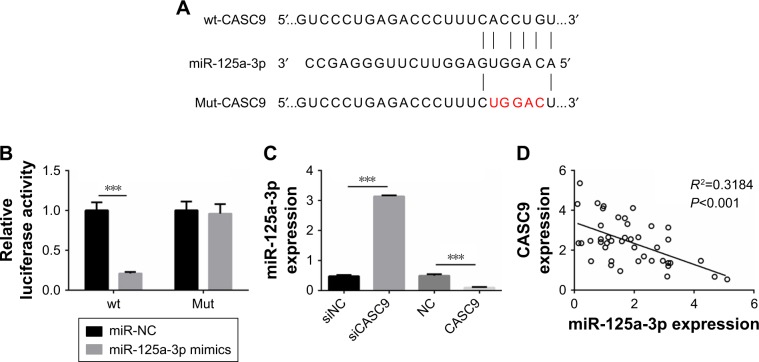
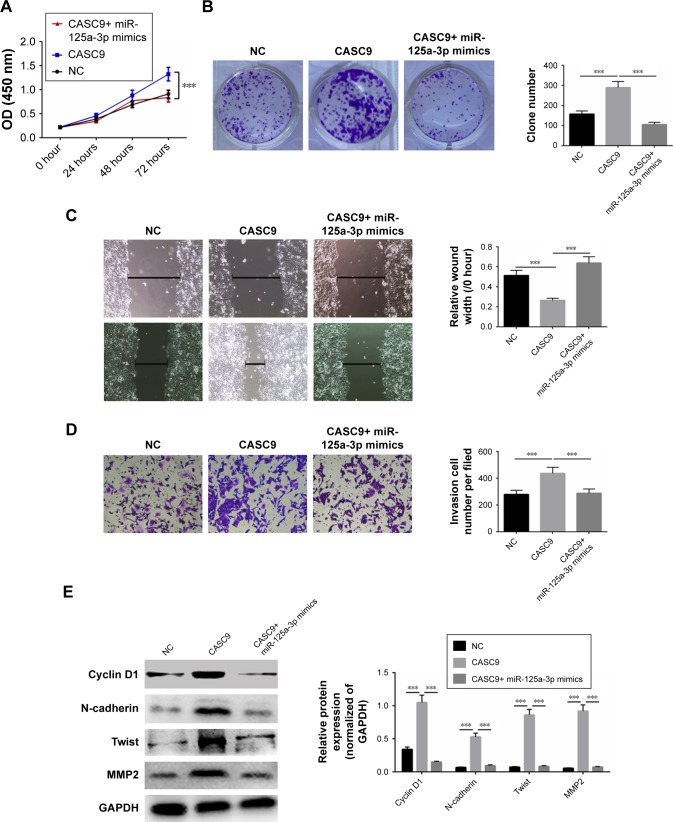
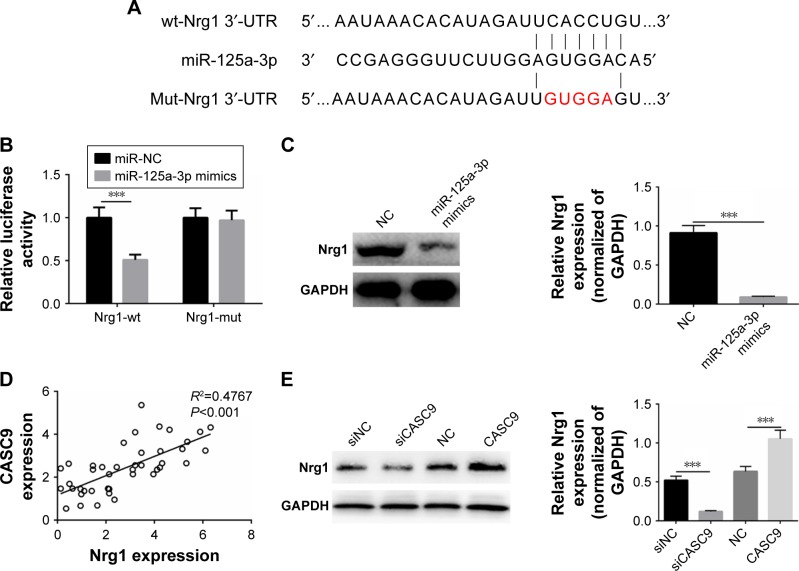
The expression of CASC9 was significantly elevated in HA tissue compared to normal tissue. Down-regulation of CASC9 inhibited proliferation, migration, and invasion of HDECs. The translation of cyclinD1, N-cadherin, Twist, and MMP2 was also decreased by CASC9 knockdown treatment. Furthermore, CASC9 over-expression exerted the opposite effect of proliferation, migration, and invasion of HDECs. We also found that CASC9 interacts with miR-125a-3p/Nrg1 to regulate cellular functions. Interestingly, miR-125a-3p can reverse the effect of CASC9 on proliferation, migration, and invasion of HDECs. Together, the clinical data showed that CASC9 expression is negatively correlated with miR-125a-3p expression and positively correlated with Nrg1 expression. CASC9 also exerted anti-tumorigenesis capability in vivo.
Our study indicates that CASC9 accelerates cell growth and invasion of HDECs and provides new insights for the diagnosis and molecular therapy of HA.
尽管血管瘤(HAs)是最常见的良性肿瘤之一,但其患病率和发病机制仍知之甚少。我们旨在确定长链非编码RNA(lncRNA)CASC9在HA来源的内皮细胞(HDECs)表型中的生物学作用,并阐明其相关机制。
通过逆转录定量聚合酶链反应(RT-qPCR)鉴定CASC9的表达。分别采用CCK8、伤口愈合和Transwell实验检测CASC9对HDECs细胞增殖、迁移和侵袭的影响。利用生物信息学分析和荧光素酶报告基因实验研究其相关机制。还评估了CASC9在体内对HA的致瘤能力。
与正常组织相比,HA组织中CASC9的表达显著升高。下调CASC9可抑制HDECs的增殖、迁移和侵袭。CASC9基因敲低处理还可降低细胞周期蛋白D1、N-钙黏蛋白、Twist和基质金属蛋白酶2的表达。此外,CASC9过表达对HDECs的增殖、迁移和侵袭具有相反的作用。我们还发现CASC9与miR-125a-3p/Nrg1相互作用以调节细胞功能。有趣的是,miR-125a-3p可逆转CASC9对HDECs增殖、迁移和侵袭的影响。临床数据显示,CASC9表达与miR-125a-3p表达呈负相关,与Nrg1表达呈正相关。CASC9在体内也具有抗肿瘤发生的能力。
我们的研究表明,CASC9可促进HDECs的细胞生长和侵袭,为HA的诊断和分子治疗提供了新的见解。