Aix Marseille Université, CNRS, LNIA UMR 7260, Marseille, France.
Aix Marseille Université, CNRS, NICN UMR 7259, Marseille, France.
PLoS One. 2018 Jun 14;13(6):e0198954. doi: 10.1371/journal.pone.0198954. eCollection 2018.
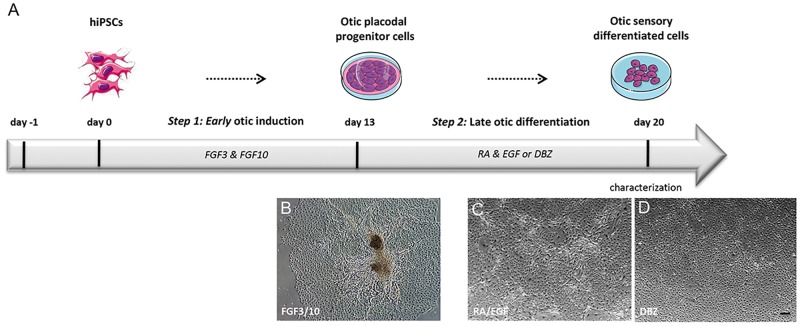
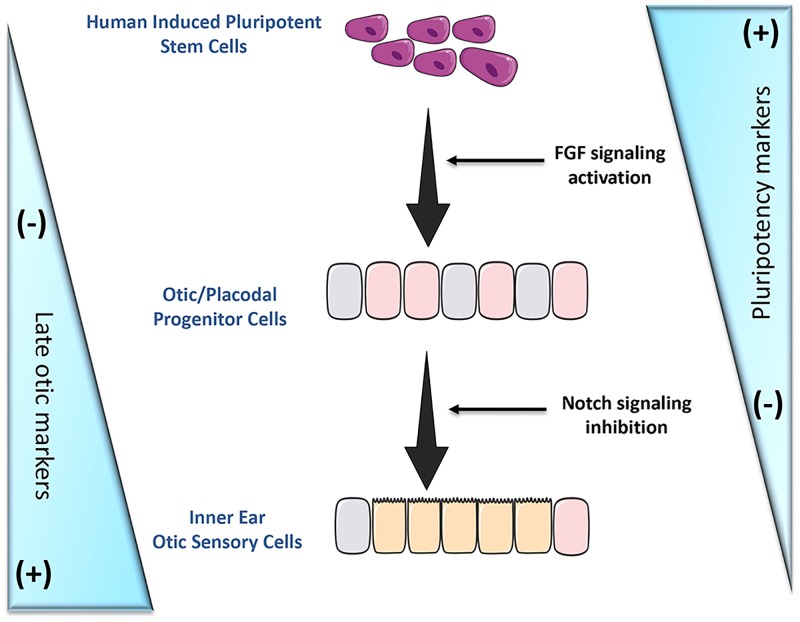
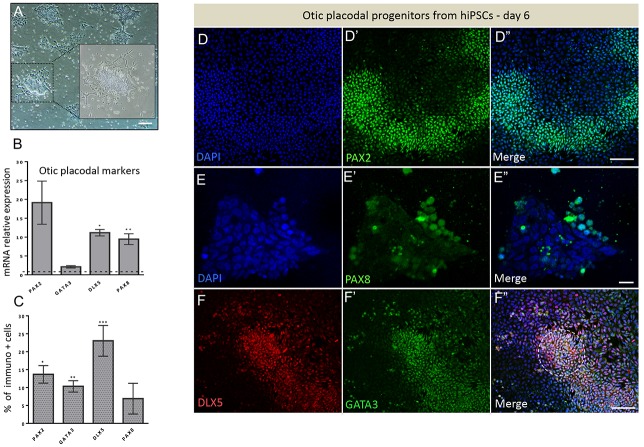
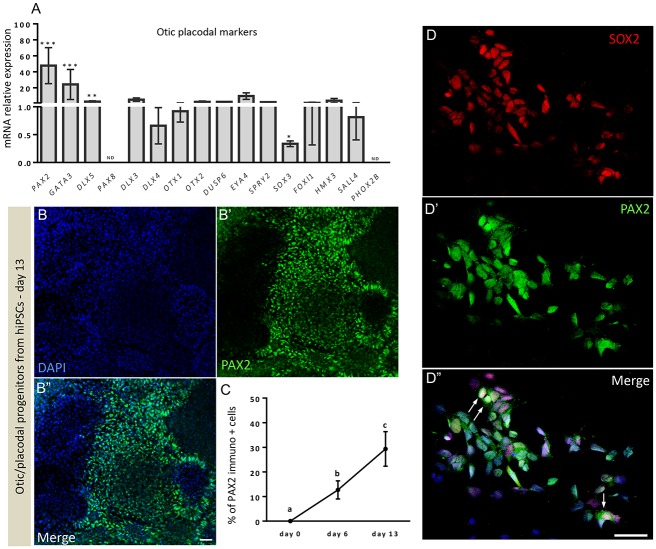
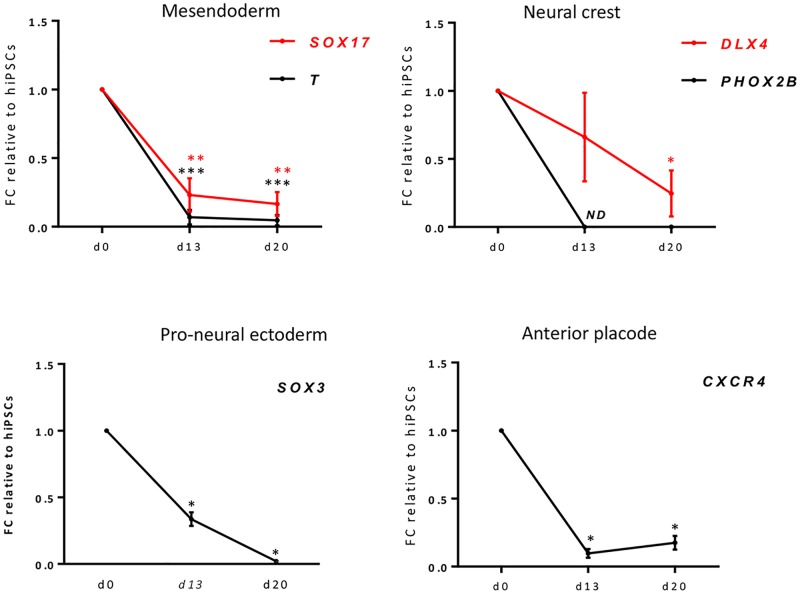
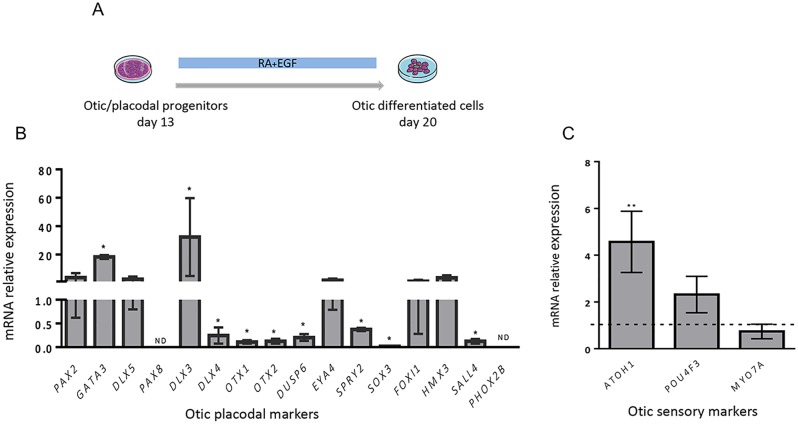
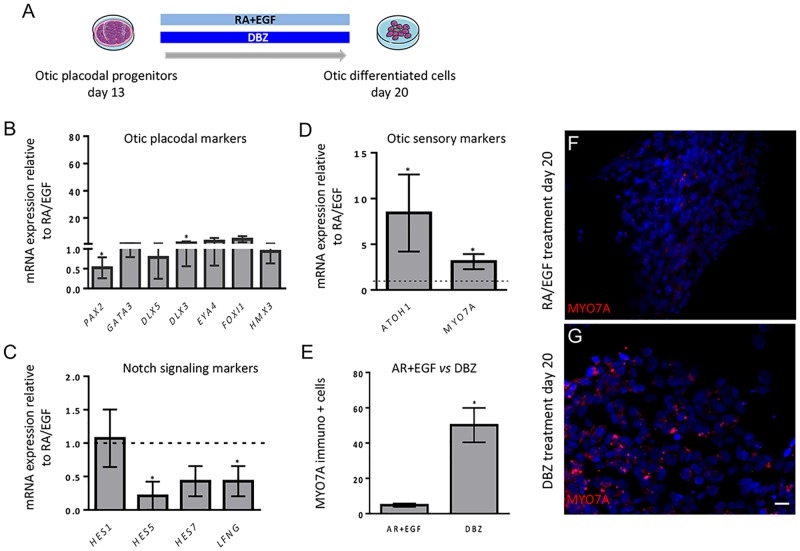
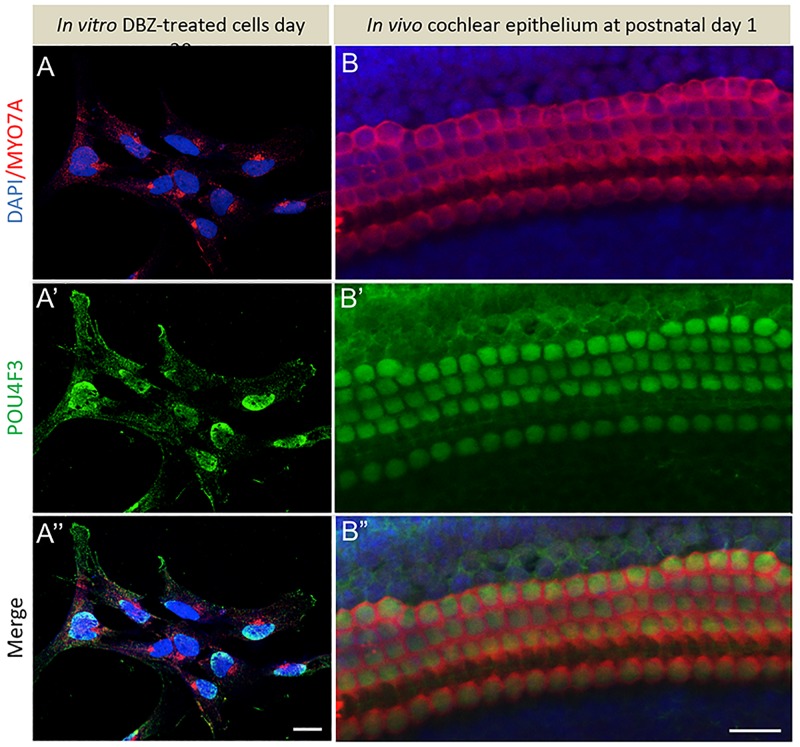
The inner ear represents a promising system to develop cell-based therapies from human induced pluripotent stem cells (hiPSCs). In the developing ear, Notch signaling plays multiple roles in otic region specification and for cell fate determination. Optimizing hiPSC induction for the generation of appropriate numbers of otic progenitors and derivatives, such as hair cells, may provide an unlimited supply of cells for research and cell-based therapy. In this study, we used monolayer cultures, otic-inducing agents, Notch modulation, and marker expression to track early and otic sensory lineages during hiPSC differentiation. Otic/placodal progenitors were derived from hiPSC cultures in medium supplemented with FGF3/FGF10 for 13 days. These progenitor cells were then treated for 7 days with retinoic acid (RA) and epidermal growth factor (EGF) or a Notch inhibitor. The differentiated cultures were analyzed in parallel by qPCR and immunocytochemistry. After the 13 day induction, hiPSC-derived cells displayed an upregulated expression of a panel of otic/placodal markers. Strikingly, a subset of these induced progenitor cells displayed key-otic sensory markers, the percentage of which was increased in cultures under Notch inhibition as compared to RA/EGF-treated cultures. Our results show that modulating Notch pathway during in vitro differentiation of hiPSC-derived otic/placodal progenitors is a valuable strategy to promote the expression of human otic sensory lineage genes.
内耳是一个很有前途的系统,可以从人类诱导多能干细胞(hiPSC)中开发基于细胞的疗法。在发育中的耳朵中,Notch 信号在耳区特化和细胞命运决定中发挥多种作用。优化 hiPSC 的诱导,以产生适当数量的耳前体和衍生物,如毛细胞,可为研究和基于细胞的治疗提供无限供应的细胞。在这项研究中,我们使用单层培养、耳诱导剂、Notch 调节和标记物表达来跟踪 hiPSC 分化过程中的早期和耳感觉谱系。在添加 FGF3/FGF10 的培养基中培养 hiPSC 13 天,可获得耳/颅嵴祖细胞。然后,这些祖细胞用维甲酸(RA)和表皮生长因子(EGF)或 Notch 抑制剂处理 7 天。通过 qPCR 和免疫细胞化学平行分析分化培养物。在 13 天的诱导后,hiPSC 衍生细胞显示出一组上调的耳/颅嵴标记物的表达。引人注目的是,这些诱导的祖细胞中有一部分显示出关键的耳感觉标记物,其在 Notch 抑制培养物中的百分比高于 RA/EGF 处理的培养物。我们的结果表明,在 hiPSC 衍生的耳/颅嵴祖细胞的体外分化过程中调节 Notch 途径是促进人耳感觉谱系基因表达的一种有价值的策略。