Guo Shuaijun, Armstrong Rebecca, Waters Elizabeth, Sathish Thirunavukkarasu, Alif Sheikh M, Browne Geoffrey R, Yu Xiaoming
School of Population and Global Health, The University of Melbourne, Melbourne, Victoria, Australia.
Centre for Community Child Health, Murdoch Children's Research Institute, Melbourne, Victoria, Australia.
BMJ Open. 2018 Jun 14;8(6):e020080. doi: 10.1136/bmjopen-2017-020080.
Improving health literacy at an early age is crucial to personal health and development. Although health literacy in children and adolescents has gained momentum in the past decade, it remains an under-researched area, particularly health literacy measurement. This study aimed to examine the quality of health literacy instruments used in children and adolescents and to identify the best instrument for field use.
Systematic review.
A wide range of settings including schools, clinics and communities.
Children and/or adolescents aged 6-24 years.
Measurement properties (reliability, validity and responsiveness) and other important characteristics (eg, health topics, components or scoring systems) of health literacy instruments.
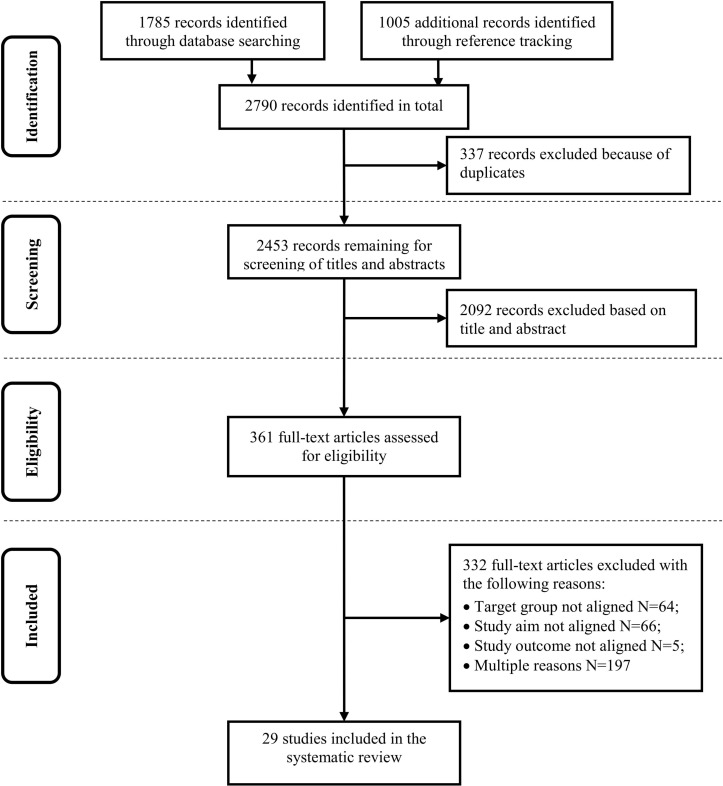
There were 29 health literacy instruments identified from the screening process. When measuring health literacy in children and adolescents, researchers mainly focus on the functional domain (basic skills in reading and writing) and consider participant characteristics of developmental change (of cognitive ability), dependency (on parents) and demographic patterns (eg, racial/ethnic backgrounds), less on differential epidemiology (of health and illness). The methodological quality of included studies as assessed via measurement properties varied from poor to excellent. More than half (62.9%) of measurement properties were unknown, due to either poor methodological quality of included studies or a lack of reporting or assessment. The 8-item Health Literacy Assessment Tool (HLAT-8) showed best evidence on construct validity, and the Health Literacy Measure for Adolescents showed best evidence on reliability.
More rigorous and high-quality studies are needed to fill the knowledge gap in measurement properties of health literacy instruments. Although it is challenging to draw a robust conclusion about which instrument is the most reliable and the most valid, this review provides important evidence that supports the use of the HLAT-8 to measure childhood and adolescent health literacy in future school-based research.
在早年提高健康素养对个人健康和发展至关重要。尽管儿童和青少年的健康素养在过去十年中受到了更多关注,但它仍然是一个研究不足的领域,尤其是健康素养测量方面。本研究旨在检验用于儿童和青少年的健康素养工具的质量,并确定最适合实地使用的工具。
系统评价。
包括学校、诊所和社区在内的广泛环境。
6至24岁的儿童和/或青少年。
健康素养工具的测量属性(信度、效度和反应度)以及其他重要特征(如健康主题、组成部分或评分系统)。
从筛选过程中确定了29种健康素养工具。在测量儿童和青少年的健康素养时,研究人员主要关注功能领域(读写基本技能),并考虑发育变化(认知能力方面)、依赖性(对父母的依赖)和人口统计学模式(如种族/民族背景)等参与者特征,而较少关注健康和疾病的差异流行病学。通过测量属性评估的纳入研究的方法学质量从差到优不等。超过一半(62.9%)的测量属性未知,原因是纳入研究的方法学质量差或缺乏报告或评估。8项健康素养评估工具(HLAT-8)在结构效度方面显示出最佳证据,青少年健康素养测量工具在信度方面显示出最佳证据。
需要更严格和高质量的研究来填补健康素养工具测量属性方面的知识空白。尽管很难就哪种工具最可靠、最有效得出强有力的结论,但本综述提供了重要证据,支持在未来基于学校的研究中使用HLAT-8来测量儿童和青少年的健康素养。