Liravi Farzad, Vlasea Mihaela
Multi-Scale Additive Manufacturing Laboratory, Department of Mechanical and Mechatronics Engineering, University of Waterloo, Waterloo, ON, Canada N2L 3G1.
Data Brief. 2018 Apr 23;18:1477-1483. doi: 10.1016/j.dib.2018.04.068. eCollection 2018 Jun.
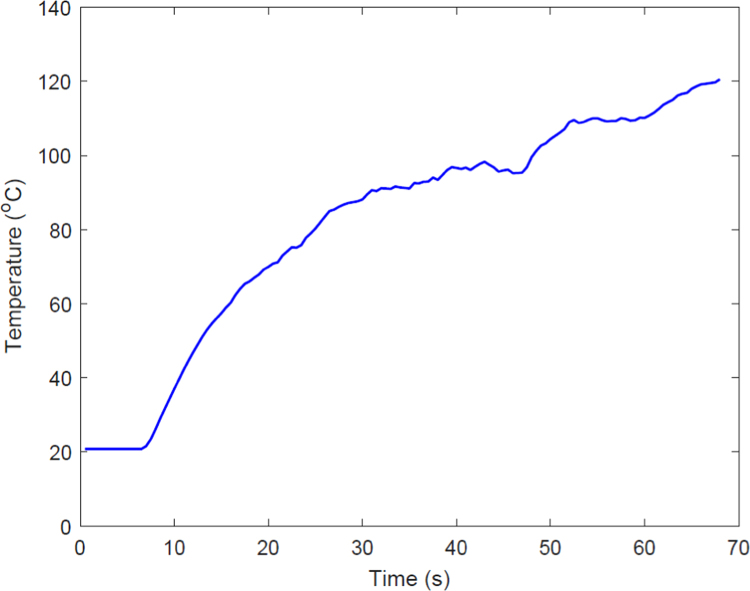
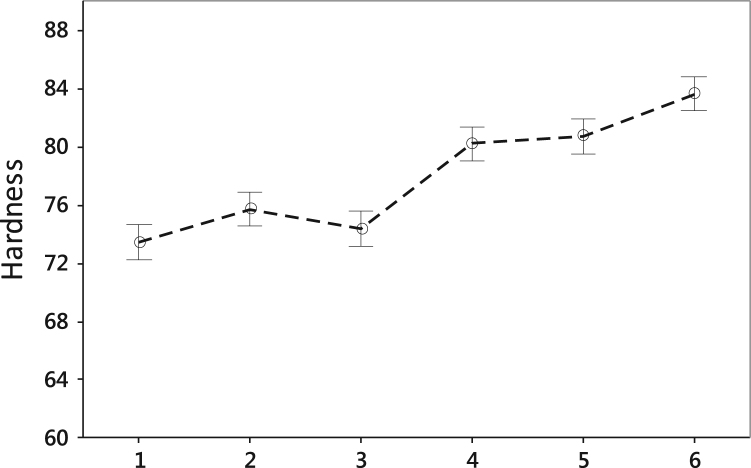
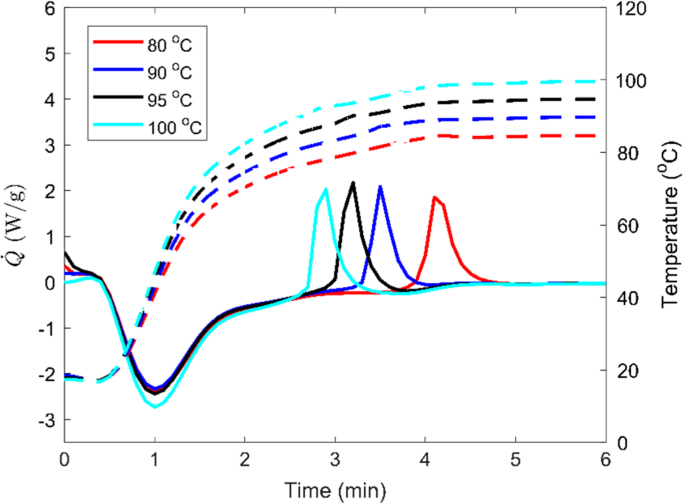
The data included in this article provides additional supporting information on our recent publication (Liravi et al., 2018 [1]) on a novel hybrid additive manufacturing (AM) method for fabrication of three-dimensional (3D) structures from silicone powder. A design of experiments (DoE) study has been carried out to optimize the geometrical fidelity of AM-made parts. This manuscript includes the details of a multi-level factorial DOE and the response optimization results. The variation in the temperature of powder-bed when exposed to heat is plotted as well. Furthermore, the effect of blending ratio of two parts of silicone binder on its curing speed was investigated by conducting DSC tests on a silicone binder with 100:2 precursor to curing agent ratio. The hardness of parts fabricated with non-optimum printing conditions are included and compared.
本文所包含的数据为我们最近发表的关于一种新型混合增材制造(AM)方法的文章(Liravi等人,2018 [1])提供了额外的支持信息,该方法用于从硅粉制造三维(3D)结构。已开展实验设计(DoE)研究以优化增材制造零件的几何保真度。本手稿包含多级析因DoE的详细信息及响应优化结果。还绘制了粉末床受热时的温度变化情况。此外,通过对前驱体与固化剂比例为100:2的硅酮粘合剂进行差示扫描量热法(DSC)测试,研究了硅酮粘合剂两部分的混合比例对其固化速度的影响。文中还纳入并比较了在非最佳打印条件下制造的零件的硬度。