Scheckenbach Kathrin
Klinik für Hals-Nasen-Ohrenheilkunde, Universitätsklinikum Düsseldorf.
Laryngorhinootologie. 2018 Mar;97(S 01):S114-S141. doi: 10.1055/s-0043-121964. Epub 2018 Mar 22.
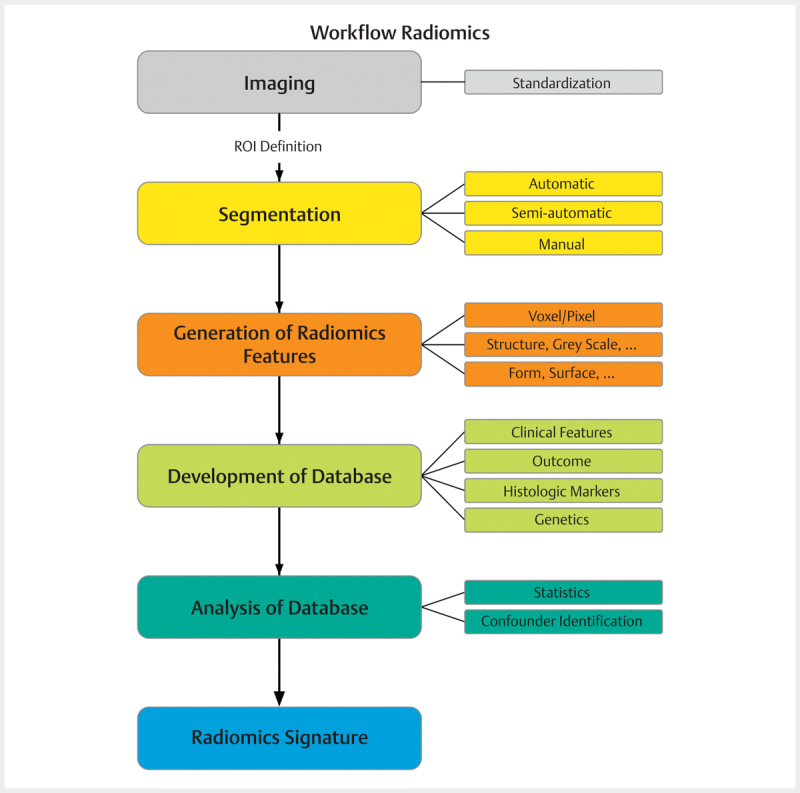
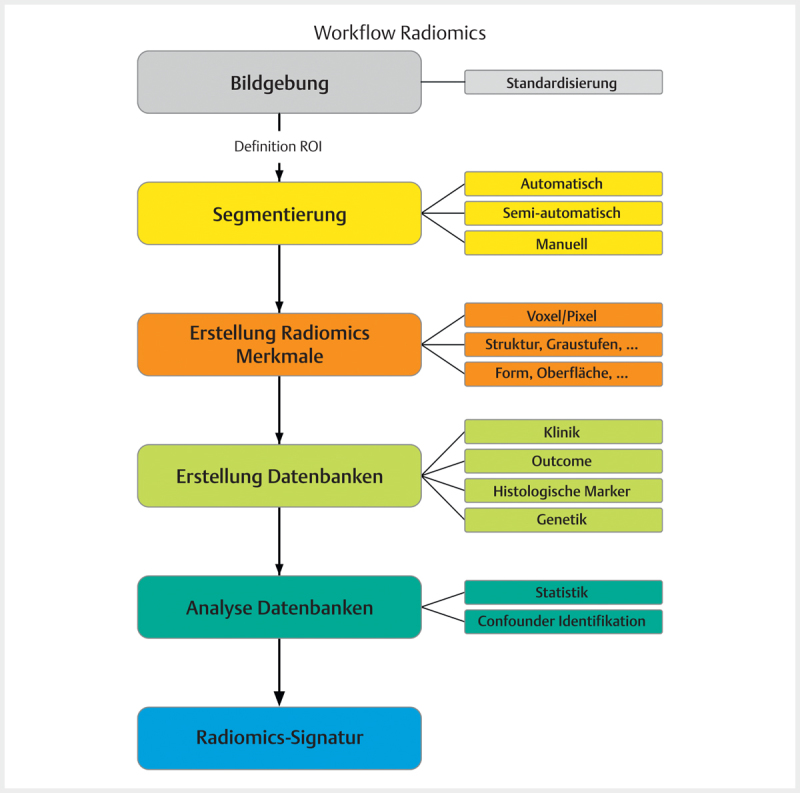
Precision medicine is increasingly pushed forward, also with respect to upcoming new targeted therapies. Individual characterization of diseases on the basis of biomarkers is a prerequisite for this development. So far, biomarkers are characterized clinically, histologically or on a molecular level. The implementation of broad screening methods ("Omics") and the analysis of big data - in addition to single markers - allow to define biomarker signatures. Next to "Genomics", "Proteomics", and "Metabolicis", "Radiomics" gained increasing interest during the last years. Based on radiologic imaging, multiple radiomic markers are extracted with the help of specific algorithms. These are correlated with clinical, (immuno-) histopathological, or genomic data. Underlying structural differences are based on the imaging metadata and are often not visible and therefore not detectable without specific software. Radiomics are depicted numerically or by graphs. The fact that radiomic information can be extracted from routinely performed imaging adds a specific appeal to this method. Radiomics could potentially replace biopsies and additional investigations. Alternatively, radiomics could complement other biomarkers and thus lead to a more precise, multimodal prediction. Until now, radiomics are primarily used to investigate solid tumors. Some promising studies in head and neck cancer have already been published.
精准医学正在不断向前推进,在即将出现的新靶向治疗方面亦是如此。基于生物标志物对疾病进行个体特征描述是这一发展的前提条件。到目前为止,生物标志物是通过临床、组织学或分子水平来进行特征描述的。除了单一标志物外,广泛筛查方法(“组学”)的实施和大数据分析有助于定义生物标志物特征。在过去几年中,除了“基因组学”“蛋白质组学”和“代谢组学”之外,“放射组学”也越来越受到关注。基于放射影像学,借助特定算法提取多个放射组学标志物。这些标志物与临床、(免疫)组织病理学或基因组数据相关。潜在的结构差异基于影像元数据,通常是不可见的,因此没有特定软件就无法检测到。放射组学通过数字或图表来呈现。放射组学信息可以从常规进行的影像中提取这一事实为该方法增添了特殊的吸引力。放射组学有可能取代活检和其他检查。或者,放射组学可以补充其他生物标志物,从而实现更精确的多模态预测。到目前为止,放射组学主要用于研究实体瘤。头颈部癌的一些有前景的研究已经发表。