NMR Spectroscopy, Bijvoet Center for Biomolecular Research, Utrecht University, Padualaan 8, 3584 CH Utrecht, The Netherlands.
Group for Nano- and Biotechnological applications, Department of Fundamentals of Electrical Engineering, Mathematics and Physics, University of Ljubljana, Tržaška cesta 25, 1000 Ljubljana, Slovenia.
Nucleic Acids Res. 2018 Aug 21;46(14):7138-7152. doi: 10.1093/nar/gky507.
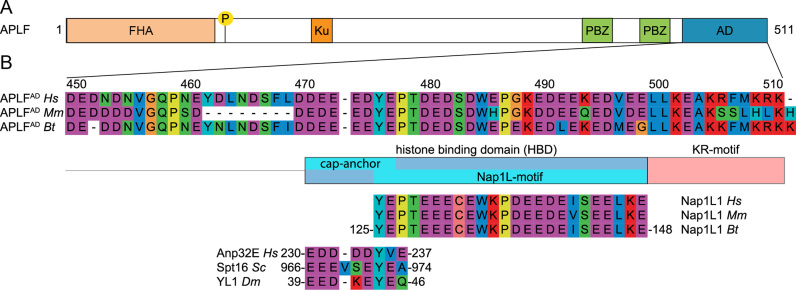
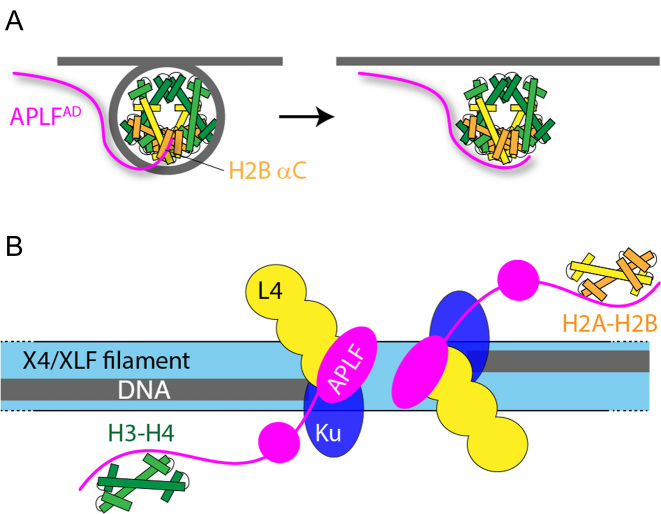
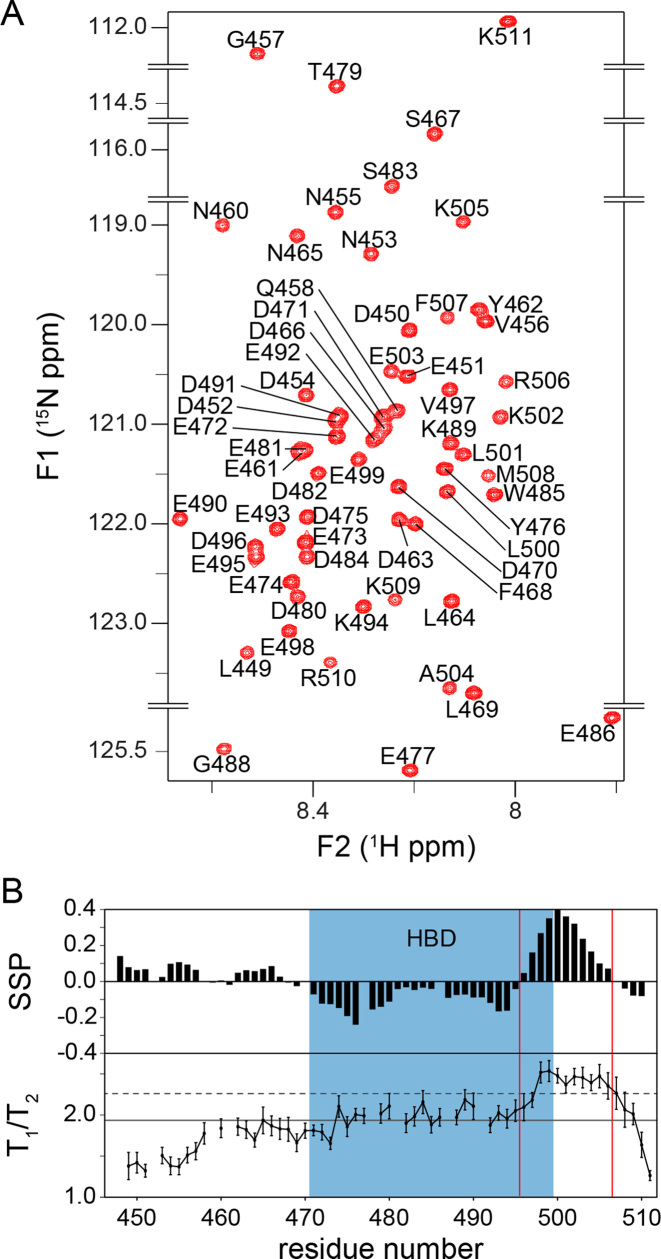
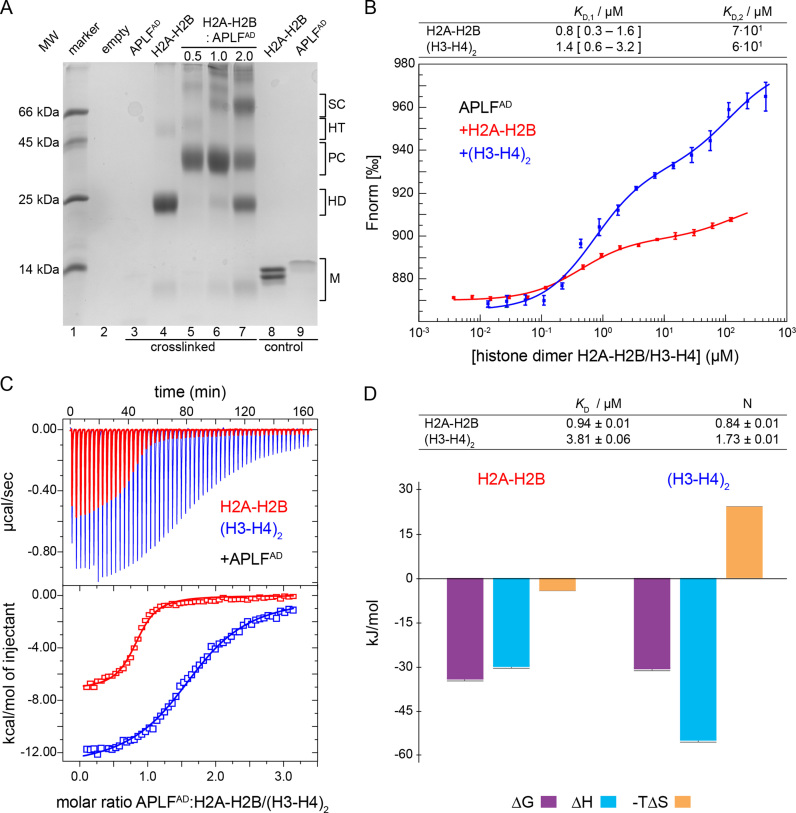
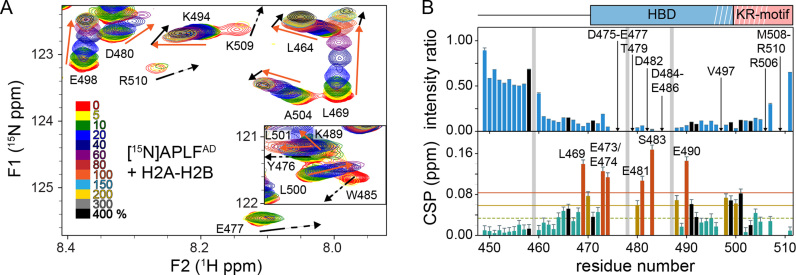
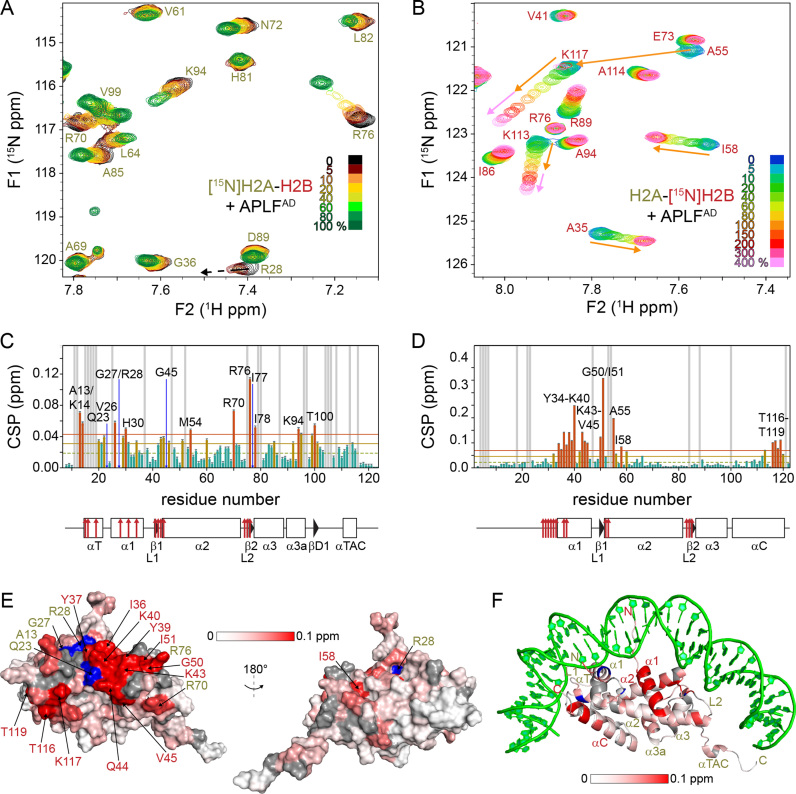
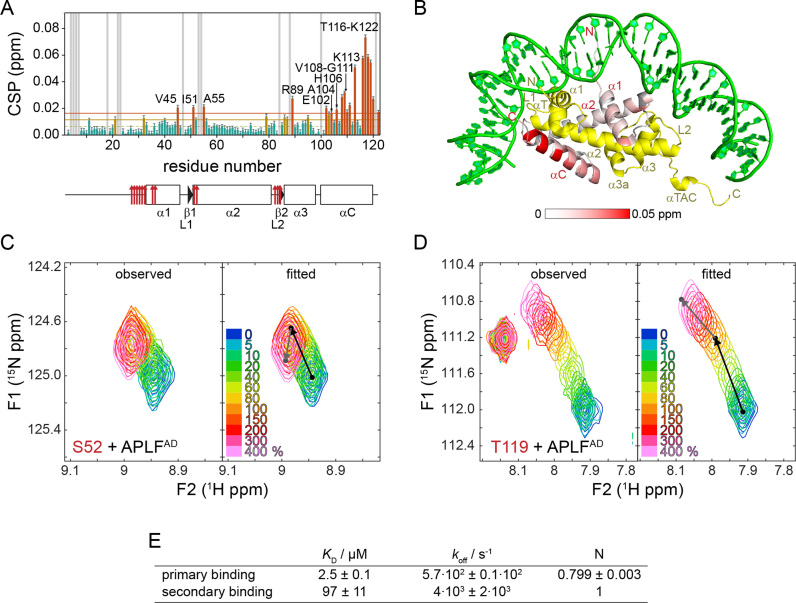
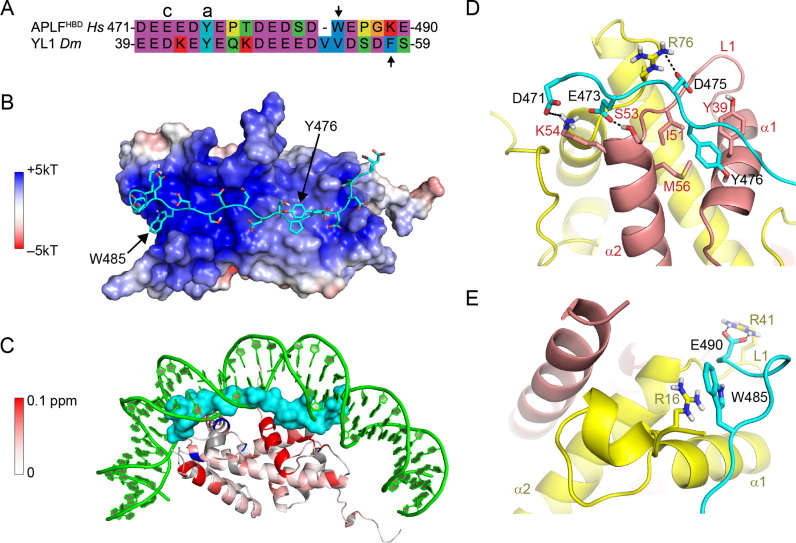
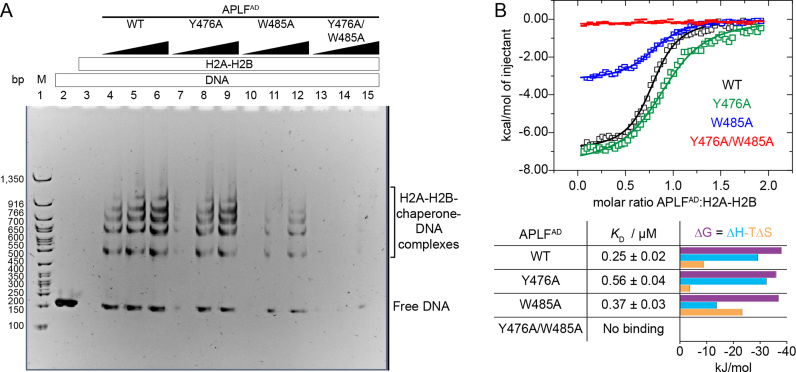
Genome replication, transcription and repair require the assembly/disassembly of the nucleosome. Histone chaperones are regulators of this process by preventing formation of non-nucleosomal histone-DNA complexes. Aprataxin and polynucleotide kinase like factor (APLF) is a non-homologous end-joining (NHEJ) DNA repair factor that possesses histone chaperone activity in its acidic domain (APLFAD). Here, we studied the molecular basis of this activity using biochemical and structural methods. We find that APLFAD is intrinsically disordered and binds histone complexes (H3-H4)2 and H2A-H2B specifically and with high affinity. APLFAD prevents unspecific complex formation between H2A-H2B and DNA in a chaperone assay, establishing for the first time its specific histone chaperone function for H2A-H2B. On the basis of a series of nuclear magnetic resonance studies, supported by mutational analysis, we show that the APLFAD histone binding domain uses two aromatic side chains to anchor to the α1-α2 patches on both H2A and H2B, thereby covering most of their DNA-interaction surface. An additional binding site on both APLFAD and H2A-H2B may be involved in the handoff between APLF and DNA or other chaperones. Together, our data support the view that APLF provides not only a scaffold but also generic histone chaperone activity for the NHEJ-complex.
基因组复制、转录和修复需要核小体的组装/拆卸。组蛋白伴侣通过防止形成非核小体组蛋白-DNA 复合物来调节这一过程。 Aprataxin 和多核苷酸激酶样因子 (APLF) 是一种非同源末端连接 (NHEJ) DNA 修复因子,其酸性结构域 (APLFAD) 具有组蛋白伴侣活性。在这里,我们使用生化和结构方法研究了这种活性的分子基础。我们发现 APLFAD 是固有无序的,并且特异性和高亲和力地结合组蛋白复合物 (H3-H4)2 和 H2A-H2B。APLFAD 在伴侣测定中防止 H2A-H2B 与 DNA 之间的非特异性复合物形成,首次确立了其对 H2A-H2B 的特异性组蛋白伴侣功能。基于一系列核磁共振研究,并得到突变分析的支持,我们表明 APLFAD 组蛋白结合结构域使用两个芳香侧链锚定在 H2A 和 H2B 的 α1-α2 斑块上,从而覆盖了它们大部分的 DNA 相互作用表面。APLFAD 和 H2A-H2B 上的另一个结合位点可能参与了 APLF 与 DNA 或其他伴侣之间的交接。总之,我们的数据支持这样一种观点,即 APLF 不仅为 NHEJ 复合物提供了支架,还提供了通用的组蛋白伴侣活性。