Department of Biomedical Sciences, College of Veterinary Medicine and Life Sciences, City University of Hong Kong, 83 Tat Chee Avenue, Kowloon, Hong Kong.
Department of Clinical Oncology, Queen Elizabeth Hospital, 30 Gascoigne Road, Kowloon, Hong Kong.
Nat Commun. 2018 Jun 15;9(1):2359. doi: 10.1038/s41467-018-04791-8.
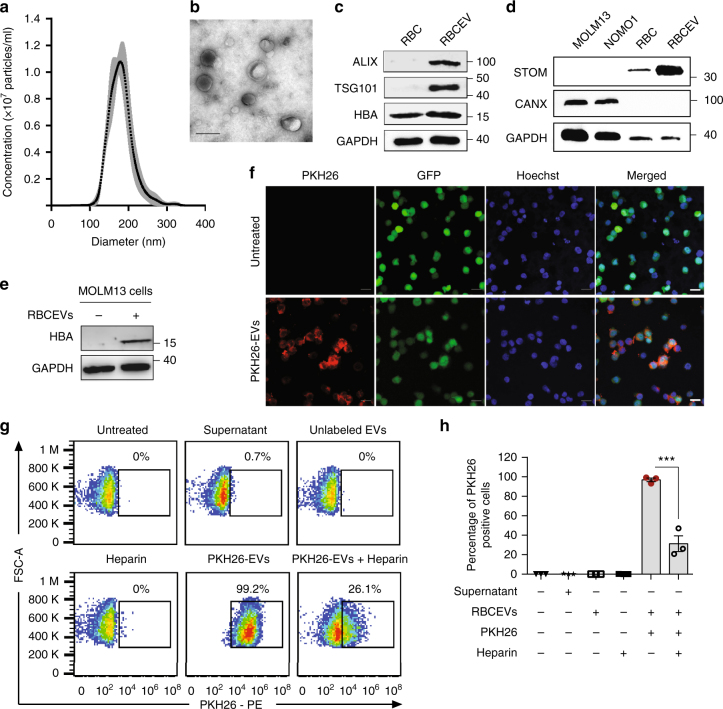
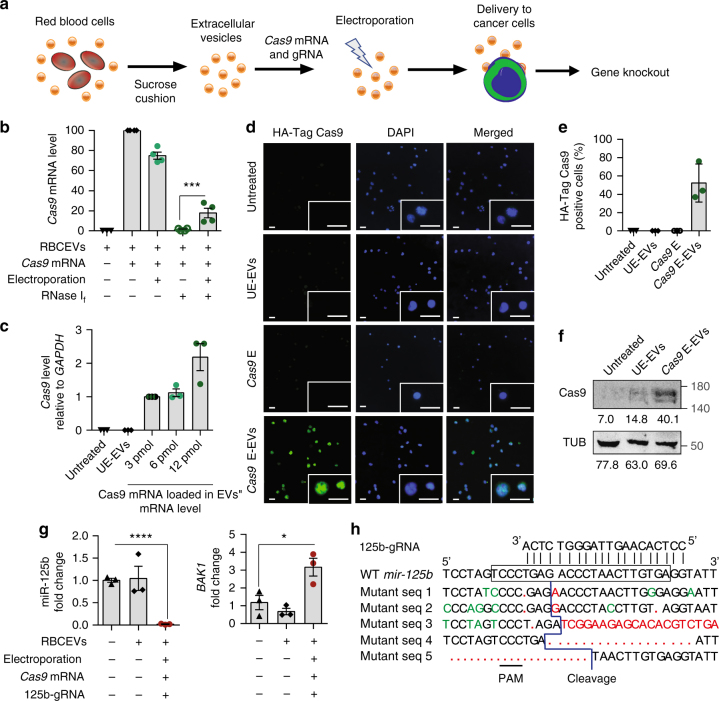
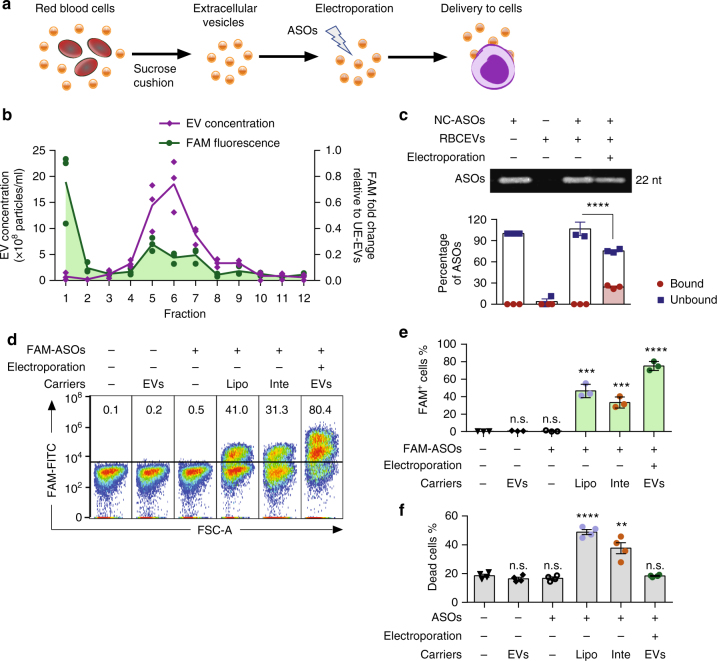
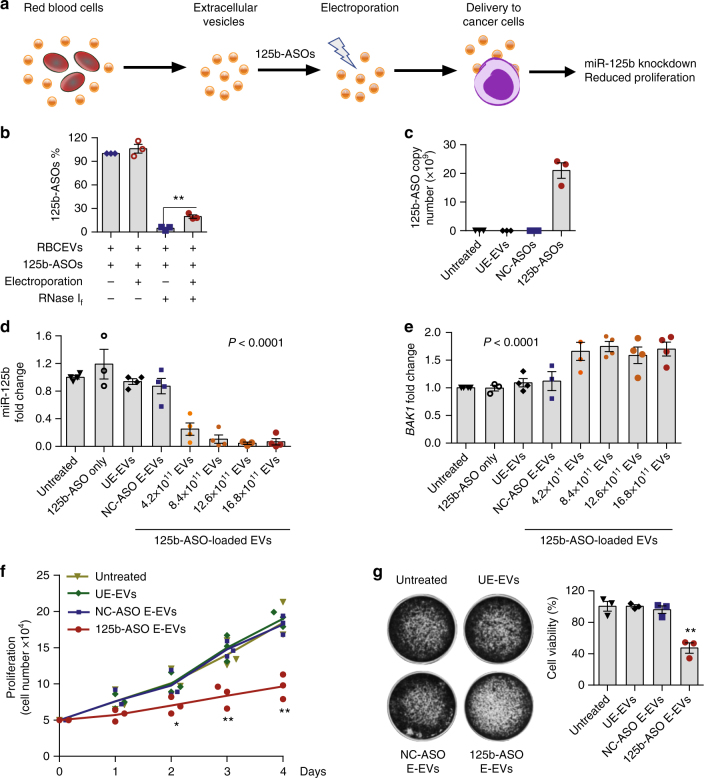
Most of the current methods for programmable RNA drug therapies are unsuitable for the clinic due to low uptake efficiency and high cytotoxicity. Extracellular vesicles (EVs) could solve these problems because they represent a natural mode of intercellular communication. However, current cellular sources for EV production are limited in availability and safety in terms of horizontal gene transfer. One potentially ideal source could be human red blood cells (RBCs). Group O-RBCs can be used as universal donors for large-scale EV production since they are readily available in blood banks and they are devoid of DNA. Here, we describe and validate a new strategy to generate large-scale amounts of RBC-derived EVs for the delivery of RNA drugs, including antisense oligonucleotides, Cas9 mRNA, and guide RNAs. RNA drug delivery with RBCEVs shows highly robust microRNA inhibition and CRISPR-Cas9 genome editing in both human cells and xenograft mouse models, with no observable cytotoxicity.
由于摄取效率低和细胞毒性高,目前大多数可编程 RNA 药物疗法的方法都不适合临床应用。细胞外囊泡 (EVs) 可以解决这些问题,因为它们代表了一种细胞间通讯的自然模式。然而,目前 EV 生产的细胞源在可用性和水平基因转移方面的安全性方面受到限制。一个潜在的理想来源可能是人类红细胞 (RBCs)。O 型 RBC 由于在血库中很容易获得,并且不含 DNA,因此可以作为大规模 EV 生产的通用供体。在这里,我们描述并验证了一种新策略,用于生成大量用于 RNA 药物递送的 RBC 衍生 EV,包括反义寡核苷酸、Cas9 mRNA 和向导 RNA。用 RBCEVs 进行 RNA 药物递送,在人细胞和异种移植小鼠模型中均显示出高度稳健的 miRNA 抑制和 CRISPR-Cas9 基因组编辑,没有观察到细胞毒性。