Department of Microbiology and Immunology, Faculty of Tropical Medicine, Mahidol University, Bangkok, Thailand.
London School of Hygiene and Tropical Medicine, London, UK.
Sci Rep. 2018 Jun 15;8(1):9167. doi: 10.1038/s41598-018-27356-7.
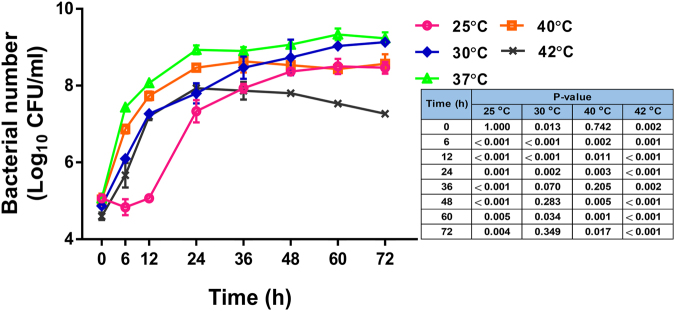
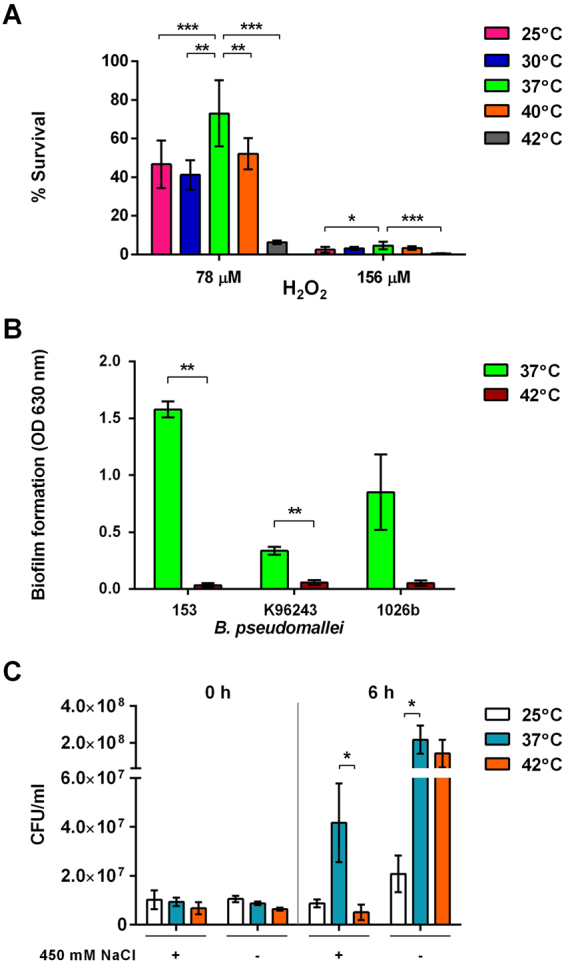
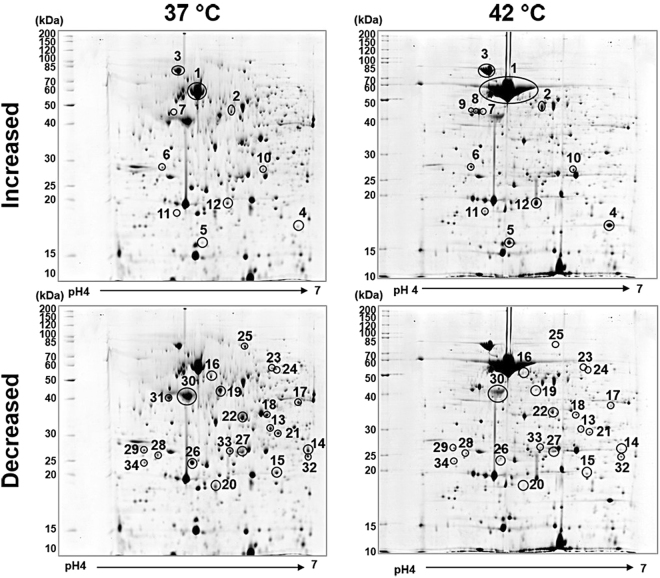
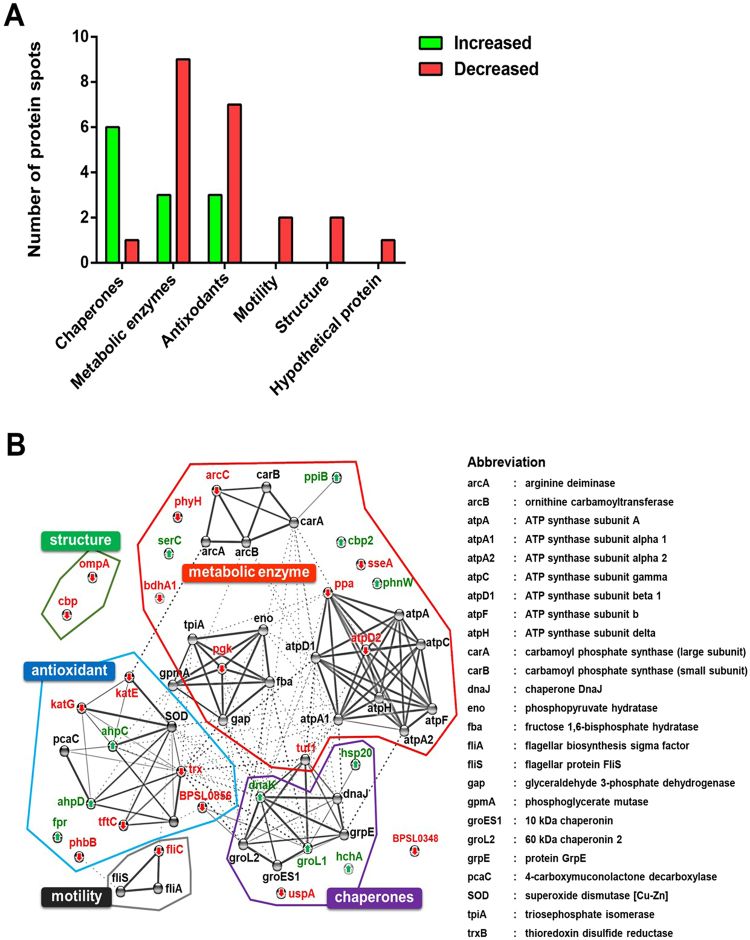
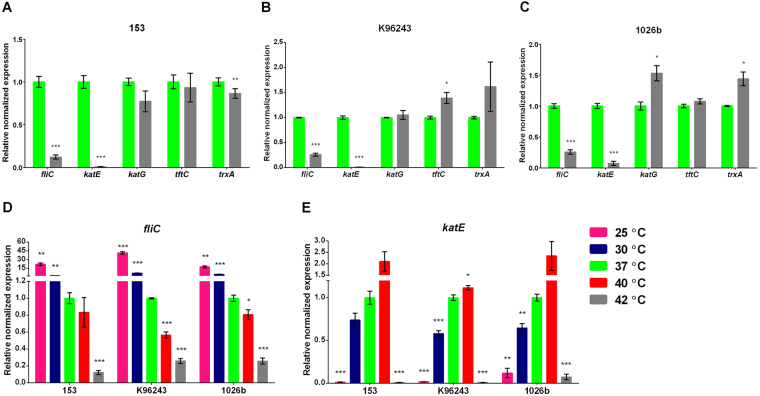
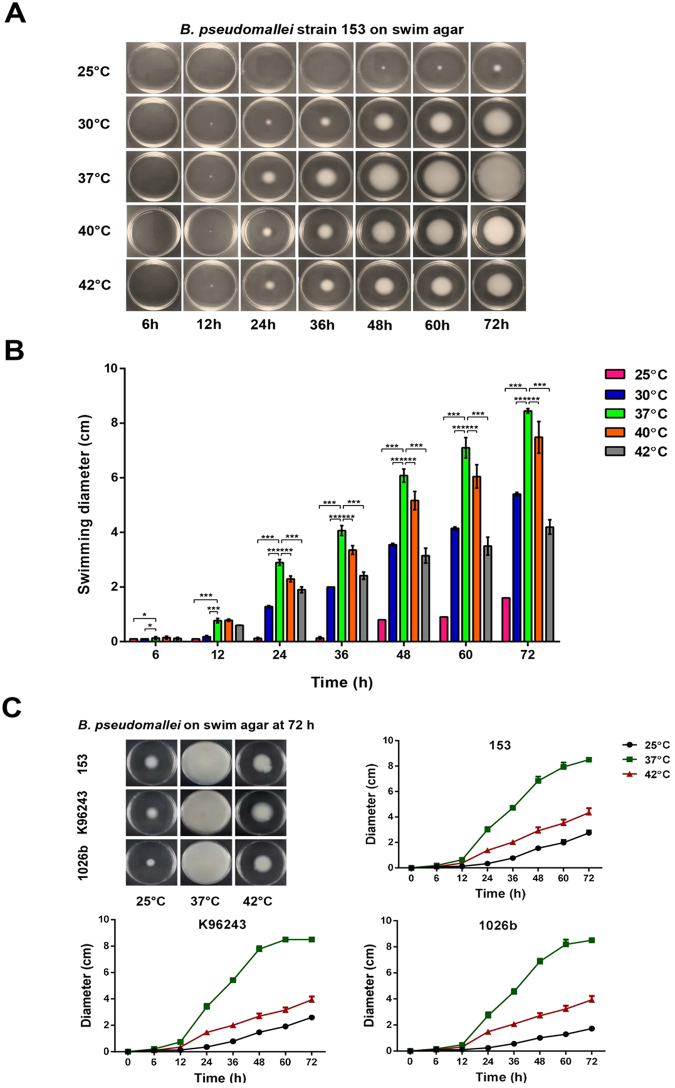
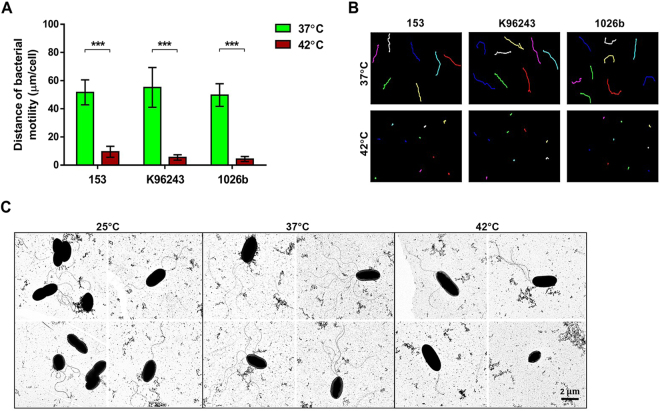
Burkholderia pseudomallei is a flagellated, gram-negative environmental bacterium that causes melioidosis, a severe infectious disease of humans and animals in tropical areas. We hypothesised that B. pseudomallei may undergo phenotypic adaptation in response to an increase in growth temperature. We analysed the growth curves of B. pseudomallei strain 153 cultured in Luria-Bertani broth at five different temperatures (25 °C-42 °C) and compared the proteomes of bacteria cultured at 37 °C and 42 °C. B. pseudomallei exhibited the highest growth rate at 37 °C with modest reductions at 30 °C, 40 °C and 42 °C but a more marked delay at 25 °C. Proteome analysis revealed 34 differentially expressed protein spots between bacterial cultures at 42 °C versus 37 °C. These were identified as chaperones (7 spots), metabolic enzymes (12 spots), antioxidants (10 spots), motility proteins (2 spots), structural proteins (2 spots) and hypothetical proteins (1 spot). Of the 22 down-regulated proteins at 42 °C, redundancy in motility and antioxidant proteins was observed. qRT-PCR confirmed decreased expression of fliC and katE. Experiments on three B. pseudomallei strains demonstrated that these had the highest motility, greatest resistance to HO and greatest tolerance to salt stress at 37 °C. Our data suggest that temperature affects B. pseudomallei motility and resistance to stress.
类鼻疽伯克霍尔德菌是一种具有鞭毛的革兰氏阴性环境细菌,可引起类鼻疽,这是热带地区人类和动物的一种严重传染病。我们假设类鼻疽伯克霍尔德菌可能会因生长温度的升高而发生表型适应。我们分析了在五种不同温度(25°C-42°C)下培养的 153 株类鼻疽伯克霍尔德菌在 LB 肉汤中的生长曲线,并比较了在 37°C 和 42°C 下培养的细菌的蛋白质组。类鼻疽伯克霍尔德菌在 37°C 时生长速度最快,在 30°C、40°C 和 42°C 时略有降低,但在 25°C 时生长速度明显延迟。蛋白质组分析显示,在 42°C 与 37°C 培养的细菌之间有 34 个差异表达的蛋白质斑点。这些被鉴定为伴侣蛋白(7 个斑点)、代谢酶(12 个斑点)、抗氧化剂(10 个斑点)、运动蛋白(2 个斑点)、结构蛋白(2 个斑点)和假设蛋白(1 个斑点)。在 42°C 下调的 22 个蛋白质中,观察到运动和抗氧化蛋白的冗余。qRT-PCR 证实 fliC 和 katE 的表达下降。对三种类鼻疽伯克霍尔德菌菌株的实验表明,在 37°C 时,它们的运动性最强,对 HO 的抵抗力最强,对盐胁迫的耐受性最强。我们的数据表明,温度会影响类鼻疽伯克霍尔德菌的运动性和对压力的抵抗力。