USDA-Animal and Plant Health Inspection Service (APHIS)-Veterinary Services (VS) Center for Epidemiology and Animal Health, National Animal Health Monitoring System, Fort Collins, CO 80526-8117; Department of Clinical Sciences, College of Veterinary Medicine and Biomedical Sciences, Colorado State University, Fort Collins 80523-1678.
USDA-Animal and Plant Health Inspection Service (APHIS)-Veterinary Services (VS) Center for Epidemiology and Animal Health, National Animal Health Monitoring System, Fort Collins, CO 80526-8117.
J Dairy Sci. 2018 Oct;101(10):9168-9184. doi: 10.3168/jds.2017-14010. Epub 2018 Jun 13.
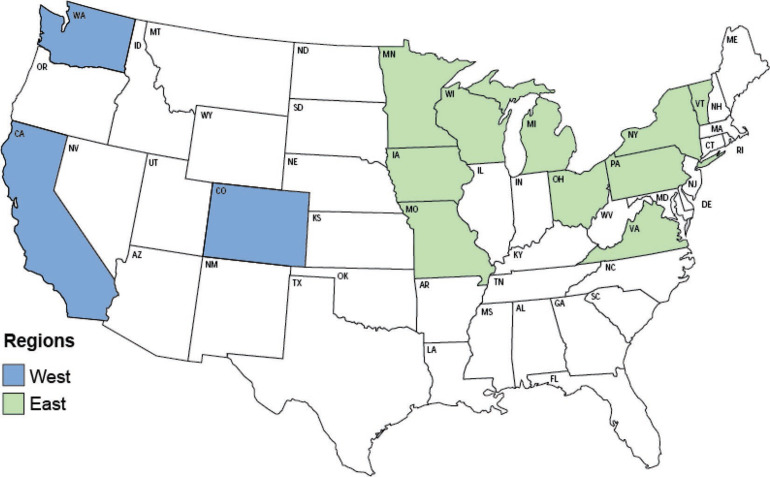
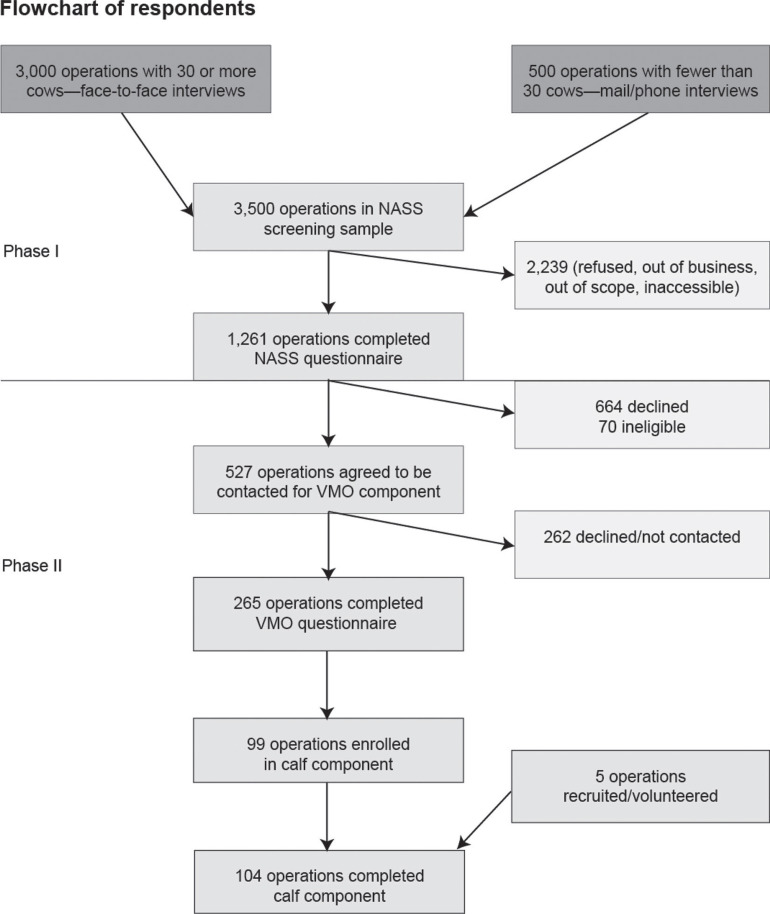
The objective of this study was to describe preweaned dairy heifer calf management practices on dairy operations across the United States that were used to analyze factors associated with colostrum quality and passive transfer, Cryptosporidium and Giardia, morbidity and mortality, and average daily gain. This study included 104 dairy operations in 13 states that participated in the National Animal Health Monitoring System's Dairy 2014 calf component study. This 18-mo longitudinal study focused on dairy heifer calves from birth to weaning, and data were collected on 2,545 heifer calves. Descriptive statistics were generated regarding colostrum feeding, preweaning housing, milk feeding and consumption, growth, morbidity and mortality, and weaning practices. The majority of calves enrolled were Holsteins (89.4%). Over half the calves (63.2%) enrolled in the study received the majority of their colostrum via bottle; however, 22.1% of calves from 51.0% of operations received colostrum via suckling from their dams. For all calves, the mean time to the first colostrum feeding was 2.8 h, and the average amount of colostrum at the first feeding was 2.9 L, with 4.5 L provided in the first 24 h. The mean serum IgG of all calves was 21.7 g/L; however, 76.0% of operations had at least 1 calf with failure of passive transfer of immunity with a serum IgG below 10 g/L. The majority of calves in the study were housed individually (86.6%). Nonetheless, 20.2% of operations housed some calves in groups, representing 13.4% of all calves. Approximately one-half of the calves in the study (52.3%) were dehorned or disbudded during the preweaning period, with only 27.8% of these calves receiving analgesics or anesthetics during the procedure. Whole or waste milk was the liquid diet type fed to 40.1% of calves, and milk replacer was fed to 34.8% of calves. A combination of milk and milk replacer was fed to 25.1% of calves. Calves, on average, were fed 2.6 L per feeding and fed 2.6 times/d, resulting in a total of 5.6 L of liquid diet fed per day. The mean average daily gain for all calves enrolled in the study was 0.7 kg/d. Fecal samples were collected and almost all operations had at least 1 calf positive for Cryptosporidium (94.2%) or Giardia (99.0%), and 84.6% of operations had calves that tested positive for both Cryptosporidium and Giardia. Over one-third of calves (38.1%) had at least one morbidity event during the preweaning period and the mortality rate was 5.0%. The mean age at weaning was 65.7 d. This study provides an update on dairy heifer raising practices in the United States.
本研究的目的是描述美国各地奶牛养殖场的哺乳期奶牛犊牛管理措施,这些措施用于分析与初乳质量和被动免疫转移、隐孢子虫和贾第鞭毛虫、发病率和死亡率以及平均日增重相关的因素。本研究包括来自美国 13 个州的 104 个奶牛场,这些奶牛场参与了国家动物健康监测系统的奶牛 2014 年犊牛部分研究。这项为期 18 个月的纵向研究侧重于从出生到断奶的奶牛犊牛,共收集了 2545 头奶牛犊牛的数据。关于初乳喂养、断奶前饲养、牛奶喂养和消耗、生长、发病率和死亡率以及断奶措施,生成了描述性统计数据。登记的大多数犊牛为荷斯坦奶牛(89.4%)。超过一半(63.2%)的登记犊牛通过奶瓶获得大部分初乳;然而,51.0%的操作中有 22.1%的犊牛通过从其母亲那里吮吸获得初乳。对于所有犊牛,第一次初乳喂养的平均时间为 2.8 小时,第一次喂养的平均初乳量为 2.9 升,24 小时内提供 4.5 升。所有犊牛的平均血清 IgG 为 21.7 g/L;然而,76.0%的操作中至少有 1 头犊牛因血清 IgG 低于 10 g/L 而被动免疫转移失败。研究中大多数犊牛(86.6%)单独饲养。尽管如此,仍有 20.2%的操作将一些犊牛分组饲养,占所有犊牛的 13.4%。研究中有近一半(52.3%)的犊牛在断奶前去角或去角,其中只有 27.8%的犊牛在去角过程中接受了镇痛剂或麻醉剂。全乳或废乳是 40.1%的犊牛所食用的液体饮食类型,34.8%的犊牛食用代乳料。25.1%的犊牛同时食用牛奶和代乳料。犊牛平均每次喂养 2.6 升,每天喂养 2.6 次,每天共喂养 5.6 升液体饮食。本研究中所有登记犊牛的平均日增重为 0.7 千克/天。采集了粪便样本,几乎所有的养殖场都至少有 1 头犊牛检测出隐孢子虫(94.2%)或贾第鞭毛虫(99.0%)阳性,84.6%的养殖场都有犊牛同时检测出隐孢子虫和贾第鞭毛虫阳性。超过三分之一(38.1%)的犊牛在断奶前至少发生过一次发病事件,死亡率为 5.0%。断奶的平均年龄为 65.7 天。本研究提供了美国奶牛犊牛饲养实践的最新情况。