Department of Anesthesiology and Operative Intensive Care Medicine (CCM/CVK), Charité - University Medicine Berlin, corporate member of Freie Universität Berlin, Humboldt-Universität zu Berlin, and Berlin Institute of Health; Campus Virchow-Klinikum; Augustenburger Platz 1, 13353 Berlin, Germany.
Int J Med Sci. 2018 Apr 27;15(7):682-688. doi: 10.7150/ijms.25393. eCollection 2018.
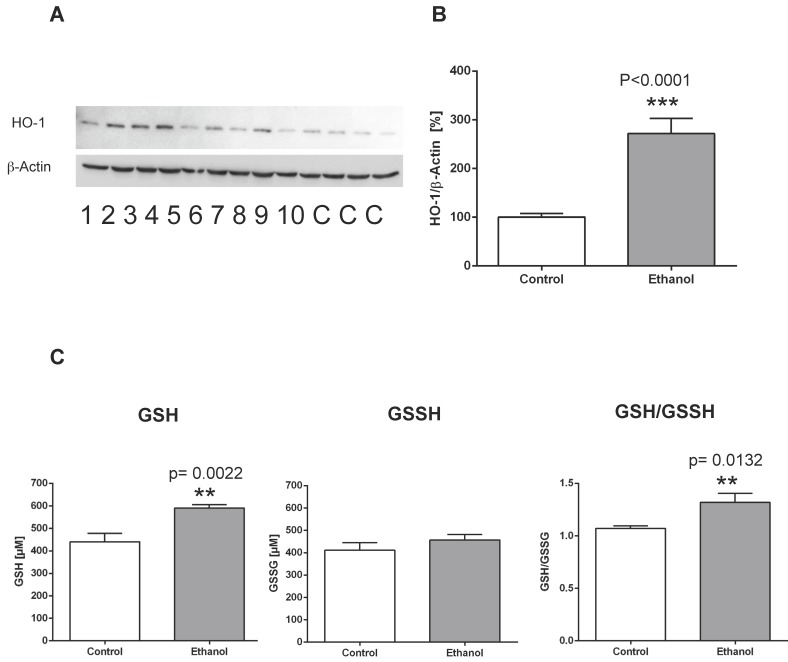
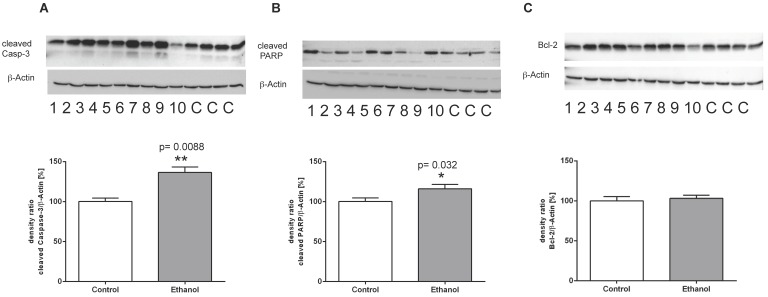
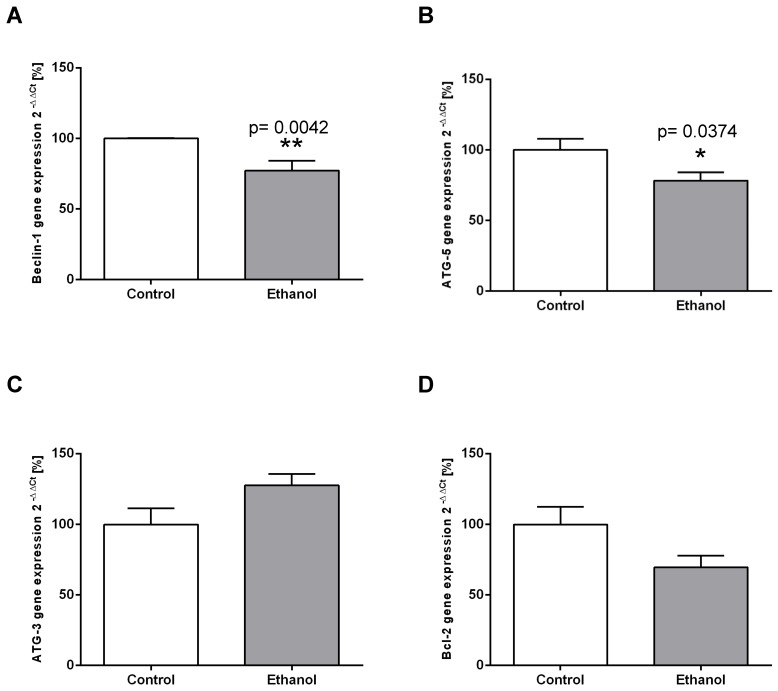
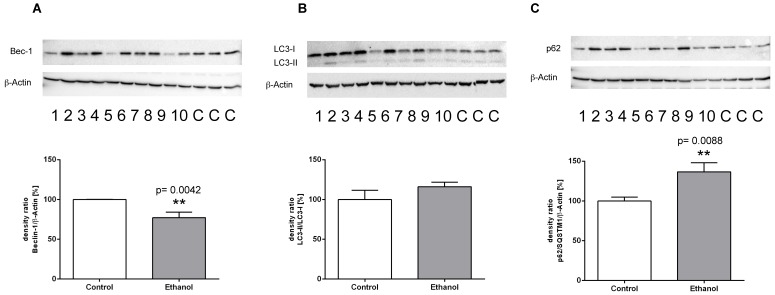
Chronic alcohol consumption is a major cause of liver injury. However, the molecular mechanisms by which alcohol impairs hepatocellular function and induces cell death remain unclear. Macroautophagy (hereafter called 'autophagy') is a degradation pathway involved in the survival or death of cells during conditions of cellular stress. This study examines the effect of chronic alcohol consumption on hepatocellular autophagy in an animal model. During a 12-week period male Wistar rats were fed a Lieber-DeCarli diet containing 5% alcohol (EtOH group; n=10), or an isocaloric diet (control group; n=10). Hepatic expression of key regulatory autophagy proteins (e.g. Beclin-1, ATG-3, ATG-5, p62/SQSTM1 and LC3) were detected by real-time polymerase chain reaction and Western blot analysis. Markers of cellular stress and apoptotic cell death (e.g. HO-1, caspase-3, PARP-1 and Bcl-2) were determined, and levels of reduced and oxidized glutathione were measured. Chronic alcohol consumption caused cellular and oxidative stress in the liver. Transcriptional and translational expression of Beclin-1 and ATG-5 was significantly impaired. The protein expression of LC3-I and LC3-II was significantly increased, while the ratio of LC3I/II remained unchanged in the EtOH group compared with controls. Hepatocellular expression of p62/SQSTM1 and markers of apoptotic cell death (such as cleaved caspase-3 and cleaved PARP-1) were significantly increased in the EtOH group indicating a disrupted autophagic flux and increased rate of apoptosis in the liver. In this model, chronic alcohol consumption impaired hepatocellular autophagy and induced apoptotic cell death. It appears that changes in autophagy might contribute to alcohol-induced structural and functional hepatocellular injury.
慢性酒精摄入是肝损伤的主要原因。然而,酒精损害肝细胞功能并诱导细胞死亡的分子机制尚不清楚。巨自噬(以下简称“自噬”)是一种降解途径,涉及细胞应激时细胞的存活或死亡。本研究在动物模型中研究了慢性酒精摄入对肝细胞自噬的影响。在 12 周的时间内,雄性 Wistar 大鼠喂食含有 5%酒精的 Lieber-DeCarli 饮食(EtOH 组,n=10)或等热量饮食(对照组,n=10)。通过实时聚合酶链反应和 Western blot 分析检测关键调节自噬蛋白(如 Beclin-1、ATG-3、ATG-5、p62/SQSTM1 和 LC3)的肝表达。测定细胞应激和凋亡细胞死亡的标志物(如 HO-1、caspase-3、PARP-1 和 Bcl-2),并测量还原型和氧化型谷胱甘肽的水平。慢性酒精摄入导致肝脏细胞和氧化应激。Beclin-1 和 ATG-5 的转录和翻译表达显著受损。LC3-I 和 LC3-II 的蛋白表达显著增加,而 EtOH 组与对照组相比,LC3I/II 的比值保持不变。EtOH 组肝细胞 p62/SQSTM1 和凋亡细胞死亡标志物(如裂解 caspase-3 和裂解 PARP-1)的表达显著增加,表明自噬通量中断和肝内凋亡率增加。在该模型中,慢性酒精摄入损害了肝细胞自噬并诱导了凋亡细胞死亡。自噬的变化似乎有助于酒精引起的结构和功能肝细胞损伤。