Department of Medicine and Medical Specialities, Faculty of Medicine and Health Sciences, University of Alcalá, 28801 Alcala de Henares, Spain.
Ramón y Cajal Institute of Sanitary Research (IRYCIS), 28034 Madrid, Spain.
Int J Biol Sci. 2024 Apr 22;20(7):2532-2554. doi: 10.7150/ijbs.95122. eCollection 2024.
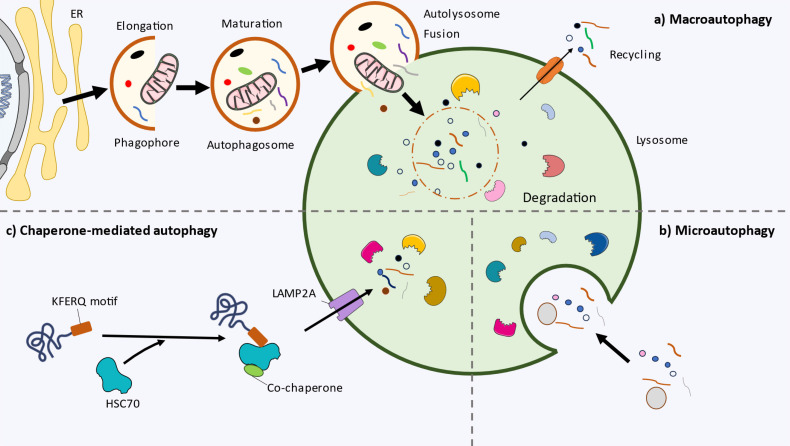
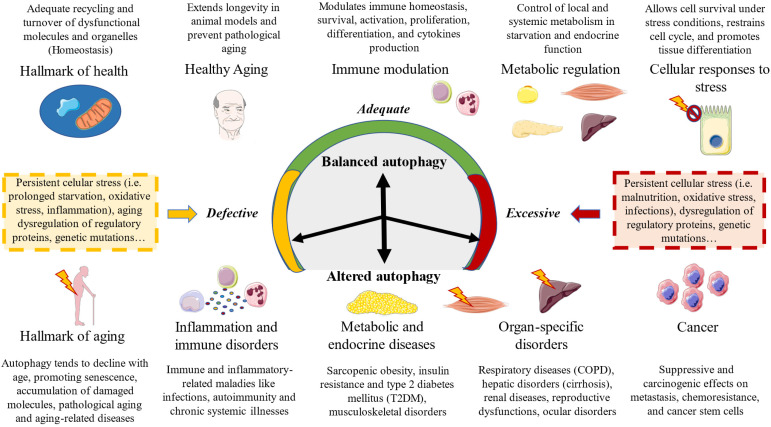
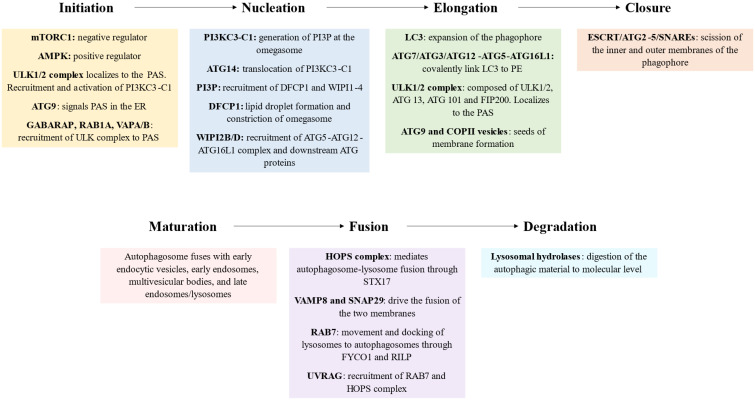
Autophagy plays a critical role in maintaining cellular homeostasis and responding to various stress conditions by the degradation of intracellular components. In this narrative review, we provide a comprehensive overview of autophagy's cellular and molecular basis, biological significance, pharmacological modulation, and its relevance in lifestyle medicine. We delve into the intricate molecular mechanisms that govern autophagy, including macroautophagy, microautophagy and chaperone-mediated autophagy. Moreover, we highlight the biological significance of autophagy in aging, immunity, metabolism, apoptosis, tissue differentiation and systemic diseases, such as neurodegenerative or cardiovascular diseases and cancer. We also discuss the latest advancements in pharmacological modulation of autophagy and their potential implications in clinical settings. Finally, we explore the intimate connection between lifestyle factors and autophagy, emphasizing how nutrition, exercise, sleep patterns and environmental factors can significantly impact the autophagic process. The integration of lifestyle medicine into autophagy research opens new avenues for promoting health and longevity through personalized interventions.
自噬在维持细胞内环境稳定和应对各种应激条件方面发挥着关键作用,通过降解细胞内成分来实现。在这篇综述中,我们全面概述了自噬的细胞和分子基础、生物学意义、药理学调节及其与生活方式医学的相关性。我们深入探讨了调控自噬的复杂分子机制,包括巨自噬、微自噬和伴侣介导的自噬。此外,我们强调了自噬在衰老、免疫、代谢、细胞凋亡、组织分化和全身性疾病(如神经退行性疾病或心血管疾病和癌症)中的生物学意义。我们还讨论了自噬药理学调节的最新进展及其在临床环境中的潜在意义。最后,我们探讨了生活方式因素与自噬之间的密切联系,强调了营养、运动、睡眠模式和环境因素如何能显著影响自噬过程。将生活方式医学纳入自噬研究为通过个性化干预促进健康和长寿开辟了新途径。