O'Neil Darik A, Nicholas Melissa A, Lajud Naima, Kline Anthony E, Bondi Corina O
Physical Medicine & Rehabilitation, University of Pittsburgh, Pittsburgh, PA, United States.
Safar Center for Resuscitation Research, University of Pittsburgh, Pittsburgh, PA, United States.
Front Pharmacol. 2018 Jun 1;9:579. doi: 10.3389/fphar.2018.00579. eCollection 2018.
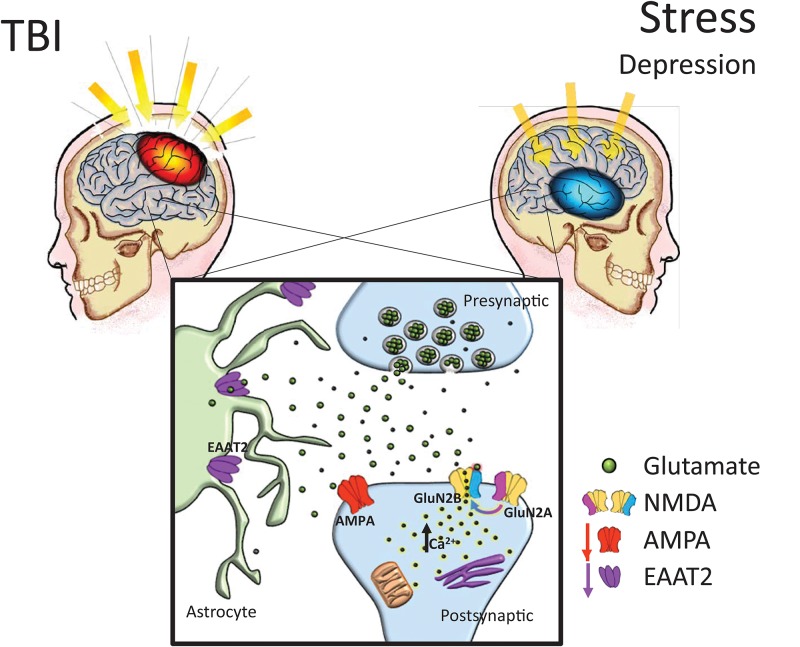
More than 10 million people worldwide incur a traumatic brain injury (TBI) each year, with two million cases occurring in the United States. TBI survivors exhibit long-lasting cognitive and affective sequelae that are associated with reduced quality of life and work productivity, as well as mental and emotional disturbances. While TBI-related disabilities often manifest physically and conspicuously, TBI has been linked with a "silent epidemic" of psychological disorders, including major depressive disorder (MDD). The prevalence of MDD post-insult is approximately 50% within the 1st year. Furthermore, given they are often under-reported when mild, TBIs could be a significant overall cause of MDD in the United States. The emergence of MDD post-TBI may be rooted in widespread disturbances in the modulatory role of glutamate, such that glutamatergic signaling becomes excessive and deleterious to neuronal integrity, as reported in both clinical and preclinical studies. Following this acute glutamatergic storm, regulators of glutamatergic function undergo various manipulations, which include, but are not limited to, alterations in glutamatergic subunit composition, release, and reuptake. This review will characterize the glutamatergic functional and signaling changes that emerge and persist following experimental TBI, utilizing evidence from clinical, molecular, and rodent behavioral investigations. Special care will be taken to speculate on how these manipulations may correlate with the development of MDD following injury in the clinic, as well as pharmacotherapies to date. Indisputably, TBI is a significant healthcare issue that warrants discovery and subsequent refinement of therapeutic strategies to improve neurobehavioral recovery and mental health.
全球每年有超过1000万人遭受创伤性脑损伤(TBI),其中200万例发生在美国。TBI幸存者表现出长期的认知和情感后遗症,这些后遗症与生活质量和工作效率下降以及心理和情绪障碍有关。虽然与TBI相关的残疾通常在身体上明显表现出来,但TBI与包括重度抑郁症(MDD)在内的心理障碍的“隐性流行”有关。受伤后1年内MDD的患病率约为50%。此外,鉴于轻度TBI往往报告不足,在美国,TBI可能是MDD的一个重要总体病因。TBI后MDD的出现可能源于谷氨酸调节作用的广泛紊乱,临床和临床前研究均表明,谷氨酸能信号变得过度并对神经元完整性有害。在这种急性谷氨酸能风暴之后,谷氨酸能功能的调节因子会发生各种变化,包括但不限于谷氨酸能亚基组成、释放和再摄取的改变。本综述将利用临床、分子和啮齿动物行为研究的证据,描述实验性TBI后出现并持续存在的谷氨酸能功能和信号变化。我们将特别关注推测这些变化如何与临床上受伤后MDD的发展相关,以及迄今为止的药物治疗方法。毫无疑问,TBI是一个重大的医疗保健问题,值得探索并随后完善治疗策略,以改善神经行为恢复和心理健康。