Department of Microbiology, Faculty of biology, Lomonosov Moscow State University, Moscow, Russia.
Laboratory of petroleum microbiology, Winogradsky Institute of Microbiology, Research Center of Biotechnology, Russian Academy of Sciences, Moscow, Russia.
Microbiologyopen. 2019 Mar;8(3):e00659. doi: 10.1002/mbo3.659. Epub 2018 Jun 17.
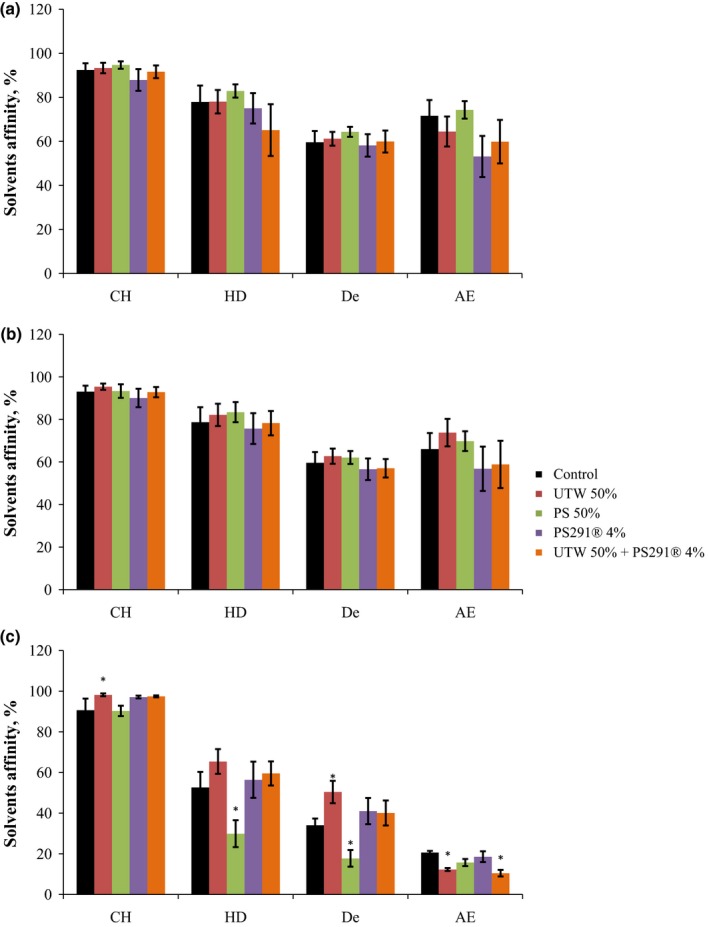
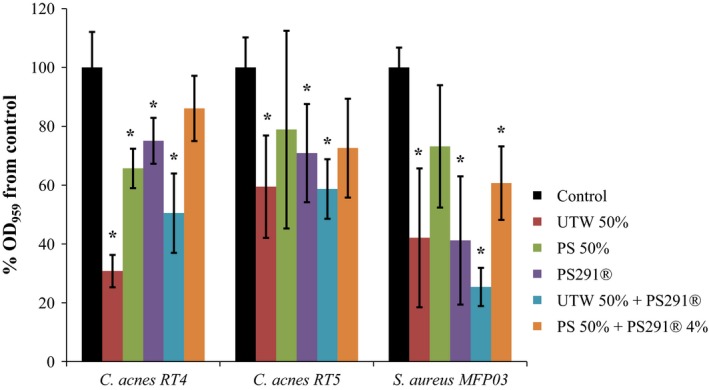
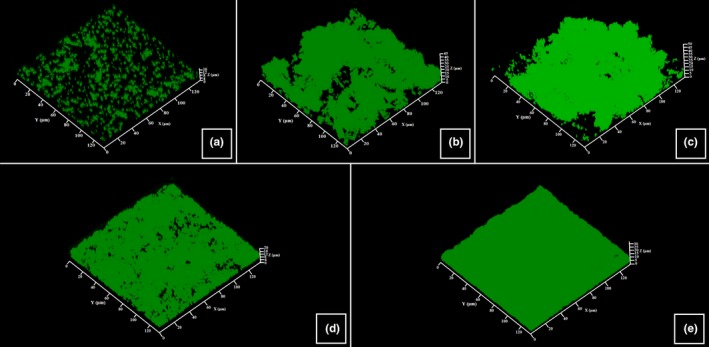
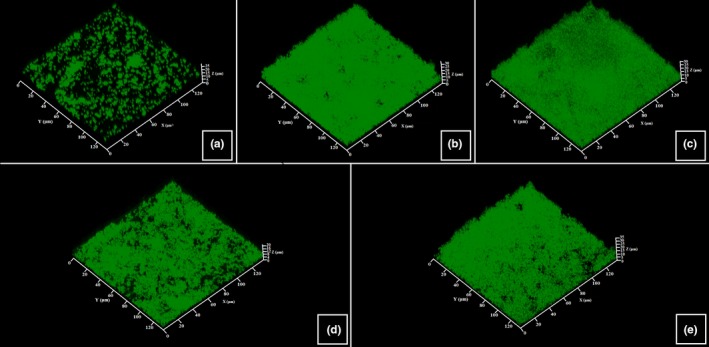
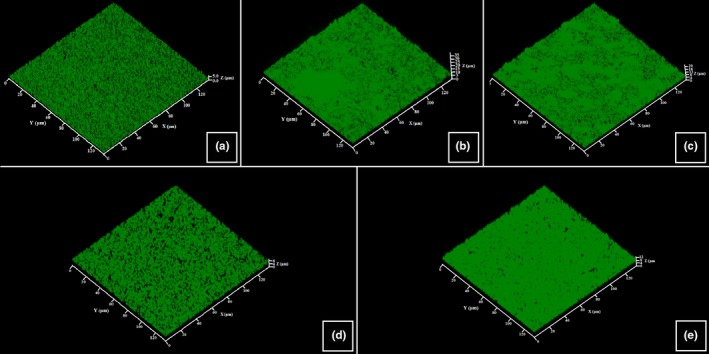
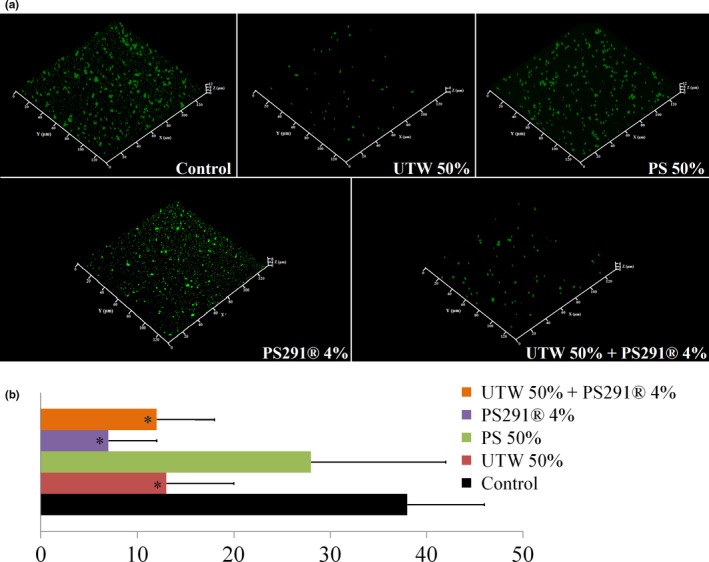
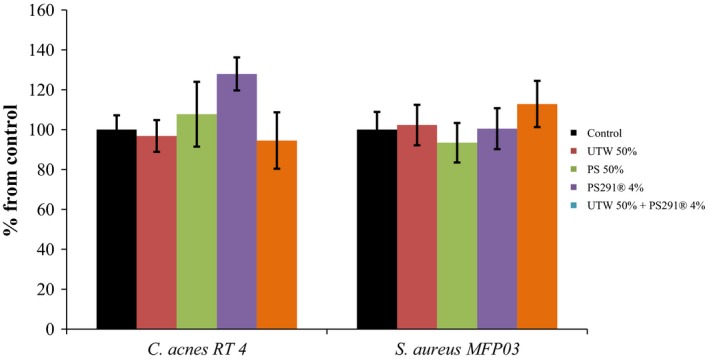
Increasing popularity of preservative-free cosmetics necessitates in-depth research, specifically as bacteria can react to local factors by important metabolic changes. In this respect, investigating the effect of cosmetic preparations on pathogenic strains of commensal species such as acneic forms of Cutibacterium acnes (former Propionibacterium acnes) and bacteria behaving both as commensals and opportunistic pathogens such as Staphylococcus aureus is of major interest. In this study, we studied the effect of commonly used cosmetics, Uriage thermal water (UTW) and a rhamnose-rich polysaccharide (PS291 ) on RT4 and RT5 acneic strains of C. acnes and a cutaneous strain of S. aureus. UTW affected the growth kinetic of acneic C. acnes essentially by increasing its generation time and reducing its biomass, whereas only the S. aureus final biomass was decreased. PS291 had more marginal effects. Both compounds showed a marked antibiofilm activity on C. acnes and S. aureus. For S. aureus that appeared essentially due to inhibition of initial adhesion. Cosmetics did not modify the metabolic activity of bacteria. Both C. acnes and S. aureus showed marked hydrophobic surface properties. UTW and PS291 had limited effect on C. acnes but increased the hydrophobic character of S. aureus. This work underlines the effect of cosmetics on cutaneous bacteria and the potential limitations of preservative-free products.
随着不含防腐剂化妆品的日益普及,深入研究这一现象显得尤为重要,因为细菌可能会通过重要的代谢变化对局部因素产生反应。在这方面,研究化妆品制剂对共生菌(如痤疮丙酸杆菌[原丙酸杆菌]的痤疮形式)和既是共生菌又是机会致病菌(如金黄色葡萄球菌)等致病菌株的影响具有重要意义。在这项研究中,我们研究了常用化妆品 Uriage 温泉水 (UTW) 和富含鼠李糖的多糖 (PS291) 对痤疮丙酸杆菌 RT4 和 RT5 菌株和皮肤金黄色葡萄球菌菌株的影响。UTW 主要通过增加其世代时间和降低生物量来影响痤疮丙酸杆菌的生长动力学,而仅降低了金黄色葡萄球菌的最终生物量。PS291 的影响则更为有限。这两种化合物都对痤疮丙酸杆菌和金黄色葡萄球菌具有明显的抗生物膜活性。对于金黄色葡萄球菌,这种作用主要是由于抑制了初始黏附。化妆品没有改变细菌的代谢活性。痤疮丙酸杆菌和金黄色葡萄球菌都表现出明显的疏水性表面特性。UTW 和 PS291 对痤疮丙酸杆菌的影响有限,但增加了金黄色葡萄球菌的疏水性。这项工作强调了化妆品对皮肤细菌的影响,以及不含防腐剂产品的潜在局限性。